Post Covid – How Has Covid-19 Affected Our Mental Health?

 · 4 min read
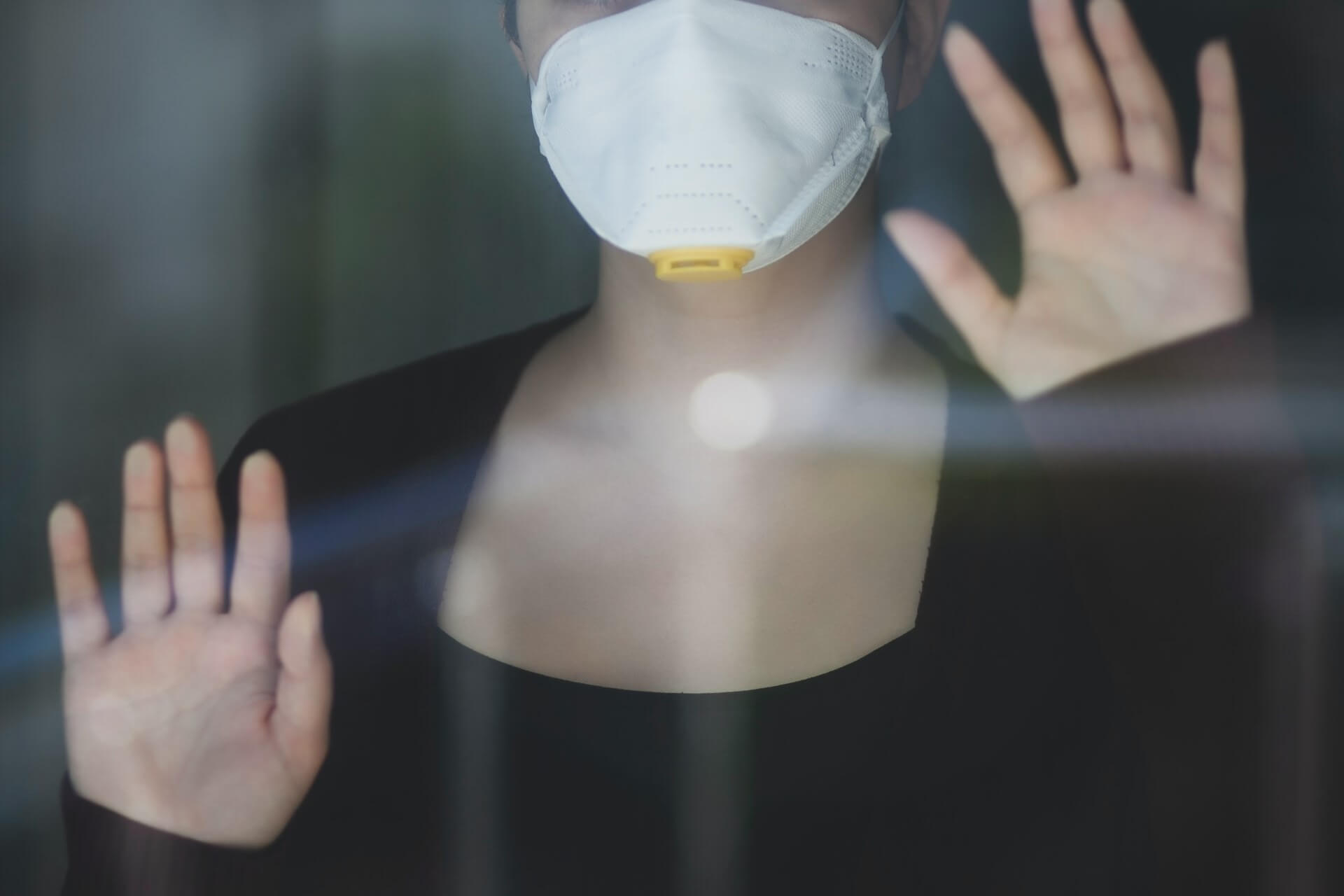
The post-Covid era and the measures that came with it have affected not only our everyday lives but also our wellbeing. In this article, we look at the impact the past months have had on many people’s mental health and how mindfulness can help us cope with the changed situation.
Post Covid – How Has Covid-19 Affected People?
In December 2019, SARS-CoV-2 (Covid-19) broke out in Wuhan, China. Shortly afterwards, in January 2020, the first Covid-19 case was recorded in Germany, and the virus has been spreading across the country ever since (Böhmer et al., 2020). Since the outbreak of the Covid-19 pandemic, a profound psychological burden has also been observed in the form of stress, anxiety, depression, frustration and uncertainty (Serafini et al., 2020; Torales, O’Higgins, Castaldelli-Maia, 2020). Negative emotions and sensitivity to social risks have increased, while positive emotions and life satisfaction have decreased (Li, Wang, Xue, Zhao & Zhu, 2020).
The study by Liang and colleagues (2020) found that an estimated 40 % of young people suffered from psychological problems and around 14 % showed signs of post-traumatic stress disorder. Those most affected were young people with less education or poorer coping styles (Liang et al., 2020). Overall, it is assumed that Covid-19 and its long-term effects will change our lives in many different ways, and this period will presumably come to be known as Post Covid (Kumar & Nayar, 2020). Areas affected include, for example, the economy, industry, the global market, agriculture, human health and healthcare.
Post Covid – What Will Change?
Scientists regard the Covid-19 pandemic as a new, unique, multidimensional and potentially toxic stressor, which is why the pandemic is seen as a particular threat to mental health (Brakemeier et al., 2020). This issue will very likely stay with us in the Post Covid era too. However, alongside the risks and negative effects, it can also be an opportunity to make changes in life, such as paying more attention to our own mental health and preventing mental illness. Besides the Covid-19 pandemic, though, there are other changes that have a direct impact on people’s wellbeing.
Post Covid – How Is the Economy Changing?
In addition to the new challenges brought by the post-Covid era, there are also key challenges arising from Industry 4.0. These include changes to production chains, constant availability and ever faster development within the labour market. Another ongoing topic in the economy is “Work 4.0” (Klammer et al, 2017). This refers to advancing digitalisation and the problems that come with it. Greater demands are placed on employees’ education and further training, and the principle of “lifelong learning” is particularly emphasised.
However, this also involves risks, which can arise above all from more flexible working hours (Klammer et al, 2017). In the post-Covid era, the option of working from home has become more important. Studies indicate that although working from home can lead to increased work performance and job satisfaction (Bloom, Liang, Roberts & Ying, 2015), it can also pose a major challenge to the balance between family and work (Golden, 2021).
Post Covid – What Impact Does Working From Home Have?
Trying to meet the needs of family and work at the same time can lead to stress, anxiety and frustration (Golden, 2021). The lack of separation between the workplace and personal space can also have negative consequences, such as reduced creativity among employees and more centralised decision-making (Nell, Foss, Klein & Schmitt, 2020). The impact of the pandemic on the workplace is immense, and another major effect is an increase in social distancing and loneliness (Kniffin et al., 2020), even though social interaction has a positive influence on physical and mental health and is essential for people (Mogilner, Whilland & Norton, 2018). Working from home, as well as other restrictions on the workplace and on interaction, is currently affecting employees’ health (Brooks et al., 2020).
For companies, it will become important to recognise that workplace loneliness also has a negative effect on performance, affiliative behaviour and affective commitment to the organisation (Cacioppo et al., 2006). The post-Covid period may also be responsible for more work-related burnout, which can be triggered by feelings of exhaustion and a detached attitude towards work (Demerouti, Mostert & Baker, 2010).
To solve this problem, employees would need more resources (Kniffin et al., 2020).
https://mindclub.rbd.rocks/blog-mindfulness-digitale-einsamkeit/

How Can Mindfulness Help Post Covid?
Better emotion regulation through mindfulness practice
In comparisons with two other relaxation methods, the authors of the study were also able to show that the mindfulness exercise was most strongly associated with improved emotion regulation. When it comes to dealing with the frustration that can arise in a working world shaped by digitalisation, this can be a key element. The study concluded that the body scan helped participants deal better with both a lack of emotions and overly intense emotions.
Better performance at work
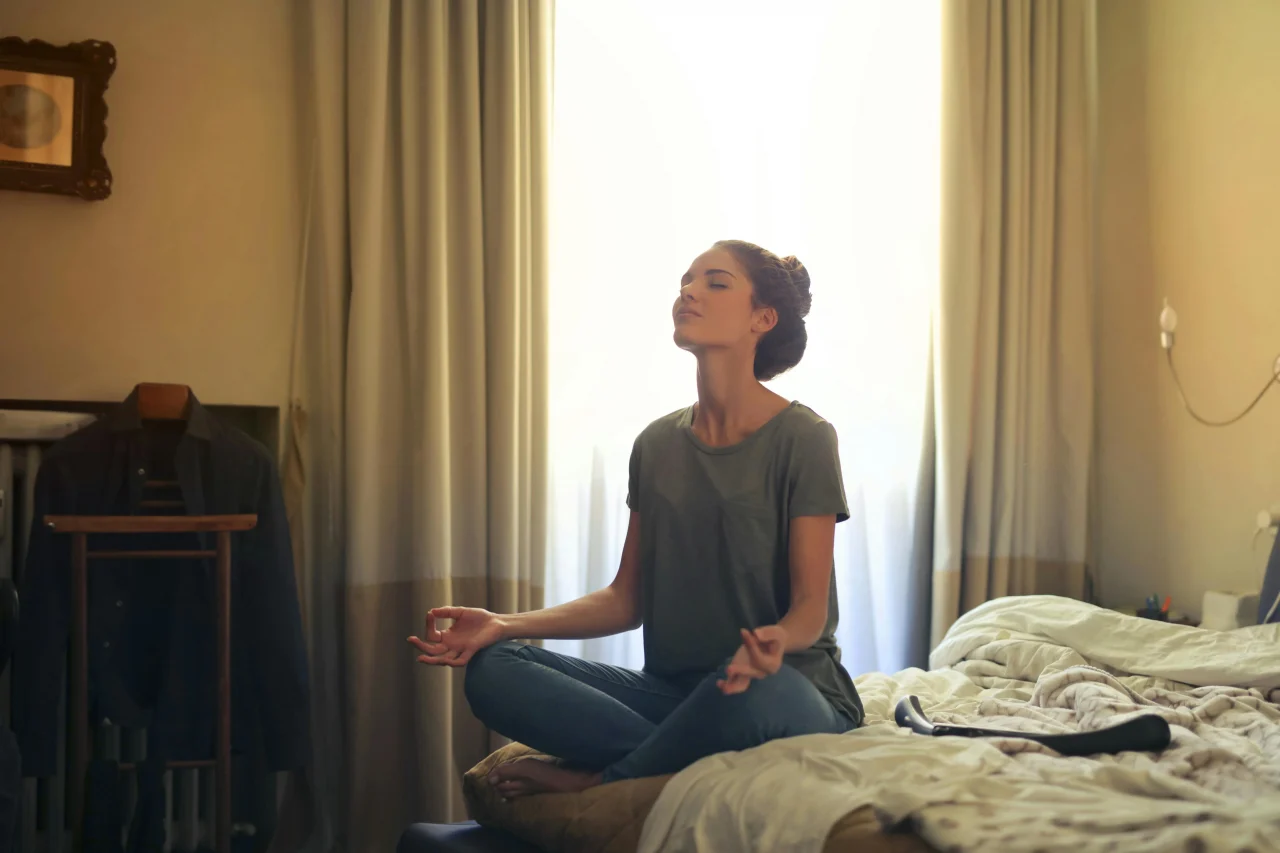
Another key benefit of mindfulness practice is improved performance at work. Psychological studies have found a positive relationship between mindfulness and job performance. In particular, the influence of mindful leaders on their employees has already become a focus of scientific research. For example, there is evidence that a mindful leadership style is positively associated with employee satisfaction as well as with the satisfaction of the leader (Arendt et al., 2019).
Mindfulness can therefore also help us master the challenges that have arisen from the coronavirus pandemic and its effects. Mindfulness practice can support both employees and leaders in regulating their emotions better and increasing their performance.
After the Pandemic
If you would like to learn more about “Life after the pandemic”, we have an interesting article for you here! See you there!
Deepen your meditation practice with Mindfulife
Meditation can be more than a short break in your everyday life. If you would like to understand more deeply how meditation works, how to build a steady practice of your own and how to guide others mindfully, our meditation teacher training is the next step. There you will not only get to know meditation in theory, but also develop more confidence, clarity and trust in your own practice.
Would you like to find out more about the training first? In our weekly webinar you will get an insight and learn more about what your path to becoming a meditation teacher could look like.
For regular support in your everyday life, you can also use our online meditation studio and join guided meditations flexibly via Eversports.
We look forward to accompanying you on your journey.
You can find more mindfulness inspiration on our channels too
References
Torales, J., O’Higgins, M., Castaldelli-Maia, J. M., & Ventriglio, A. (2020). The outbreak of COVID-19 coronavirus and its impact on global mental health. International Journal of Social Psychiatry, 66(4), 317-320.
Liang, L., Ren, H., Cao, R., Hu, Y., Qin, Z., Li, C., & Mei, S. (2020). The effect of COVID-19 on youth mental health. Psychiatric quarterly, 91(3), 841-852.
Kumar, A., & Nayar, K. R. (2020). COVID 19 and its mental health consequences. Journal of Mental Health, 180(6), 817-8.
Böhmer, M. M., Buchholz, U., Corman, V. M., Hoch, M., Katz, K., Marosevic, D. V. et al. (2020). Investigation of a COVID-19 outbreak in Germany resulting from a single travel-associated primary case: a case series. The Lancet Infectious Diseases, 20(8), 920–928. https://doi.org/10.1016/S1473-3099(20)30314-5
Serafini, G., Parmigiani, B., Amerio, A., Aguglia, A., Sher, L. & Amore, M. (2020). The psychological impact of COVID-19 on the mental health in the general population. QJM: An International Journal of Medicine, 113(8), 531–537. https://doi.org/10.1093/qjmed/hcaa201
Li, S., Wang, Y., Xue, J., Zhao, N. & Zhu, T. (2020). The Impact of COVID-19 Epidemic Declaration on Psychological Consequences: A Study on Active Weibo Users. International Journal of Environmental Research and Public Health, 17(6), 1–9. https://doi.org/10.3390/ijerph17062032
Klammer, U., Steffes, S., Maier, M. F., Arnold, D., Stettes, O., Bellmann, L. & Hirsch-Kreinsen, H. (2017). Arbeiten 4.0 - Folgen der Digitalisierung für die Arbeitswelt. Wirtschaftsdienst, 97(7), 459–476. https://doi.org/10.1007/s10273-017-2163-9
Bloom, N., Liang, J., Roberts, J. & Ying, Z. J. (2015). Does Working from Home Work? Evidence from a Chinese Experiment. The Quarterly Journal of Economics, 130, 165–218. https://doi.org/10.1093/qje/qju032
Brakemeier, E.-L., Wirkner, J., Knaevelsrud, C., Wurm, S., Christiansen, U. L. et al. (2020). Die Covid-19-Pandemie als Herausforderung für die psychische Gesundheit. Zeitschrift für Klinische Psychologie und Psychotherapie, 49(1), 1-31. https://doi.org/10.1026/1616-3443/a000574 Arendt, J. F., Pircher Verdorfer, A., & Kugler, K. G. (2019). Mindfulness and leadership: Communication as a behavioral correlate of leader mindfulness and its effect on follower satisfaction. Frontiers in psychology, 10, 667.
Golden, T. D. (2021). Telework and the Navigation of Work-Home Boundaries. https://doi.org/10.1016/j.orgdyn.2020.100822
Nell, P. C., Foss, N. J., Klein, P. G., & Schmitt, J. (2020). Avoidingdigitalization traps: Tools for top managers.Business Horizons. http://dx.doi.org/10.2139/ssrn.3582655
Kniffin, K. M., Narayanan, J., Anseel, F., Antonakis, J., Ashford, S. P., Bakker, A. B. Bamberger, P. et al. (2020). Covid-19 and the Workplace: Implications, Issues, and Insights fpr Fucture and Action. American Psychological Association, 76(1), 63-77.
Mogilner, C., Whillans, A., & Norton, M. I. (2018). Time, money, and subjective well-being. In E. Diener, S. Oishi & L. Tay (Hrsg.). Handbook of well-being. Salt Lakt City, UT: Nobascholar.
Brooks, S. K., Webster, R. K., Smith, L. E., Woodland, L., Wessely, S.,Greenberg, N., & Rubin, G. J. (2020). The psychological impact ofquarantine and how to reduce it: Rapid review of the evidence. Lancet, 395, 912–920. http://dx.doi.org/10.1016/S0140-6736(20)30460-8
Cacioppo, J. T., Hawkley, L. C., Ernst, J. M., Burleson, M., Berntson,G. G., Nouriani, B., & Spiegel, D. (2006). Loneliness within a nomo-logical net: An evolutionary perspective. Journal of Research in Per-sonality, 40,1054 –1085.http://dx.doi.org/10.1016/j.jrp.2005.11.007
Demerouti, E., Mostert, K., & Bakker, A. B. (2010). Burnout and workengagement: A thorough investigation of the independency of bothconstructs. Journal of Occupational Health Psychology, 15, 209 –222. http://dx.doi.org/10.1037/a0019408