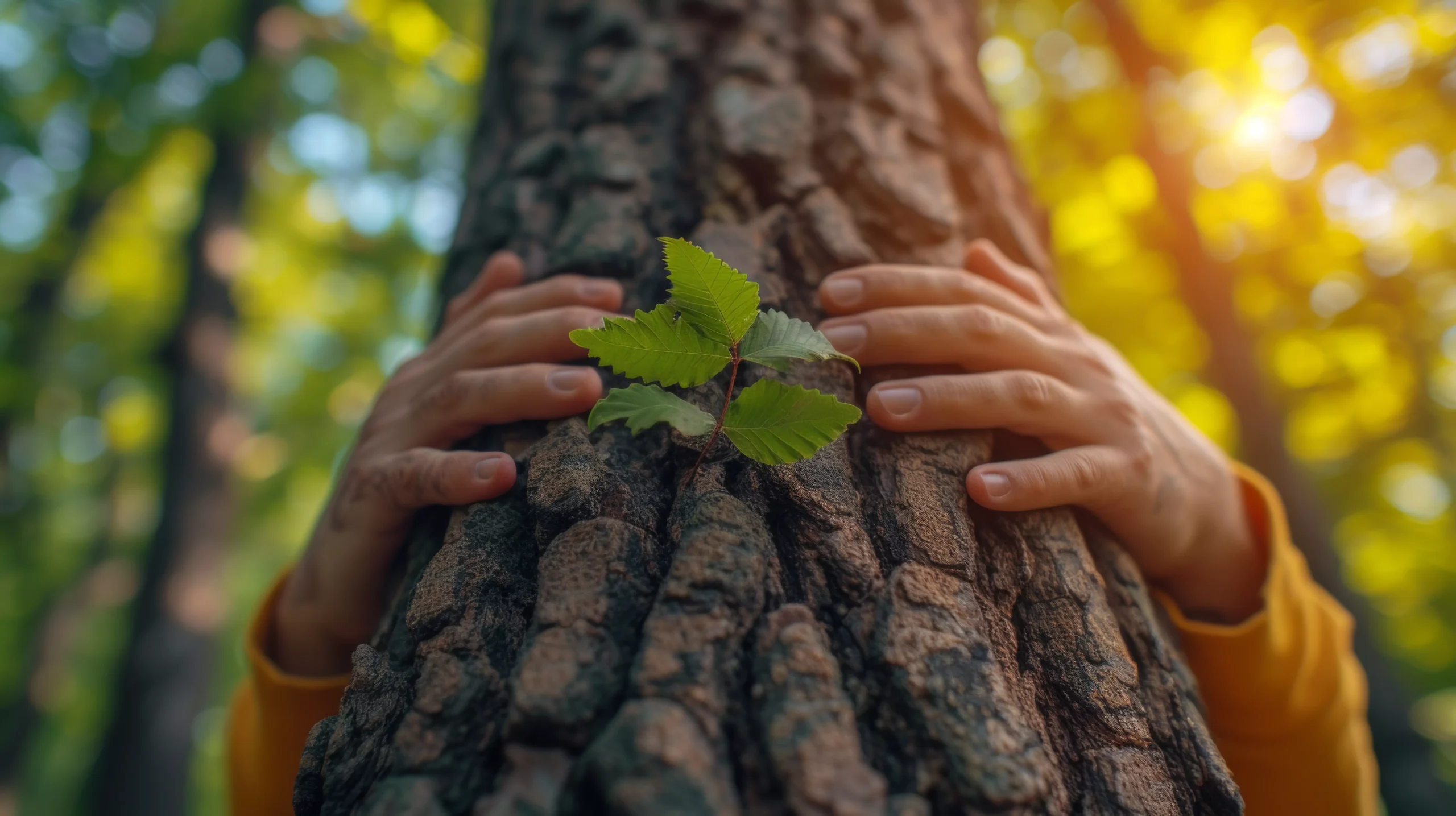
Mindfulness and ecological awareness: the connection
Use mindfulness to develop ecological awareness, for greater sustainability and the protection of our environment. People and nature in harmony.

 · 4 min read

Mindfulness and ecological awareness – their key role in creating sustainable harmony
Today’s world moves at a breathtaking pace, which has led to an alienation from nature and rapid environmental destruction. In the midst of this storm, mindfulness can offer an island of calm and insight, enabling us to restore our connection with the environment and develop more sustainable ways of living. In this blog post, we will explore the profound connection between mindfulness and ecological awareness and show how meditation practices can help us build a more harmonious relationship with the environment.
What is mindfulness?
Mindfulness is not a new idea but an ancient practice rooted in various cultures and spiritual traditions. In Buddhism, for example, it is a central part of the path to enlightenment. It refers to consciously perceiving the present moment without judgement or distraction. This practice allows us to observe our thoughts and feelings without being trapped by them.
The start of the journey: mindfulness and meditation
Meditation is one of the most effective ways to cultivate mindfulness. By practising meditation regularly, we learn to calm the mind and immerse ourselves in the present moment. This creates space for self-reflection and heightens our ecological awareness of the environment around us. We begin to appreciate the beauty of nature and to recognise the impact our actions have on it.
Ecological awareness and ecological behaviour in connection with mindfulness
Conscious perception inevitably leads to ecological awareness. When we are in the “here and now”, we recognise that our actions have consequences for the environment. We become aware of our ecological footprint and of the impact our consumer behaviour has on nature. This awareness is the first step towards change.
Mindfulness and climate protection
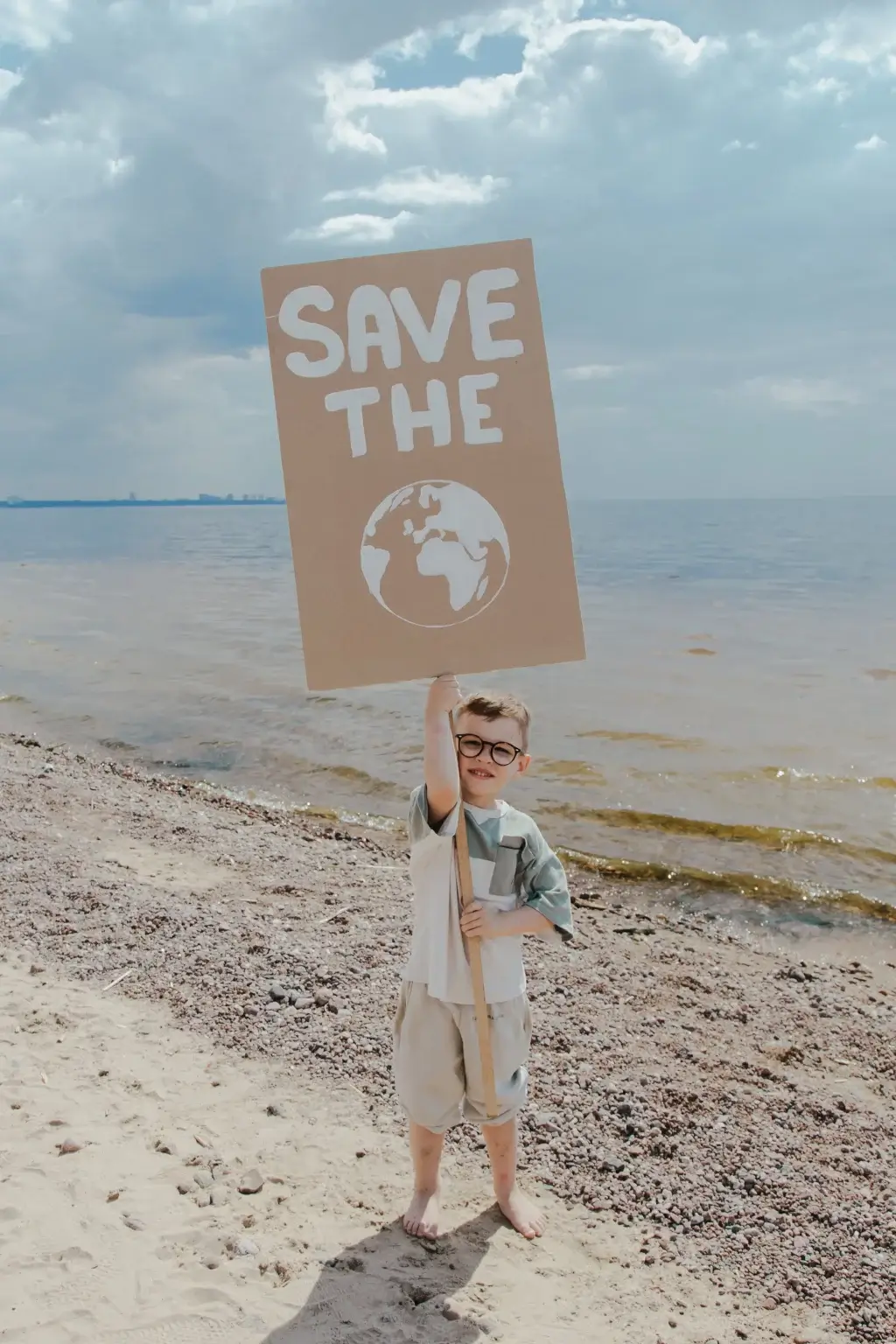
The current challenges in the field of climate protection call for a drastic change in our behaviour and our ways of thinking. Being present in the current moment can help us consume more consciously and make more environmentally friendly decisions. It encourages us to rethink our relationship with the environment and to promote sustainable practices.
This is where training in directing our attention comes into play, as a way of tackling climate problems and exploring ecological issues.
Mindfulness and health
Alongside its ecological benefits, mindfulness also offers considerable health benefits. Reduced stress, improved mental health and greater wellbeing are just some of the positive effects of meditation techniques. Healthy, balanced people are more willing to make environmentally conscious decisions and to stand up for the protection of nature.
When we perceive our feelings without judging them and take care of our health, for example by consciously choosing a healthy diet or deciding to respond to illness in a healthy way, mindfulness also makes us more inclined to protect the nature around us and society, and to build ecological awareness. The result is a harmonious relationship between people and the environment. The stronger ecological behaviour of mindful people is a consequence of improved personal health behaviour.
Meditation helps us to develop compassion for ourselves, for others and for the environment, and to support one another. In this way, we change ourselves and make a crucial positive contribution to protecting the environment. Unfolding our own potential can lead us to increase sustainability by conserving the Earth’s resources, so that we can live healthily.
Mindfulness training and the psychology of consumer behaviour
The psychology of consumer behaviour is closely linked to our emotional and mental state. Training in directing our attention can help us better understand our impulses and habits when we consume. We learn to consume more consciously and to free ourselves from superficial, material values.

The connection between people and the environment. How can mindfulness strengthen this connection?
Being present in the current moment helps us to restore the connection between people and the environment. We recognise that we are an integral part of a larger ecological system. Our actions have a direct impact on the environment, but they can also contribute to harmony and healing.
Mindfulness and community
Training in directing our attention also fosters a sense of community and cooperation. People who are in the “here and now” through meditation tend to become more involved in environmental projects and to work together on solutions. This collective relationship can bring about positive change at both a local and a global level.

Conclusion: the path to harmony between people and the environment through mindfulness
In today’s world, shaped by hectic lifestyles and consumption, meditation can serve as a lifeline. It allows us to rediscover our connection with nature and to develop a deep ecological awareness. Through meditation, we learn to be consciously present in the current moment and to act in an environmentally friendly way. These changes in our thinking and behaviour can not only improve our own health but also help to create harmony between people and the environment.
Buddhism teaches us that our wellbeing is inseparably linked to the wellbeing of nature. The practice of meditation enables us to recognise and honour this connection. It opens up the path to a more sustainable and harmonious future in which people and the environment exist in balance.
It is up to each of us to walk this path of mindfulness and to shape the world we leave to our children.
Deepen your meditation practice with Mindfulife
Meditation can be more than a short break in your everyday life. If you would like to understand more deeply how meditation works, how to build a steady practice of your own and how to guide others mindfully, our meditation teacher training is the next step. There you will not only get to know meditation in theory, but also develop more confidence, clarity and trust in your own practice.
Would you like to find out more about the training first? In our weekly webinar you will get an insight and learn more about what your path to becoming a meditation teacher could look like.
For regular support in your everyday life, you can also use our online meditation studio and join guided meditations flexibly via Eversports.
We look forward to accompanying you on your journey.
You can find more mindfulness inspiration on our channels too
References
Chen, Y., Chang, C., & Lin, Y. (2014). Green transformational leadership and green performance: The mediation effects of green mindfulness and green self-efficacy. Sustainability, 6(10), 6604–6621. https://doi.org/10.3390/su6106604
Geiger, S. M., Otto, S., & Schrader, U. (2018). Mindfully green and healthy: An indirect path from mindfulness to ecological behavior. Frontiers in Psychology, 8, Article 2306. https://doi.org/10.3389/fpsyg.2017.02306
Kumar, S., & Panda, T. K. (2018). The role of mindfulness in sustainable consumption behaviour: An emerging economy perspective. Conference paper presented at the 12th Great Lakes NASMEI Marketing Conference, Chennai, India.
Panno, A., Maricchiolo, F., & Giacomantonio, M. (2017). Mindfulness, pro-environmental behavior, and belief in climate change: The mediating role of social dominance. Environment and Behavior, 50(8), 864–888. https://doi.org/10.1177/0013916517718887
Wamsler, C. (2017). How mindfulness can help the shift towards a more sustainable society. The Conversation. https://theconversation.com/how-mindfulness-can-help-the-shift-towards-a-more-sustainable-society-79127