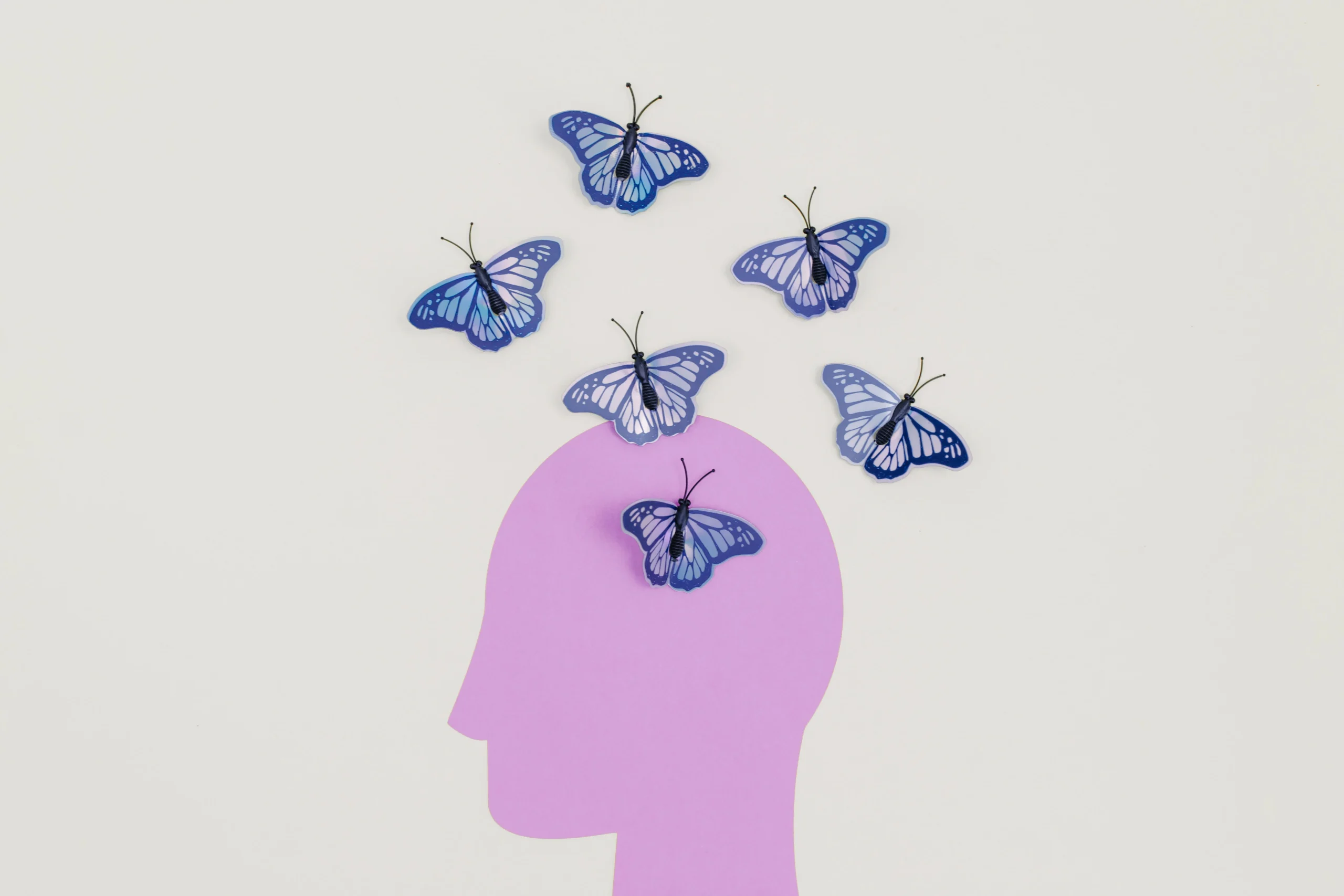
Metta Meditation: How Can It Bring More Kindness and Compassion into Your Life?

 · 3 min read
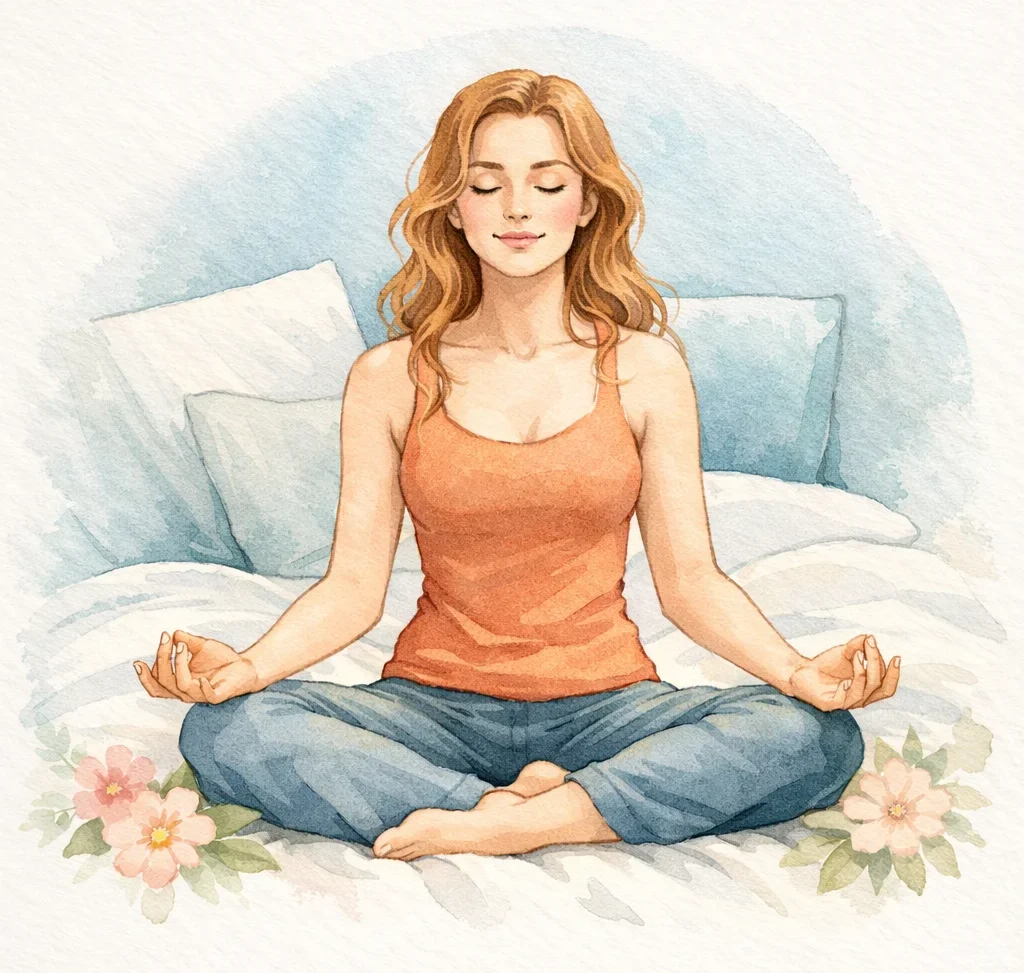
Imagine you could use a simple exercise to train a kind state of mind towards yourself and others, so that it gradually becomes a kind of inner basic attitude. This is exactly what Metta meditation sets out to do. In this article, you will learn how to deliberately direct your attention towards kind thoughts and, in doing so, create space for more inner peace.
What is Metta meditation, anyway?
Metta meditation is also known as ‘loving-kindness meditation’. It is a type of meditation in which you deliberately cultivate a kind and benevolent state of mind. The aim is not only to experience this attitude during meditation, but to let it become a kind of inner basic attitude in the long term.
Especially at the beginning, it can feel as though you are just repeating empty words. You may even feel that you don’t feel anything at all, or that the phrases seem strange and meaningless to you. That is completely fine and a natural part of the process. Your intention is what matters: the sincere wish for more kindness – towards yourself and others. That is entirely enough to get started. Over time, the words can take on more meaning and gradually be reflected in your attitude, too.
A gentle way into this type of meditation is to meet yourself with kindness and then gradually widen this circle – to the people close to you, and eventually to everyone else as well.
How does Metta meditation work in practice?
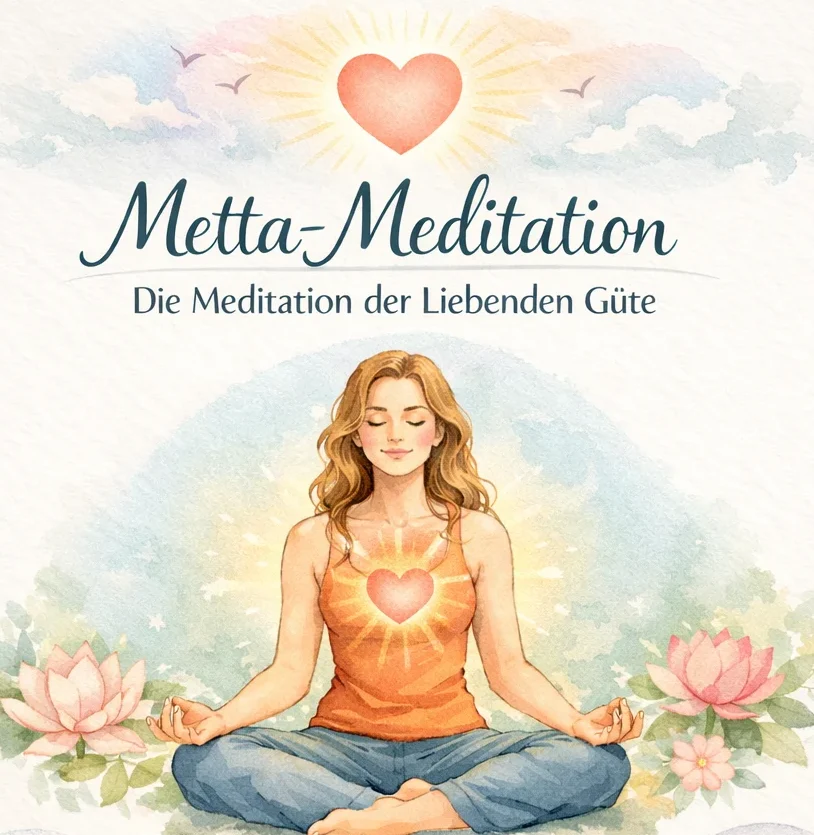
The process is simple and, at the same time, powerful:
First, settle into a relaxed posture and close your eyes. Let your body soften step by step. You can start with your face and consciously release the tension there. From there, you can let the relaxation travel bit by bit through your whole body, until your entire body feels calm, loose and soft. Then direct your attention to your heart, which is often seen as a symbol of love and compassion.
Now say the following phrases to yourself, silently or quietly:
May I (always) be happy.
May I (always) be healthy.
May I (always) feel at ease.
May I (always) be full of joy.
Take your time and notice what the words bring up in you, without trying to force anything. You can say the phrases at your own pace, in your own personal order, and repeat them as often as feels right for you.
At the end of the meditation:
Let go of any remaining tension, take a deep breath, pause for a moment to notice how you feel, and consciously thank yourself for the time you have taken for yourself.

What does science say about Metta meditation?
The effects of Metta meditation have also been studied extensively by scientists.
A study by Hofmann et al. (2011) shows that this meditation practice can help to reduce self-criticism and strengthen compassion – both for yourself and for others.
In addition, a systematic review by Gu et al. (2022) concludes that Metta and compassion meditations can, overall, have a positive influence on life satisfaction.
These findings make it clear: even if the practice may feel unfamiliar or even a little artificial at first, over time it can noticeably help to change your inner attitude in a lasting way and foster more kindness, compassion and inner wellbeing.
How can you integrate Metta meditation into your everyday life?
You don’t need to meditate for long to feel the first effects. Just a few minutes a day can make a difference.
You can use the practice:
- in the morning as a gentle start to the day
- as a short break during the day
- or in the evening to reflect and wind down
What matters is not the duration, but regularity and the development of your inner attitude.
Anastasia Prut (psychology student)

Would you like to try a guided Metta meditation?
If you would like to make getting started easier, a guided meditation can be very helpful.
With the following video, you can let yourself be gently guided through Metta meditation:
Give yourself a few minutes and perhaps a little more kindness and compassion, too.
Deepen your meditation practice with Mindfulife
Meditation can be more than a short break in your everyday life. If you would like to understand more deeply how meditation works, how to build a steady practice of your own and how to guide others mindfully, our meditation teacher training is the next step. There you will not only get to know meditation in theory, but also develop more confidence, clarity and trust in your own practice.
Would you like to find out more about the training first? In our weekly webinar you will get an insight and learn more about what your path to becoming a meditation teacher could look like.
For regular support in your everyday life, you can also use our online meditation studio and join guided meditations flexibly via Eversports.
We look forward to accompanying you on your journey.
You can find more mindfulness inspiration on our channels too
References
Gu, X., Luo, W., Zhao, X., Chen, Y., Zheng, Y., Zhou, J., Zeng, X., Yan, L., Chen, Y., Zhang, X., Lv, J., Lang, Y., Wang, Z., Gao, C., Jiang, Y., & Li, R. (2022). The effects of loving-kindness and compassion meditation on life satisfaction: A systematic review and meta-analysis. Applied Psychology: Health and Well-Being, 14(3), 1081–1101. https://doi.org/10.1111/aphw.12367
Hofmann, S. G., Grossman, P., & Hinton, D. E. (2011). Loving-kindness and compassion meditation: Potential for psychological interventions. Clinical Psychology Review, 31(7), 1126–1132. https://doi.org/10.1016/j.cpr.2011.07.003