Metta Meditation: Definition, Effects and Practical Exercises
In our hectic and often stressful world, more and more people are looking for ways to find inner calm and boost their wellbeing. One method that has become increasingly popular in recent years is metta meditation. This ancient Buddhist practice of loving compassion can not only lead subjectively to a positive state of mind but has also been shown to offer numerous health benefits.

 · 5 min read

Our everyday lives are full of it: headlines asking ‘Is work still worth it?’, push notifications on your smartphone such as ‘Have you seen the new post on Instagram yet?’ or a calendar reminder saying ‘Deadline tomorrow!’. We take on many roles at once and jump from one task to the next. In this world, more and more people are looking for ways to press pause for a moment and find inner calm. One method that has become increasingly popular in recent years is metta meditation. This ancient Buddhist practice of loving compassion can not only lead subjectively to a positive state of mind but has also been shown to offer numerous health benefits.
What is metta meditation?
Does this sound familiar? We give everything to help our friends, even when we are pretty exhausted ourselves. We rush around to get everything done at work. Or we drag ourselves out of bed with a cold because we promised to look after our neighbour’s dog today, and it really needs to go out now. We take care of everything and everyone around us. But who takes care of you? Metta meditation may hold the answer.
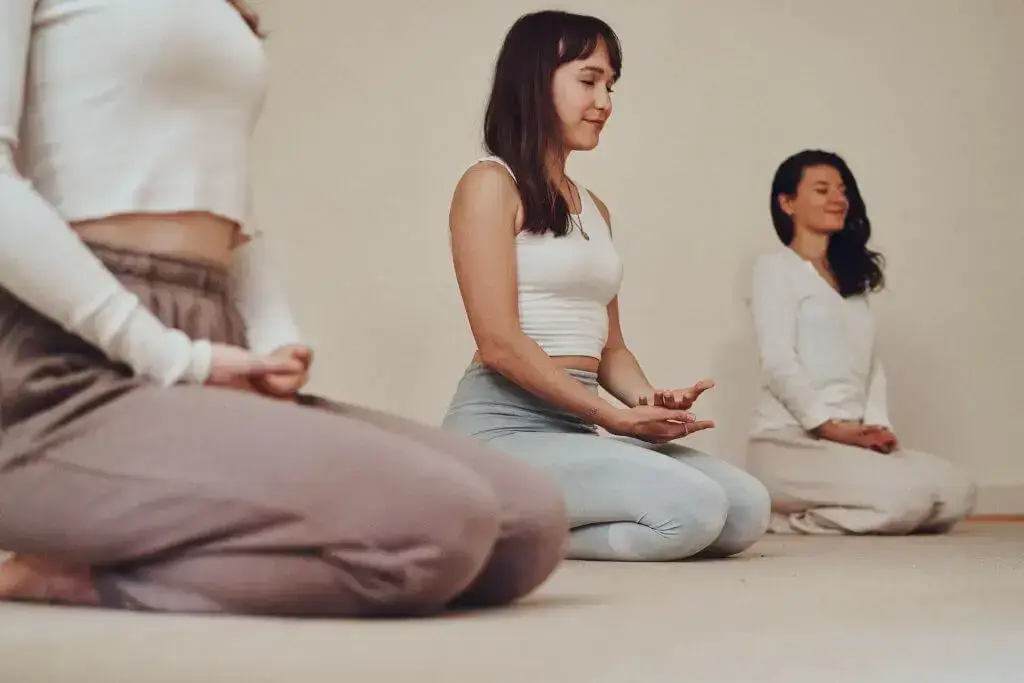
Metta meditation, also known as “loving-kindness meditation”, is a meditation practice that aims to develop loving compassion and goodwill towards all living beings. The term “metta” comes from Pali, an ancient Indian language, and means something like “loving kindness” or “unconditional love”. In this meditation, you focus on sending positive thoughts and wishes to yourself, to loved ones, to neutral people and even to people you find difficult.
This involves repeating phrases such as “May you be well” or “May you be healthy and strong”. You put yourself at the centre. And since many of us have internalised that we can be anything but selfish, you might find this new practice quite difficult at first. Because the answer to the question of who takes care of you is: you do! Yet this is exactly what we tend to avoid. We don’t want to come across as self-centred or vain – and in the end, we sabotage ourselves. Instead of constant self-criticism, why not simply try a little self-love? Be kind to yourself; this body is the only one you have. Feel free to take a look here too and use the autumn to meet yourself with more mindfulness.

What are the positive effects of metta meditation?
We have already introduced you to one benefit of metta meditation, namely the reduction of psychosis-like symptoms, in this article. But that’s not all it can do! It can also have a positive influence on your emotional experience. For example, a study by Fredrickson et al. (2008) showed that participants who regularly practised metta meditation experienced a significant increase in positive emotions. This in turn led to greater life satisfaction and fewer symptoms of depression. And all without changing their external circumstances, apart from a regular meditation practice.
The authors see meditation as a key to experiencing happiness and contentment in life – without constantly having to create external situations that supposedly make us happy. After all, too little or too much dopamine in our system leads to an imbalance, which is why it can sometimes make sense to do a detox and to support this process with your metta meditation. Increase your willingness to help and your resilience, and free yourself from self-destructive patterns. Many psychological factors can be positively influenced, and you will generally feel more content.

Try it out right now!
But enough theory, let’s get practical! How do you practise metta meditation?
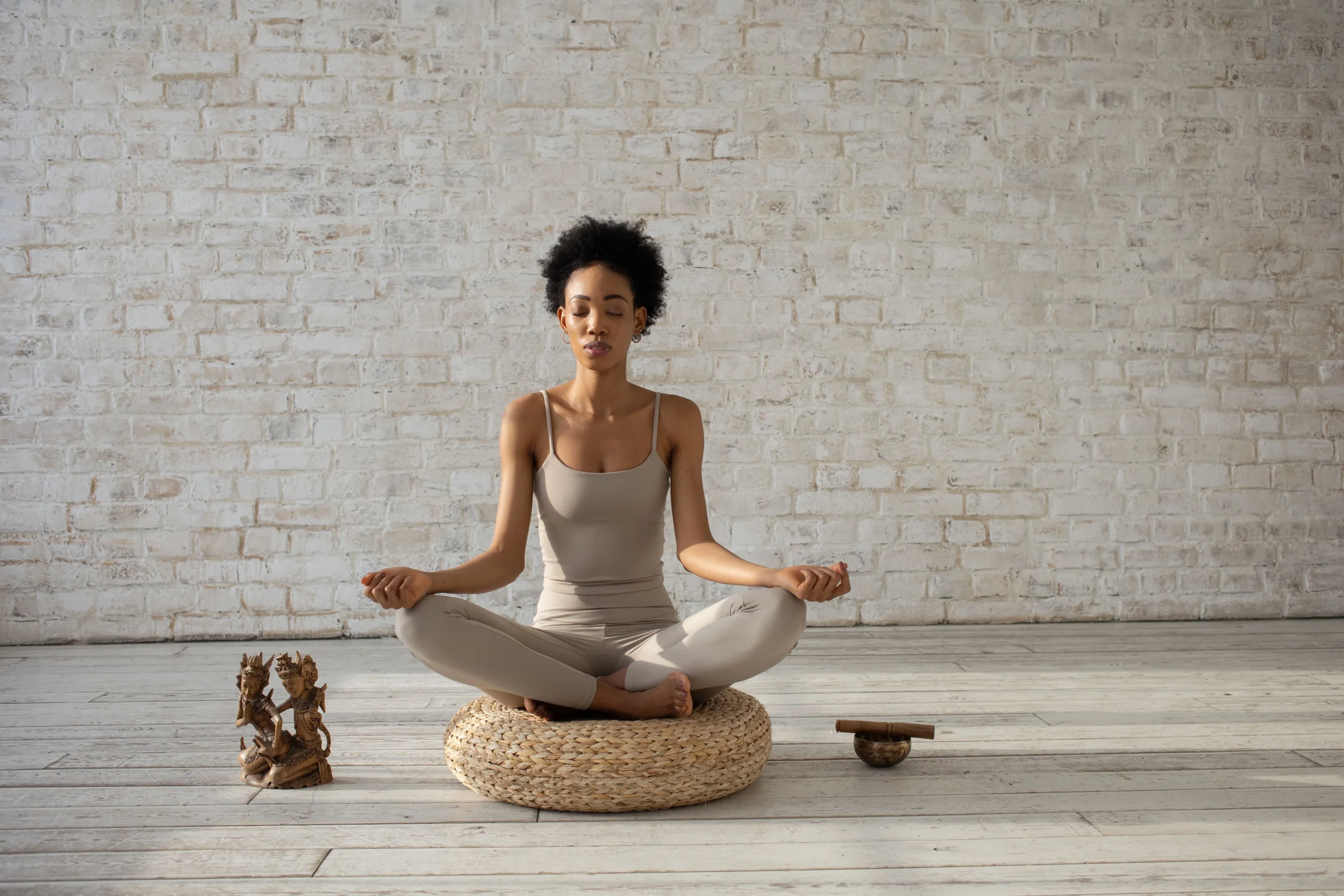
Settle into your meditation posture. Make sure you won’t be disturbed during your practice. Consider what you need in order to settle down. A meditation cushion, scents or simply building your practice into a fixed time of day can help you. When you are ready to begin your metta meditation, start with a few deep breaths and connect with the present moment. This is followed by a sequence of five phases:
- Love and goodwill just for you!
Say the following positive affirmations of self-love and self-acceptance, out loud or silently, until you feel a sense of love and peace.
– May I be safe.
– May I be healthy.
– May I be happy.
– May I be free from fear. - Love for someone close to you
Picture a person who is important to you and send love to this person. Adapt the affirmations above and say them in the YOU form until you are sending a feeling of love here too.
– May you be safe.
– May you be healthy.
– May you be happy.
– May you be free from fear. - Goodwill for a neutral person
Now send the same affirmations to a person you feel neutral about. To feel connected, you can look for superficial things you have in common with them (gender, hair colour, a place where you meet). - Compassion for a person you don’t like
This is a difficult one. Try to focus on the core of primal love and the prospect of the emotional liberation that comes with it. Give yourself time; if you can’t feel deep love at first, that is completely normal in the beginning. With repetition, you can let go of the negative feelings that stand in the way of a compassionate connection, and feel freer. - Affection for all sentient beings
Now say your affirmations for all beings. Accept everything just as it is right now, because that is exactly right for you at this moment. Allow your emotions, however they show up.
– May all beings be safe.
– May all beings be healthy.
– May all beings be happy.
– May all beings be free from fear.
Come back to the here and now and thank yourself for your time!
If this has made you curious, take a look at the YouTube channel “Phil Pham Meditation“. There you will find lots of fascinating videos, including guided metta meditations.
Enjoy your journey – with best wishes from the Mindfulife team!
Deepen your meditation practice with Mindfulife
Meditation can be more than a short break in your everyday life. If you would like to understand more deeply how meditation works, how to build a steady practice of your own and how to guide others mindfully, our meditation teacher training is the next step. There you will not only get to know meditation in theory, but also develop more confidence, clarity and trust in your own practice.
Would you like to find out more about the training first? In our weekly webinar you will get an insight and learn more about what your path to becoming a meditation teacher could look like.
For regular support in your everyday life, you can also use our online meditation studio and join guided meditations flexibly via Eversports.
We look forward to accompanying you on your journey.
You can find more mindfulness inspiration on our channels too
References
Fredrickson, B. L., Cohn, M. A., Coffey, K. A., Pek, J., & Finkel, S. M. (2008). Open hearts build lives: Positive emotions, induced through loving-kindness meditation, build consequential personal resources. Journal of Personality and Social Psychology, 95(5), 1045–1062. https://doi.org/10.1037/a0013262
Frick, A., Thinnes, I., & Stangier, U. (2020). Metta-based group meditation and individual cognitive behavioral therapy (MeCBT) for chronic depression: Study protocol for a randomized controlled trial. Trials, 21, 20. https://doi.org/10.1186/s13063-019-3815-4
Kearney, D. J., Malte, C. A., McManus, C., Martinez, M. E., Felleman, B., & Simpson, T. L. (2013). Loving-kindness meditation for posttraumatic stress disorder: A pilot study. Journal of Traumatic Stress, 26(4), 426–434. https://doi.org/10.1002/jts.21832
Leiberg, S., Klimecki, O., & Singer, T. (2011). Short-term compassion training increases prosocial behavior in a newly developed prosocial game. PLOS ONE, 6(3), e17798. https://doi.org/10.1371/journal.pone.0017798