Meditative Hikes: Experiencing Mindfulness in Nature

 · 6 min read
Meditative hikes – if you’re wondering what they are and how they work, you’ve come to the right place! We hope you enjoy reading!
Meditative hikes – A journey full of insight
Lockdown 2020. Now I have the time and leisure to sit down quietly and write about a journey that, two years on, I still draw relief and insight from. It was in late summer 2018 when I spontaneously decided to turn my back on city life for a few weeks. My job and my social relationships, and the obligations that keep you on your toes in both, had left me more than stressed. I felt drained and worn out. Even my beloved yoga was causing me more stress than relief. I needed some distance. The answer: hiking.
Meditative hikes – Sometimes you have to leave in order to arrive
By then, 12 years had already passed since Hape Kerkeling scored a bestseller with his highly entertaining travelogue “Ich bin dann mal weg” [1] , a book that not only held the top spot until 2008 but also set off a wave of eager hikers who flooded the Way of St James. When people talk about the Way of St James, they usually mean the Camino Francés, which starts in Saint-Jean-Pied-de-Port in France and ends in Santiago de Compostela in Galicia.
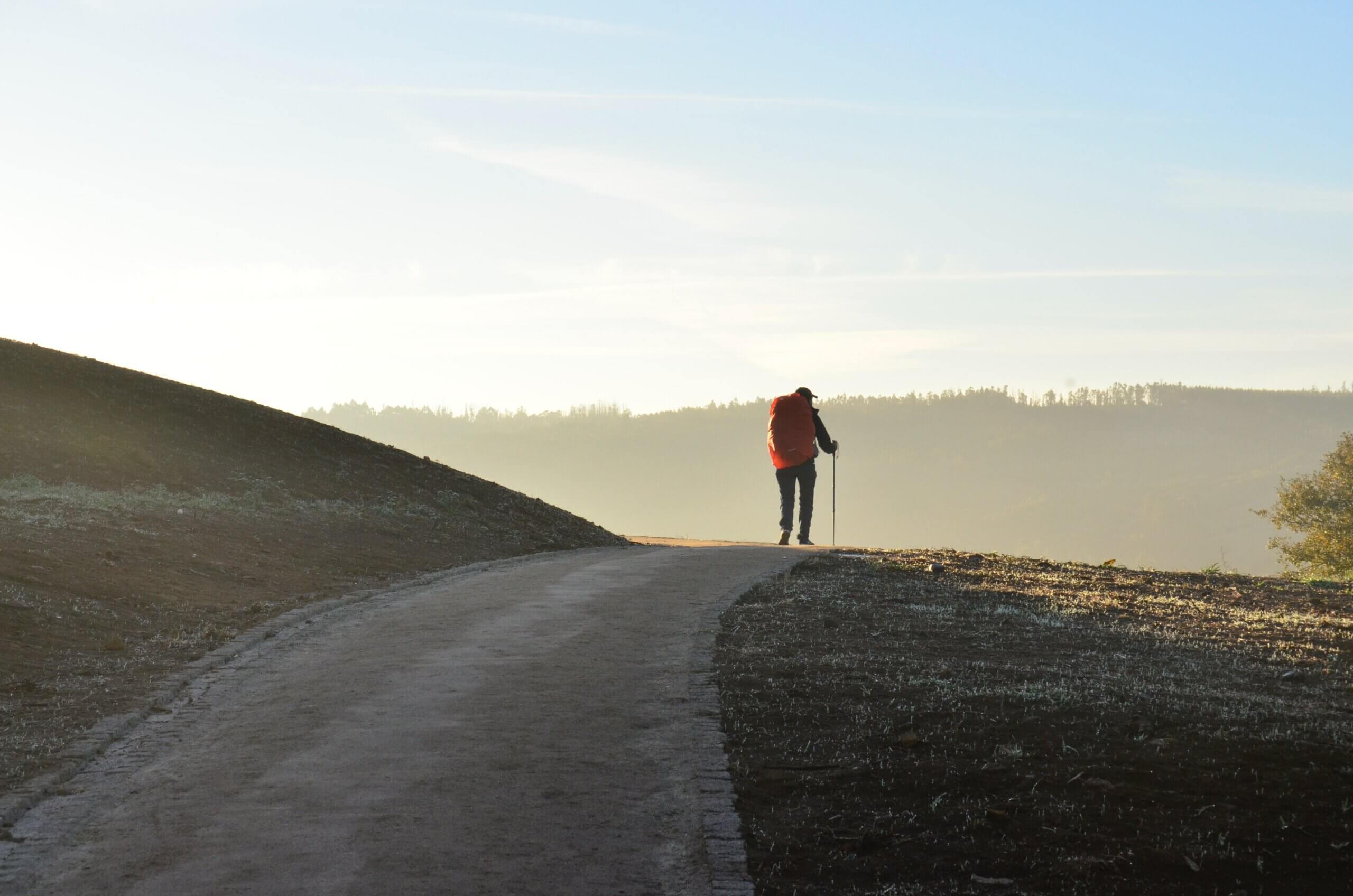
There are several alternative routes, including the Camino del Norte, which follows the Atlantic coast and takes you along the ocean from Irún in the Basque Country over 875 kilometres, likewise to Compostela. That was my route. It may sound trite, but back then I knew intuitively what would prove true during the journey: sometimes you have to leave in order to arrive.

Meditative hikes – Smartphone off
After landing in Spain and checking in for the first time, I switched off my smartphone. Relief. For a long time I hadn’t even been aware that I was using my phone mindlessly. By that I mainly mean unconscious use, where you constantly look at your smartphone because you’re afraid of missing something you simply mustn’t miss. The fact that this something usually doesn’t exist makes no difference. You’re blind to it. In research, as I would later read, this phenomenon is called undirected smartphone use.
Keep it analogue became my new motto. Instead of Google Maps, I found my way with a small red hiking guide that fitted in my trouser pocket, and I captured the most beautiful moments not with my smartphone but with my almost thirty-year-old analogue SLR camera. Some people probably took me for a hipster. But that didn’t matter.
The more effort it takes to take a photo, the more care and patience you’ll put into capturing it. And the more you’ll savour the moment of taking it, pausing. That was my mindful photography. I won’t hide the fact that, in doing so, I forgot everything else around me and was completely in the moment, lingering over the focusing before I pressed the shutter.
Meditative hikes – Mindful eating by the sea
And so the hiking days passed, and what used to be important lost its weight, while what had been less important gained in significance. Food, for example. Before the hike, I ate to fill myself up. Food was a means to an end – staying productive. Hiking reminded me to see eating as an end in itself. And because the hostels had kitchens, I started thinking about my evening meals.
I took inspiration from the Spanish cuisine I encountered at lunchtime. I could have gone to restaurants in the evenings too, but why not treat cooking as a form of meditation for once? And it tasted good. I would sit down somewhere outside the hostel with my food. The sea was always somehow within sight and earshot, as I ate after it had already got dark.
Before the first bite, I closed my eyes, moved my fork into the plate, tried to pick up as little as possible and, with my eyes still closed, brought the fork to my nose first. I stayed there for a few breaths. Only then did I open my mouth and take in the food. But even then I waited before I started chewing. Only then did I chew – for longer than usual and more slowly than normal. Admittedly, that sounds pretty exhausting and weird. And to be honest, it was the first few times, but after that this way of mindful eating became a real pleasure.
If you’re interested not only in meditative hikes but also in meditating in the mountains, have a read of our article on the subject!
Meditative hikes – Annoying fellow hikers
And then there were my fellow hikers. My working life is full of social contact, and while hiking I realised how much human interaction has shifted into the digital realm: whether it’s Facebook, WhatsApp or Telegram, Twitter or LinkedIn, there’s always something to check and people messaging you everywhere. Someone wants something from you, all the time. Switching off my smartphone solved that problem.
But there were still my fellow hikers – some of them annoying, and almost all of them German. In the cafés, the restaurants, the hostels, at the street markets of course, and pretty much everywhere else too. I was amazed at how hungry for conversation everyone was, as if they couldn’t bear their own company. Not even here. This isn’t meant as a plea against social contact, but time for myself always means time alone with myself, too.
I soon noticed that it wasn’t only the others’ curiosity that made them strike up conversations with me, but also the curiosity my fellow hikers perceived in me. Now, curiosity is nothing bad – quite the opposite – but sometimes it’s unnecessary. Especially when you want to free yourself.
Meditative hikes
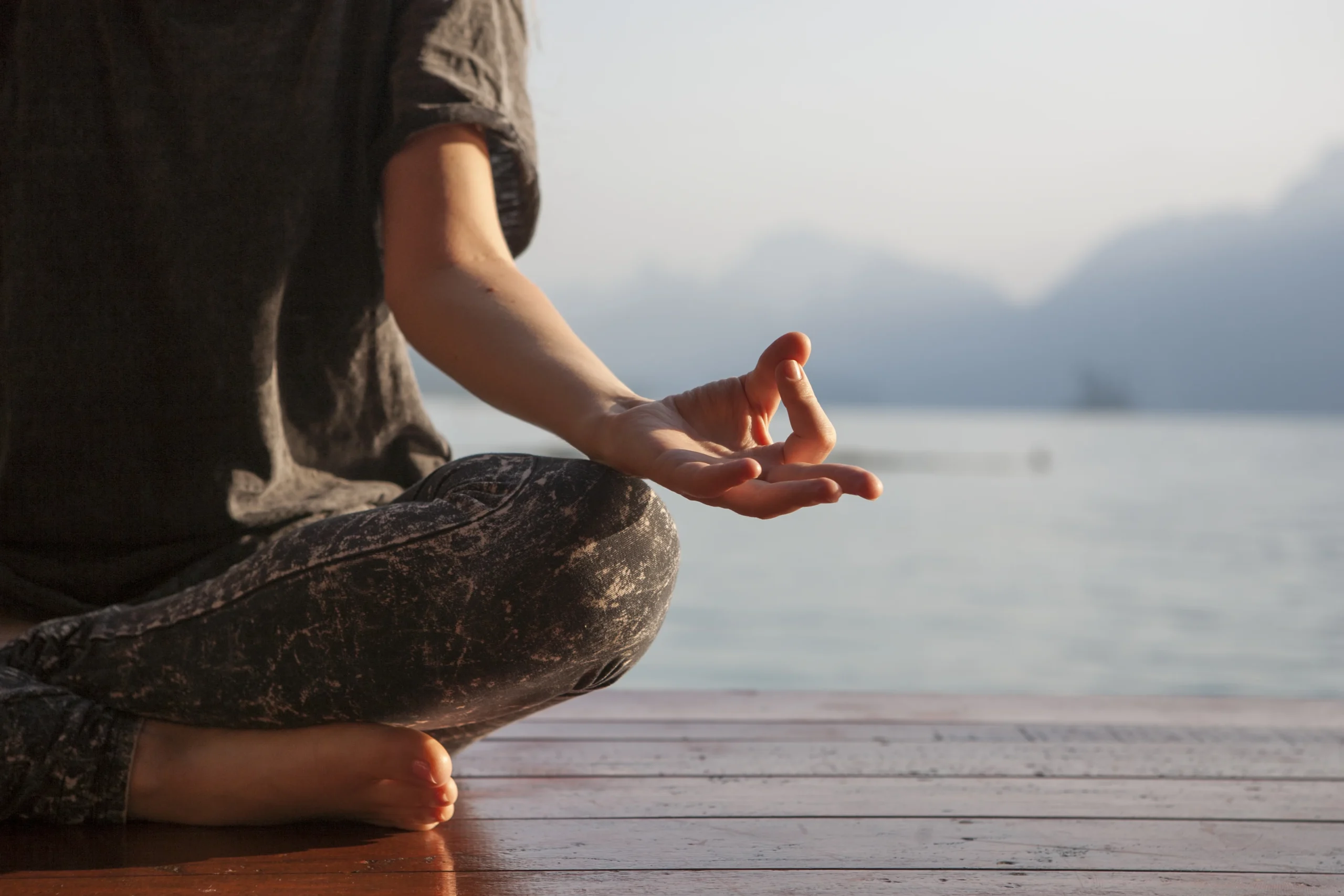
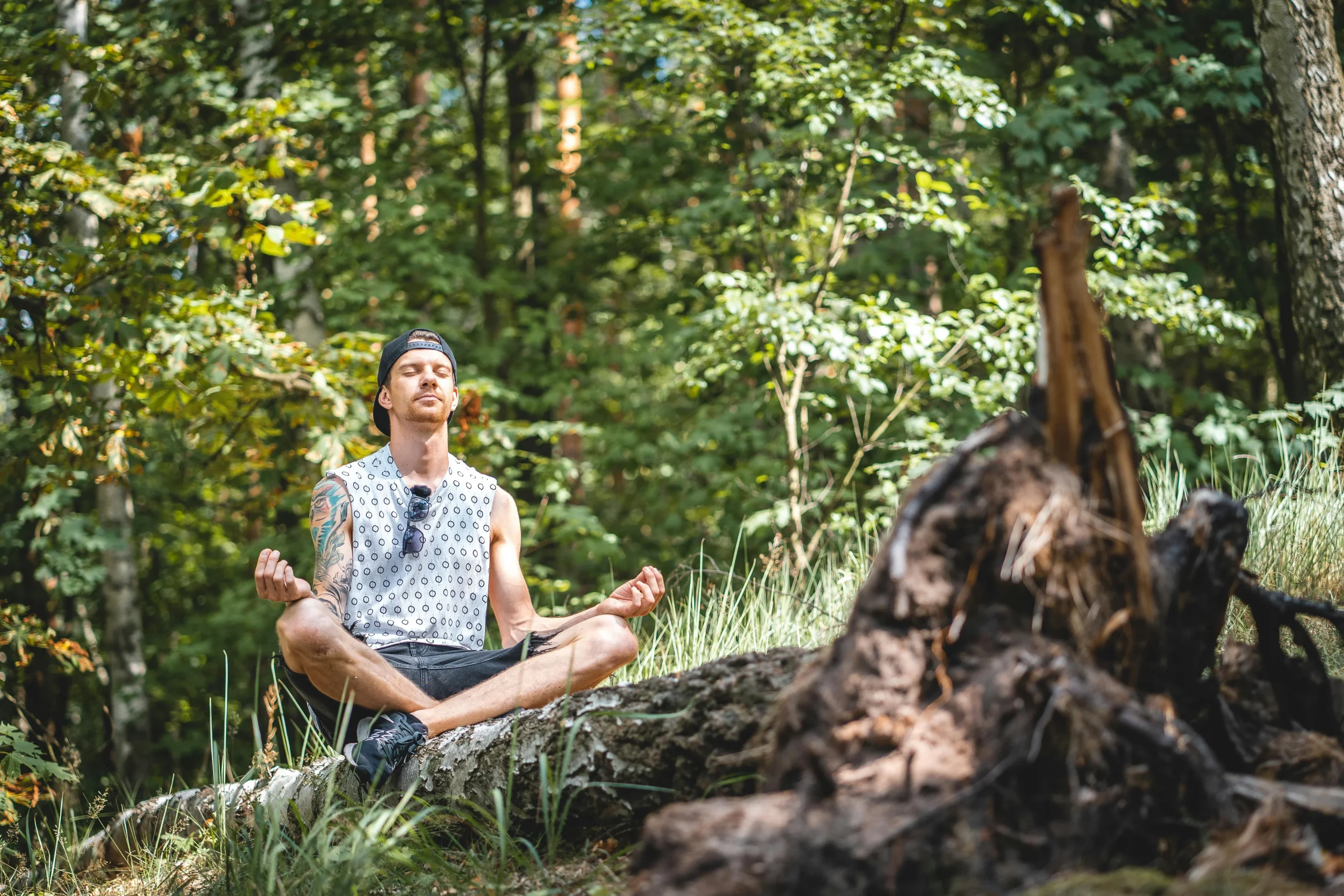
This is where the meditative hikes helped me. I had a rough idea of what to do: I’d watched the odd video about it, tried out an app once and read a few short pieces on meditation. So I resolved to take a fifteen-minute meditation break every five kilometres. Once I’d settled into position, I turned my attention to my breathing. Breathing in, I counted to four, held my breath until six, breathed out until ten and then held my breath again until twelve. Then I began breathing in again at one.
At some point the counting stops too, and you simply breathe, your thoughts drifting past you like gentle waves. The feeling of vitality at the end of a session is hard to describe, but I’ll try it like this: suddenly my annoying fellow hikers weren’t so annoying any more, and our conversations quickly gained depth and genuine warmth. I think this kind of human connection could be described quite well as a slower, more mindful way of being together – one that meditative hikes support really well.
Meditative hikes – Practising mindfulness in everyday life
The days fly by when you’re hiking. Too fast. And before you know it, the phone is ringing again, the messages are trickling in and you’re checking your personal and work email accounts. Even though a lot of it overwhelmed me at first, on a still unconscious level I knew that I was more grounded and calmer. What matters is integrating mindfulness and meditation practices into your normal everyday life.
When you’re travelling, that’s no problem, but at home you’re caught up in the daily grind – and on top of that you’re supposed to practise mindfulness and meditation? Sounds like more stress at first! And of course there’s some truth in that. After all, you first have to learn these practices – meditating and a mindful way of being. This path can be bumpy, too.
But which path isn’t?
Has this article on meditative hikes sparked your interest? Take a look at our blog and let yourself be inspired by more fascinating and informative posts on yoga and meditation as well as mindfulness. Perhaps you now fancy a guided meditation to start practising mindfulness straight away?
Deepen your meditation practice with Mindfulife
Meditation can be more than a short break in your everyday life. If you would like to understand more deeply how meditation works, how to build a steady practice of your own and how to guide others mindfully, our meditation teacher training is the next step. There you will not only get to know meditation in theory, but also develop more confidence, clarity and trust in your own practice.
Would you like to find out more about the training first? In our weekly webinar you will get an insight and learn more about what your path to becoming a meditation teacher could look like.
For regular support in your everyday life, you can also use our online meditation studio and join guided meditations flexibly via Eversports.
We look forward to accompanying you on your journey.
You can find more mindfulness inspiration on our channels too
References
Kerkeling, H. (2015). Ich bin dann mal weg: Meine Reise auf dem Jakobsweg (Ungekürzte Taschenbuchausgabe). Piper.