Letting Go and Relaxing: How Can Meditation Help?
Letting go and relaxing is not all that easy for many people in everyday life. Thoughts go round in circles, to-do lists are waiting and even in quiet moments the mind often stays busy. Meditation can help you gain a little distance again and, step by step, find more calm in your own body. In this exercise you will learn a simple method that can help you do just that: using your breath as an anchor to return gently to the present moment, again and again.

 · 4 min read
Letting go and relaxing is not all that easy for many people in everyday life. Thoughts go round in circles, to-do lists are waiting and even in quiet moments the mind often stays busy. Meditation can help you gain a little distance again and, step by step, find more calm in your own body. In this exercise you will learn a simple method that can help you do just that: using your breath as an anchor to return gently to the present moment, again and again.
Letting go and relaxing – why the breath is so powerful
Today the focus will once again be on your breath as an anchor, so that you can let go and relax during your meditation, even if thoughts or distractions occasionally carry you away. Always remember during your meditation: it is completely normal, and perfectly fine, to drift off now and then. Especially at the start of your journey, it may take a bit more practice to truly stay in the moment for a few minutes. With a little patience and the right tools, this will become easier and easier over time.
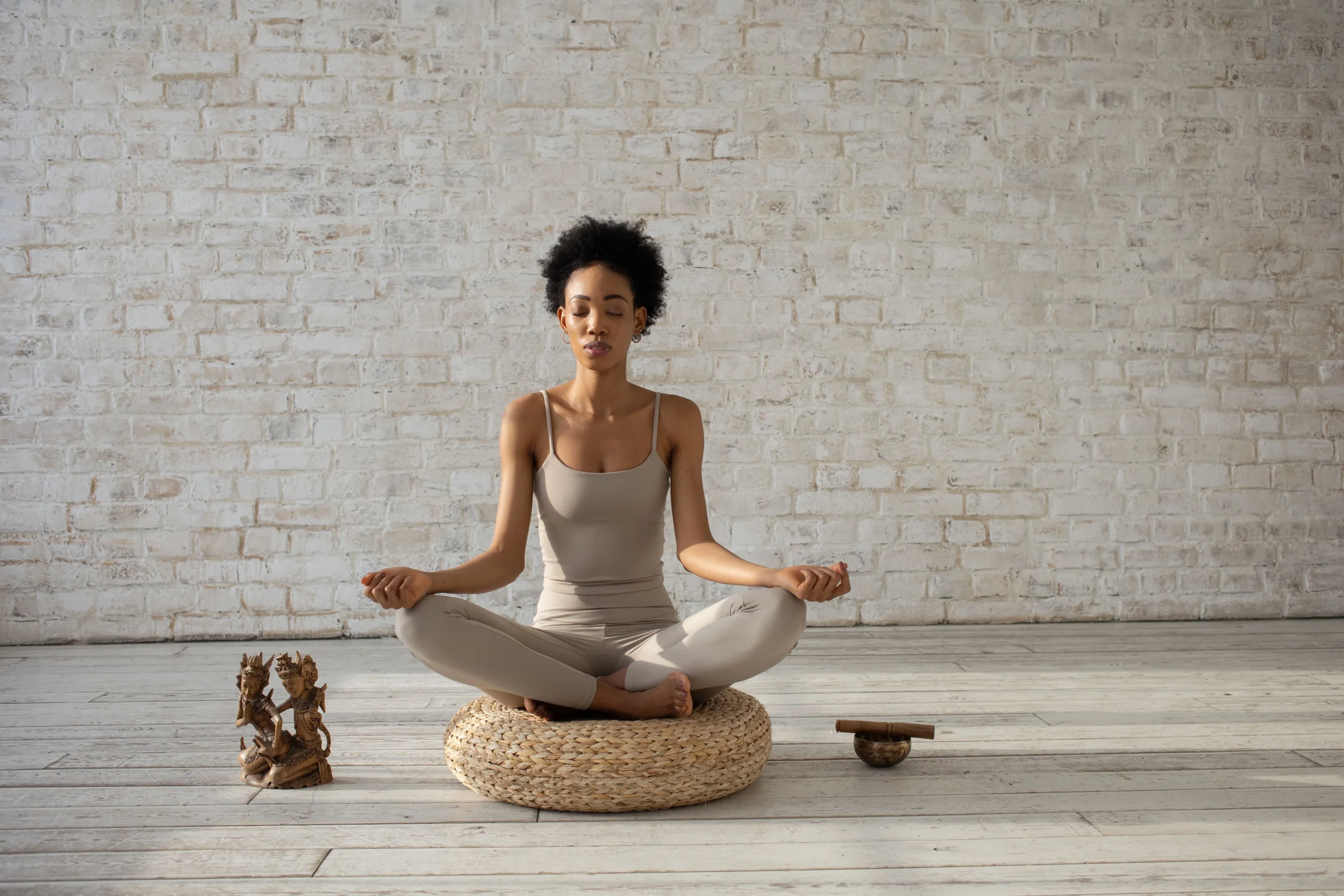
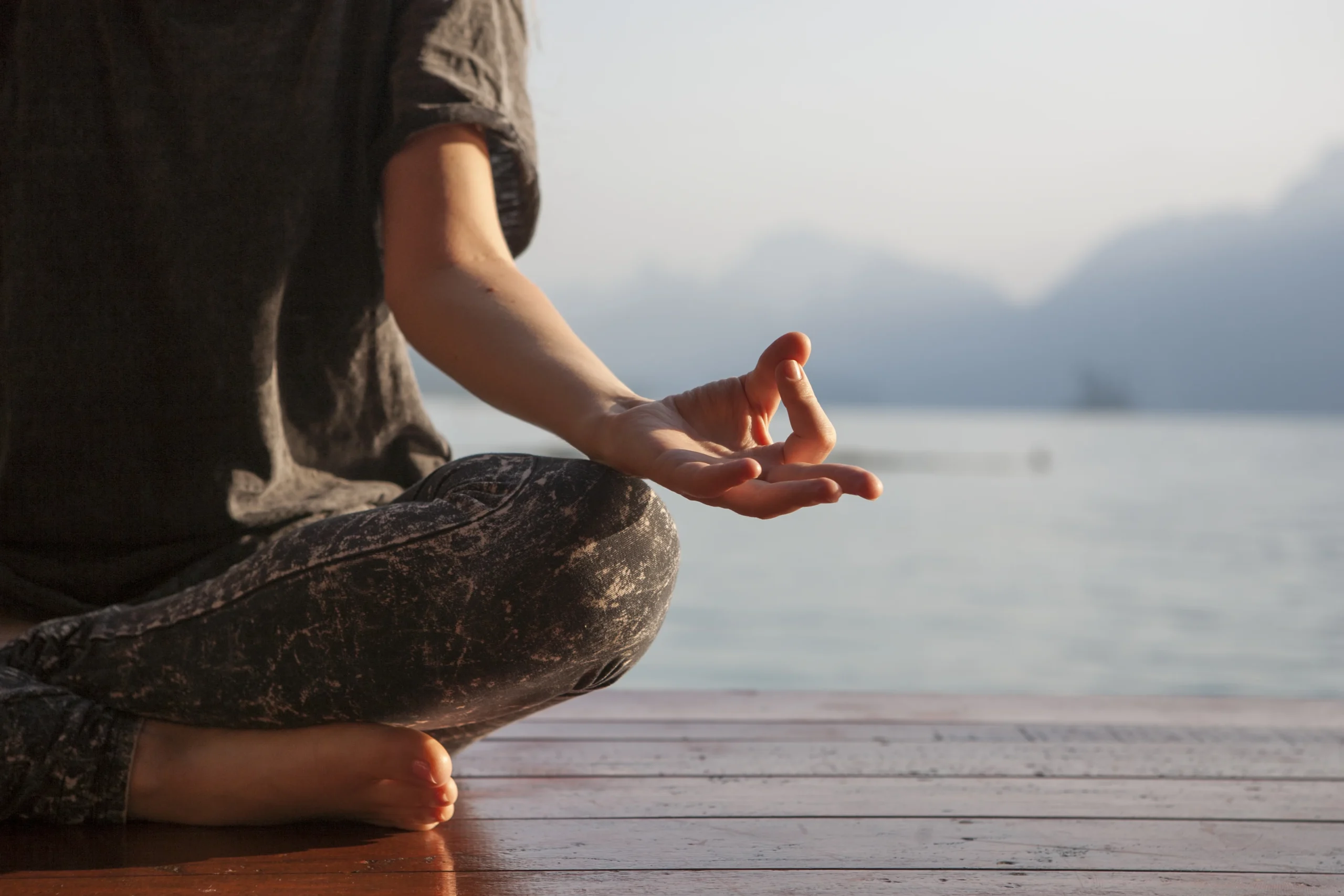
If you like, I warmly invite you to a short meditation exercise today as well, so that you can try letting go and relaxing for yourself. You don’t need to do anything special. Simply be here and take an upright posture, just as you practised last week.
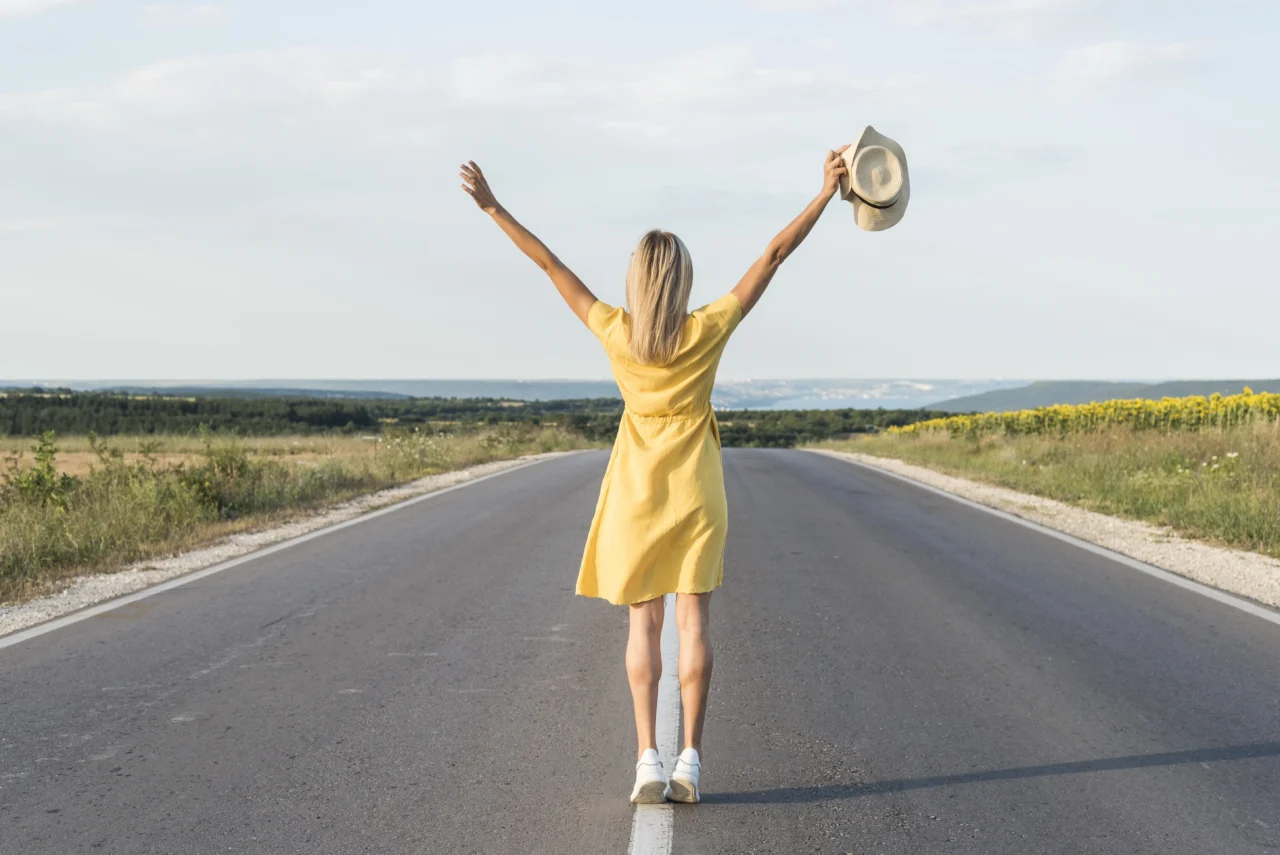
Guided meditation: returning to the breath with awareness
Before we begin, remind yourself: you have taken time to meditate. Everything else can wait for this moment. That is already the first and most important step towards letting go and relaxing.
First, feel your body, the surface you are sitting on, your posture. Release your face, forehead, eyebrows, jaw and shoulders – consciously letting go and relaxing.
Then, at your own pace, begin by tuning in to your body. Feel the contact with the surface you are sitting on and notice how your posture is right now. Then feel your face, especially your eyebrows and forehead. Allow both to relax. Feel your jaw and let the jaw muscles loosen a little too. Feel your shoulders, including the area around your shoulders and neck, and let your shoulders drop.
Then gently bring your attention to your breathing. Feel the breath flowing in and out through your nose. Take the next few moments to settle into your breath and be consciously present with it. When you breathe in, you become aware that you are breathing in. When you breathe out, you become aware of that too and know that you are breathing out.
Again and again, your mind will wander. That is completely normal and even a good thing. Your heart produces heartbeats, your lungs produce breaths and your mind produces thoughts. You don’t have to prevent this, nor stop it. But you don’t have to follow every thought either.
So when you notice that you have been somewhere else, let go and return to your breath. And then focus above all on your out-breath, while your breath comes and goes quite naturally, without you influencing it too much. And then use your out-breath to count your breaths. On the next out-breath, think to yourself: one. On the one after that, think: two. And so on, until you reach seven. Once you get there, start again with one.

And then let go of the breath counting again. Let your breath keep flowing and become aware once more of how you are sitting right now. Bring your awareness to your surroundings, the room you are in and the sounds that are present at this moment.
Now bring your attention back and open your eyes again.
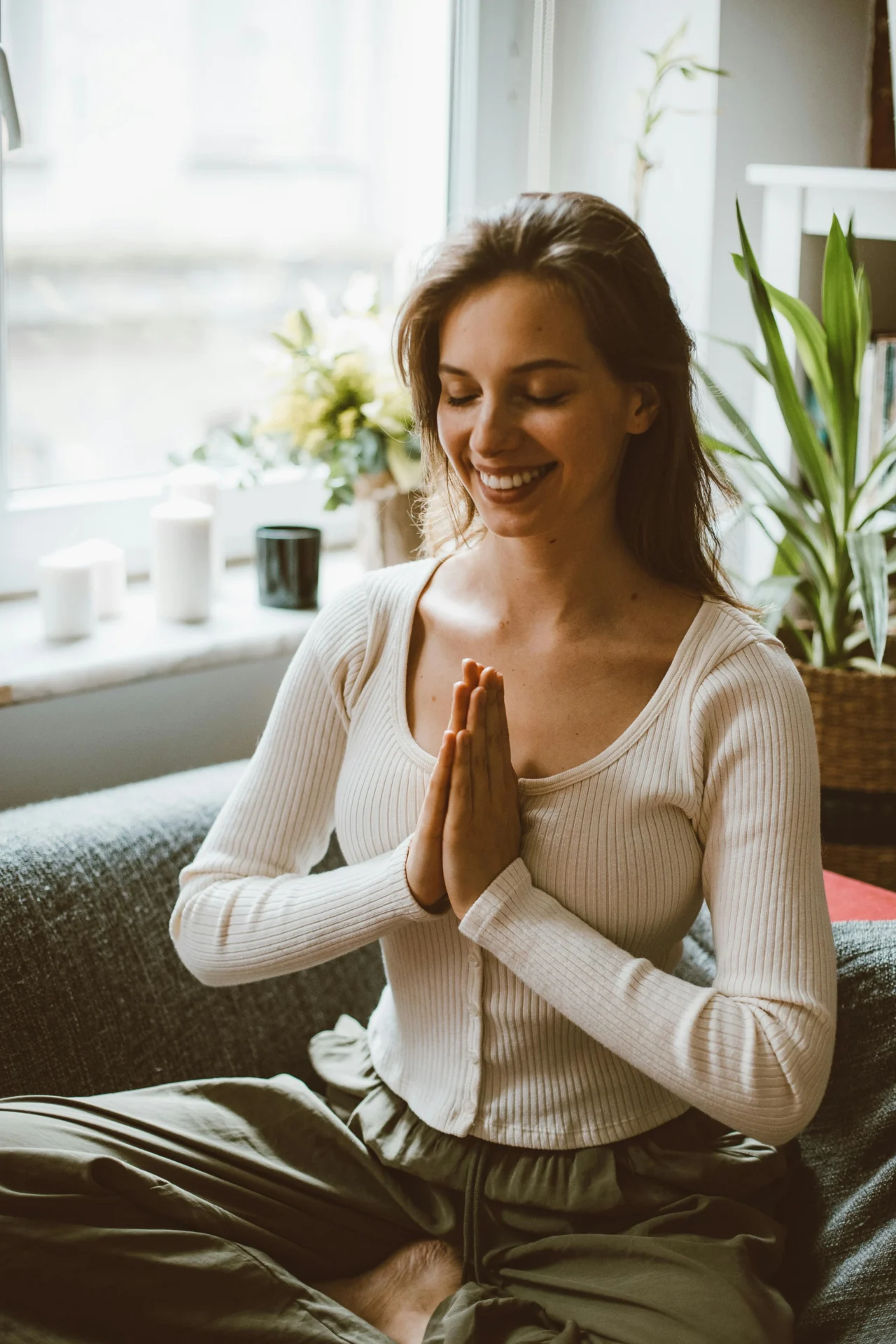
Reflecting without judgement: understanding meditation as a path
Take a moment to reflect on the exercise. How did your meditation feel? Was your mind calm or restless? Both are fine. Meditation is not a destination but a path on which you learn to let go and relax. Each time, you will feel a little more presence and serenity – right where you are. Be patient and kind to yourself, because every conscious breath is already a step in the right direction – towards letting go and relaxing.
Conclusion: letting go and relaxing
Letting go and relaxing is a skill we can develop bit by bit – and meditation with the breath as an anchor is a simple yet powerful way to get there. Every conscious breath gives you a moment of calm and helps you to be mindfully present in the here and now, without judging or suppressing your thoughts.
Try it for yourself: take a few minutes every day, sit upright, breathe consciously and keep gently returning to your breath. The more often you do this exercise, the easier it becomes to let go and truly relax in everyday life, too.
Start now: take a few minutes, sit upright, breathe in and out consciously, and keep returning to your breath. This is how you learn to let go and relax – step by step, breath by breath.
Meditation to follow along with
If you would like to deepen your meditation experience or get started straight away, you will find a wide range of guided meditations on the YouTube channel ‘Phil Pham Meditation’. This video on ‘letting go and relaxing’ fits this article particularly well. Feel free to give it a try.
Betty Schneider (B.Sc. Psychology)Meditate online with the Mindfulife online meditation studio
Deepen your meditation practice with Mindfulife
Meditation can be more than a short break in your everyday life. If you would like to understand more deeply how meditation works, how to build a steady practice of your own and how to guide others mindfully, our meditation teacher training is the next step. There you will not only get to know meditation in theory, but also develop more confidence, clarity and trust in your own practice.
Would you like to find out more about the training first? In our weekly webinar you will get an insight and learn more about what your path to becoming a meditation teacher could look like.
For regular support in your everyday life, you can also use our online meditation studio and join guided meditations flexibly via Eversports.
We look forward to accompanying you on your journey.
You can find more mindfulness inspiration on our channels too
References
Kushner, K., & Marnocha, M. (2008). Meditation and relaxation. In W. T. O’Donohue & N. A. Cummings (Eds.), Evidence-based adjunctive treatments (pp. 177–205). Academic Press.https://doi.org/10.1016/B978-012088520-6.50010-X
Deepak, K. K. (2019). Meditation induces physical relaxation and enhances cognition: A perplexing paradox. In Progress in Brain Research (Bd. 244, S. 85–99). Elsevier. https://doi.org/10.1016/bs.pbr.2018.10.030
Phil Pham. (2024, 10. September). 5 Minuten Meditation: Stress abbauen & sofort entspannen [Video]. YouTube. https://www.youtube.com/watch?v=c7s_QJjoNk8