Acupuncture – needling your way to mental health?
In our 45th podcast episode, we talk to Mr Beißner, Professor of Systems Neuroscience at Hannover Medical School, and explore how he came to study neuroscience. But what does that have to do with acupuncture? Mr Beißner gives us insights into his research on acupuncture.

 · 4 min read
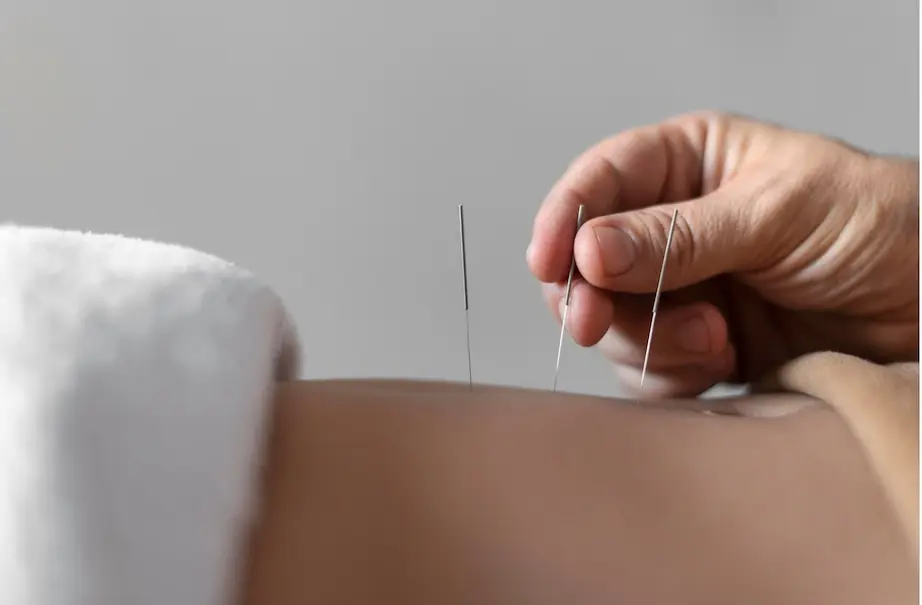
Among alternative healing methods, acupuncture is considered one of the most medically recognised treatments. How much of an effect does the Chinese practice of inserting needles have on our mind? And what does research say about how it works? We shed some light on it.
What is acupuncture?
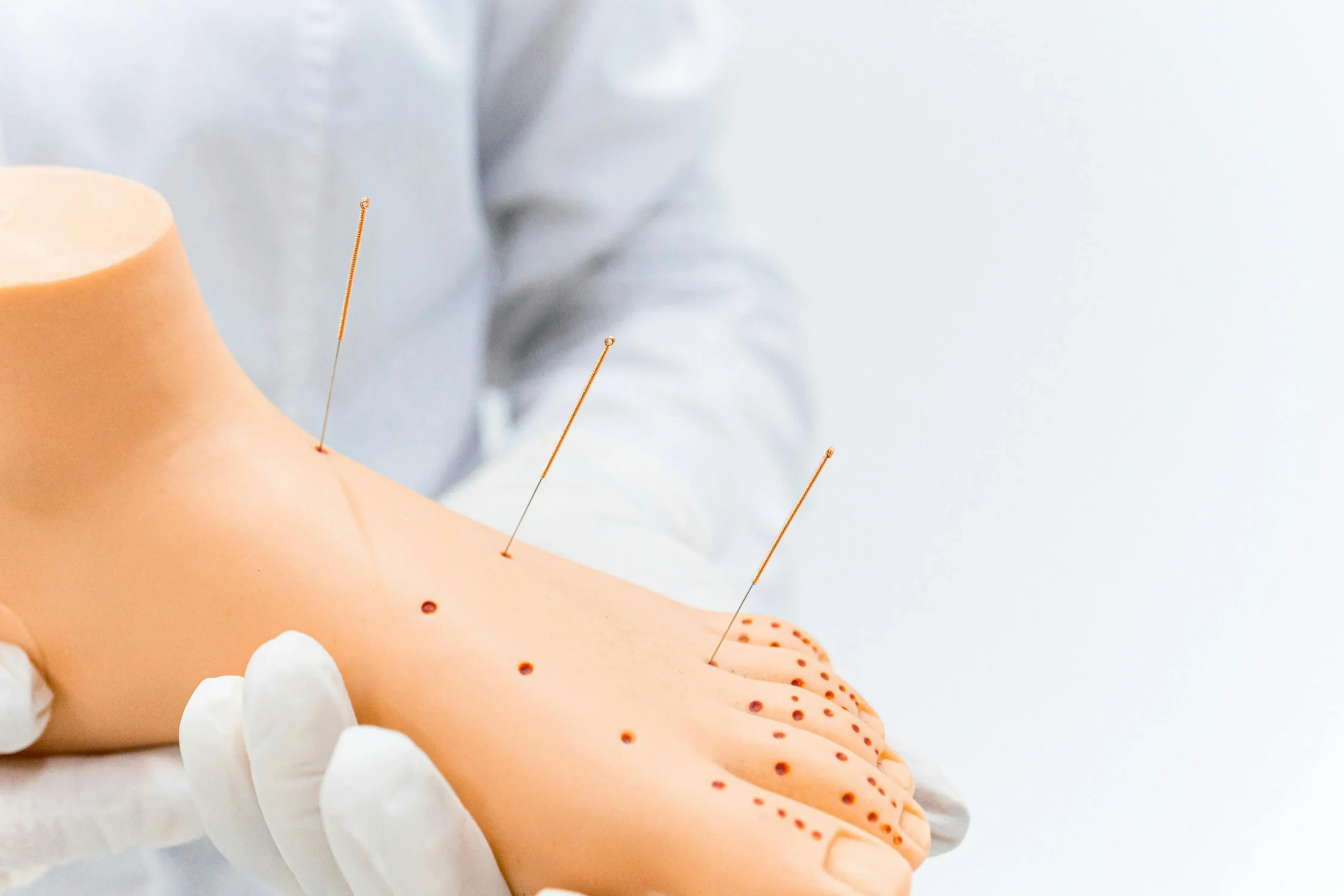
The term ‘acupuncture’ comes from Latin and is made up of the words ‘acus’, meaning needle, and ‘punctio’, meaning pricking. The method has its origins in traditional Chinese medicine. There, healers assumed that twelve energy channels, known as meridians, run through the body. More than 350 acupuncture points lie along these meridians. Fine needles inserted into these points are said to influence qi, the life energy, and release blockages.
Science has been unable to demonstrate the existence of either the twelve meridians or qi. However, the fact that the theoretical concept behind the method is now considered untenable does not mean that it doesn’t work. Chinese high priests discovered more or less by chance that wounds on one part of the body could relieve a symptom in a completely different part of the body. They found that even a needle prick had this effect. Based on their observations, they then continued to develop and systematise the technique. It was only afterwards, more as an explanation after the fact, that it was assumed the meridians must lie at the points they had found.
How does acupuncture work from today’s perspective?
Today we know that meridians are unlikely to be responsible for the effect of the needling. Rather, these points are home to nerve, fascia and muscle points that are highly sensitive to stimuli. The fine needles stimulate these points, and our body sends a signal to the spinal cord, where a response is then triggered. Depending on the acupuncture point, endorphins are released, the body’s own painkillers are set free or relaxation is initiated by activating the parasympathetic nervous system.
As with all other medical methods, acupuncture also has a placebo effect. A method works because we are convinced that it works. This effect has been demonstrated in many clinical studies. Meta-analyses even find that the placebo effect is just as large as the effect of the treatment itself. This is because the body activates its own mechanisms when we receive a medication or another treatment. For example, it releases endorphins and opioids, which relieve pain and increase wellbeing. This is why imaging studies have been able to show that brain regions change measurably when a placebo is administered.
Together, then, the stimulation of the point and the placebo effect lead to a measurable change in the human body. Studies show that the effect of acupuncture is stronger than a pure placebo effect. This suggests that it is genuinely effective, i.e. that the needling itself has an effect, independent of the placebo effect.
What psychological effects does acupuncture have?
The largest area of research, and probably also the main area of application, for this ancient Chinese healing method is the treatment of pain. But in recent years acupuncture has also been used more frequently in psychiatric treatment. For example, ear acupuncture is used on many addiction wards. It can reduce psychological symptoms of addiction such as restlessness, cravings and destabilisation. Although scientific proof of its effectiveness is lacking, clinics report very positive results.
Among mental health conditions, the healing method shows the greatest effectiveness for depression. In clinical studies, the largest effects were seen in combination with an antidepressant: the medication took effect more quickly and more reliably when those affected were also treated with acupuncture.
For other conditions such as sleep or anxiety disorders, studies also point to good effectiveness. Since acupuncture is also considered to have very few side effects, experts are calling for the method to be integrated more widely into everyday clinical practice in psychiatry. At present, however, there is often a shortage of trained specialists to do so.
Can I use acupuncture preventively?
In recent years, several studies have examined the extent to which acupuncture can be used to help people cope better with chronic stress . For example, during the coronavirus pandemic, researchers at the University of Greifswald were able to show that ear acupuncture effectively relieved anxiety and reduced stress symptoms among hospital staff.

Other studies show that acupuncture can reduce exam anxiety and lower blood pressure. There is evidence that the method can influence the responses of the sympathetic and parasympathetic nervous systems. These two systems control how relaxed we are and how strong our stress response is. Overall, then, there are some indications that acupuncture can help us deal better with chronic stress and at least minimise its consequences. However, its effectiveness is not yet considered clearly proven by science; further studies are needed for that.
Do I have to pay for acupuncture myself?
For some conditions, the effectiveness of acupuncture is considered sufficiently proven. This is the case, for example, for certain forms of back pain or knee problems. Here, statutory health insurance in Germany covers a certain number of treatments. Some health insurers also cover the costs in other cases or pay a subsidy, for example for other pain symptoms or for birth preparation. Importantly, the treatment must be carried out by a doctor with the relevant additional training for reimbursement to be possible.
As described above, acupuncture is used to treat psychological symptoms in some psychiatric clinics. Anyone wanting outpatient treatment, for example to relieve sleep problems or restlessness, usually has to pay for acupuncture themselves. In some cases, private health insurers pay for additional indications that statutory insurers do not cover.
edited on 20 November 2025
by Sarah B. (B.Sc. Psychology)
Deepen your meditation practice with Mindfulife
Meditation can be more than a short break in your everyday life. If you would like to understand more deeply how meditation works, how to build a steady practice of your own and how to guide others mindfully, our meditation teacher training is the next step. There you will not only get to know meditation in theory, but also develop more confidence, clarity and trust in your own practice.
Would you like to find out more about the training first? In our weekly webinar you will get an insight and learn more about what your path to becoming a meditation teacher could look like.
For regular support in your everyday life, you can also use our online meditation studio and join guided meditations flexibly via Eversports.
We look forward to accompanying you on your journey.
You can find more mindfulness inspiration on our channels too
References
Brinkhaus, B. (2007). Akupunktur bei Patienten mit arterieller Hypertonie. Deutsche Zeitschrift für Akupunktur, 50(3), 46-47.
Colling, C., Hofer, E.-M., & Musil, R. (2021). Akupunktur in der Psychiatrie – Chancen und Grenzen. Zeitschrift für Komplementärmedizin, 13, 36–40.
Feig, M. A. (2022). Ohrakupunktur zum Abbau von Stress und Ängsten bei Mitarbeitern des Gesundheitswesens. AkupunkturPraxis, 3(01), 52-57.
Gabriel, T. F., Dobos, G., & Dobos, G. (2023). Der Effekt der Akupunktur auf einen experimentellen Schmerzreiz. Duisburg-Essen Publications online, University of Duisburg-Essen, Germany.
Hai, Hong, ed. Acupuncture: Theories and Evidence. World Scientific, 2013.
Heine, H. (2006). Stress und Grundregulation–Wirkungsweise von Akupunktur und Neuraltherapie. Deutsche Zeitschrift für Akupunktur, 49(3), 26-31
Howick, J., Friedemann, C., Tsakok, M., Watson, R., Tsakok, T., Thomas, J., ... & Heneghan, C. (2013). Are treatments more effective than placebos? A systematic review and meta-analysis. PloS one, 8(5), e62599
Wager, T. D., & Atlas, L. Y. (2015). The neuroscience of placebo effects: connecting context, learning and health. Nature Reviews Neuroscience, 16, 403–418. https://doi.org/10.1038/nrn3976
Weidig, W. (2012). Akupunktur in Sucht und Psyche – ein Update. Deutsche Zeitschrift fuer Akupunktur, 55(3), 11–15.