Meditation posture: how should I sit?

 · 5 min read
Do you struggle to find the right posture when you meditate? Then this is the perfect article for you. We’ll give you some helpful tips to improve your meditation posture. Enjoy reading!
One of the first difficulties we come across when meditating is the posture we are supposed to adopt. Most people prefer a seated meditation posture. Often, however, we get so caught up during meditation in how we are sitting that we never actually get round to meditating. That’s why it’s worth clearing up any uncertainties beforehand.
When it comes to meditation posture, lots of questions can come up: Is it OK to sit on a chair? Can you meditate lying down? Am I allowed to lean back? What do I do with my hands? Do I meditate with my eyes open or closed? Do I have to be able to sit in the lotus position?
There are many kinds of meditation: walking meditation, qigong, yoga and so on. In this article, we’d like to focus on sitting meditation and take a closer look at the corresponding meditation posture. Other blog posts have already covered topics such as mindfulness, the effects of meditation or mindful eating – so if you’re interested in those, feel free to read on!
Do I have to stay completely still when meditating?
As a general rule: even once you’ve chosen a meditation posture, you don’t necessarily have to stay in that position. If your leg goes to sleep, you can put up with it for a while, but you shouldn’t endure pain. Your posture is meant to support your meditation and not distract you further. So if you ever need to change position, you are of course free to do so. Try to shift your position slowly and mindfully, especially if you are meditating together with other people whom you don’t want to disturb.
Which meditation posture works best?
As for the meditation posture itself, it should be comfortable enough for you to be mentally relaxed, but not so comfortable that you become drowsy. That’s why it’s best to meditate sitting up rather than lying down. For the same reason, we recommend not leaning back during meditation if you can avoid it.
Meditation posture on a chair
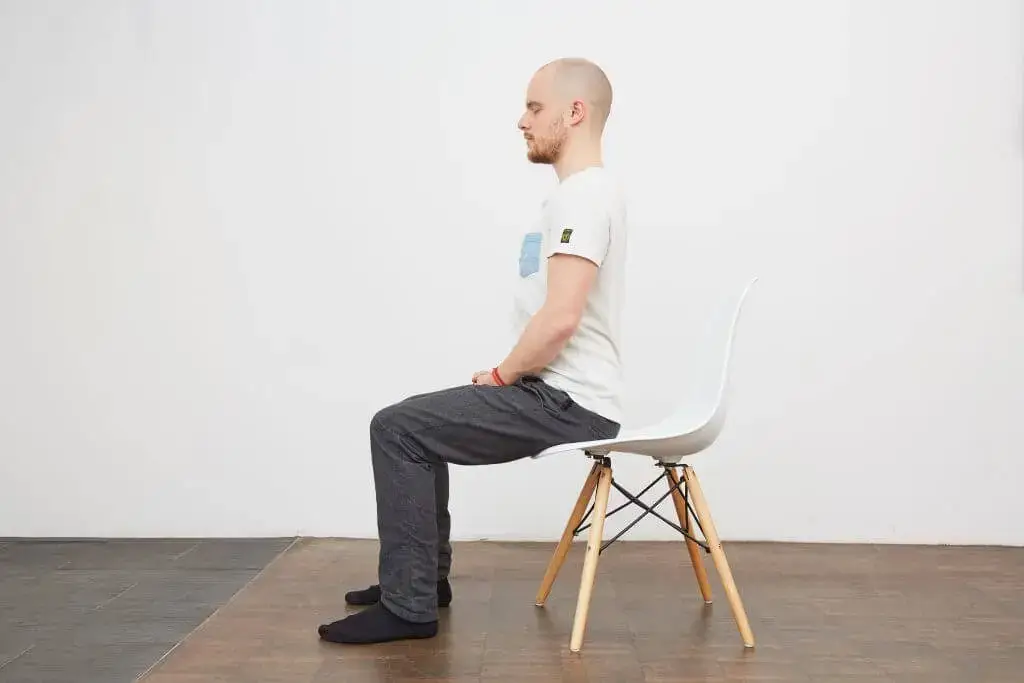
If you’d like to meditate on a chair and take the previous tips to heart, this means you should shuffle forward to the front edge of the seat. Your back is a good distance away from the backrest and your pelvis tilts slightly forward. This way your spine straightens automatically and almost supports itself, which makes it easier to stay upright. Both feet are parallel and placed flat on the floor. This gives you a stable meditation posture and makes it easier to focus your attention on the meditation.
Meditation posture on the floor
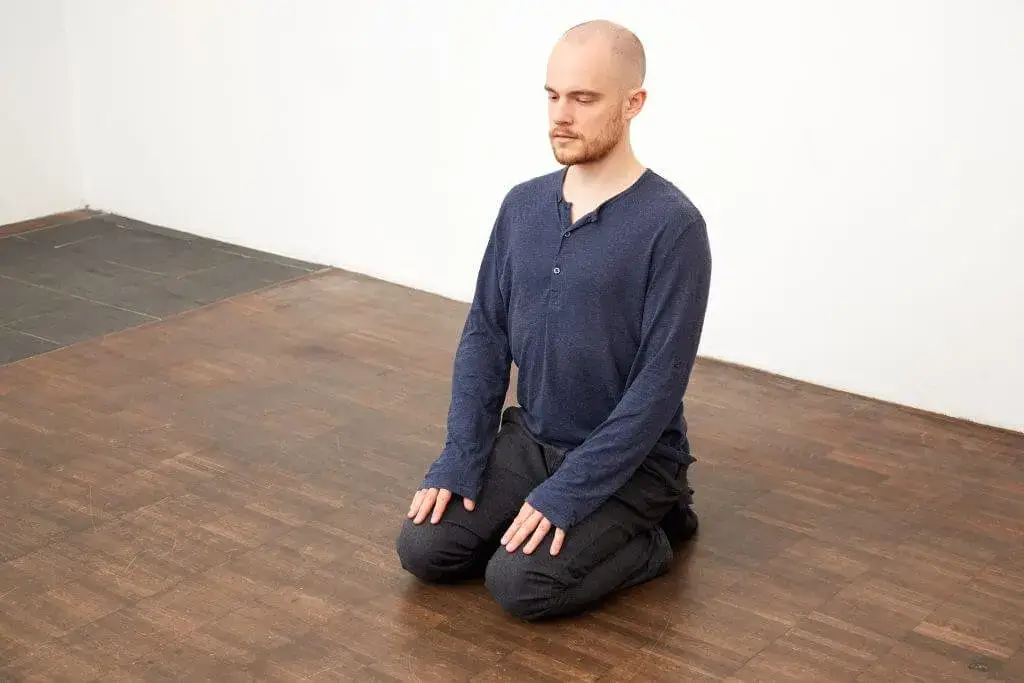
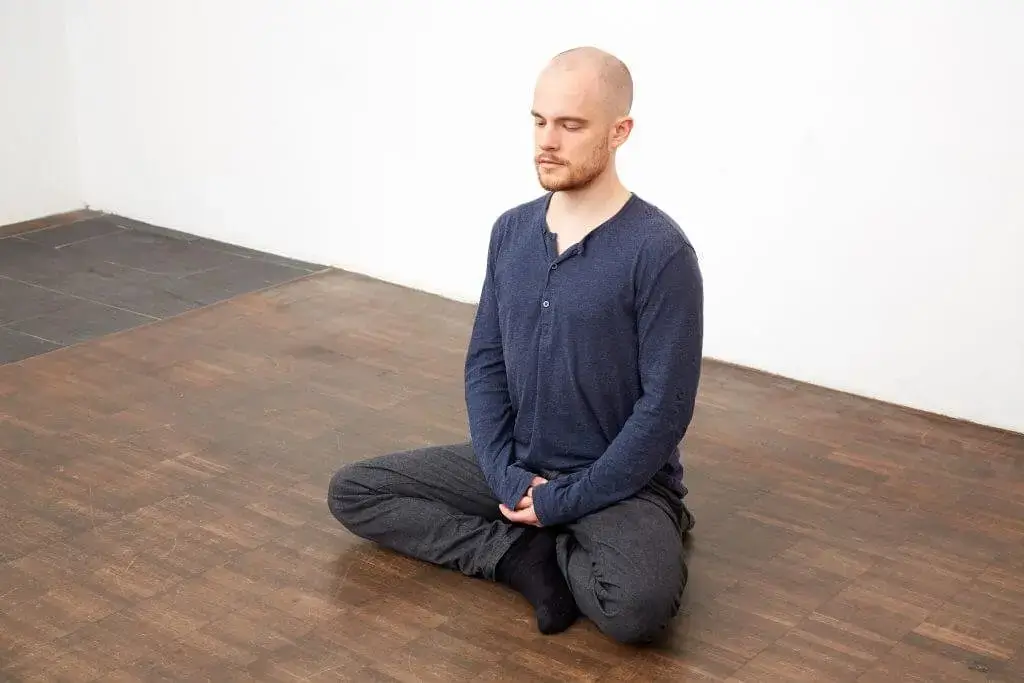
If you’d like to sit on the floor, the same basic principles apply as when sitting on a chair. You should find an upright posture in which your pelvis tilts slightly forward. This allows your spine to straighten optimally – and to stay upright without much effort.
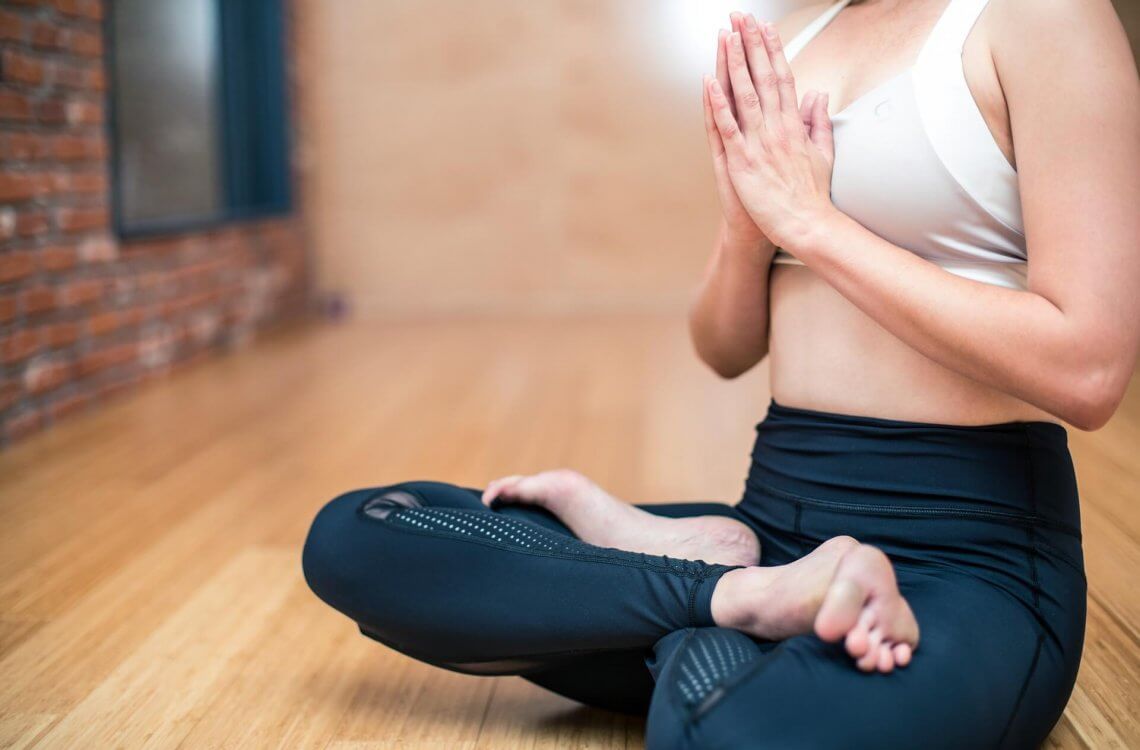
On the floor, there are essentially two options for your meditation posture: you either sit in a variation of the kneeling position or in a cross-legged position. In the kneeling position, your shins rest on the floor and your thighs rest on your calves. There are various cross-legged positions (e.g. the lotus position or the simple cross-legged position). Which floor position you choose doesn’t really matter. What’s important is that you sit stably and that your position supports your attention.
You may need a prop to find your ideal position. If you have knee problems, you can cushion your knees with a soft blanket in the kneeling position. In both variations (kneeling or cross-legged), you can also raise your pelvis with a meditation cushion. This helps you feel your sitting bones better and straighten your spine further. Many meditation cushions let you remove some of the filling so you can adjust the cushion to your preferred height.
What do I do with my hands?
Once your seat is stable and as comfortable as possible, and your spine is relieved and upright, the question of what to do with your hands arises. Various spiritual traditions use so-called mudras (hand positions) to pursue particular goals in meditation (e.g. strengthening concentration or increasing energy).
One of the best-known hand positions is the mudra in which the thumb and index finger touch and the other three fingers are extended. The world of mudras is vast, and if you’re interested, you’re very welcome to dive deeper here. In this article, however, we’d like to keep things to simply resting your hands.
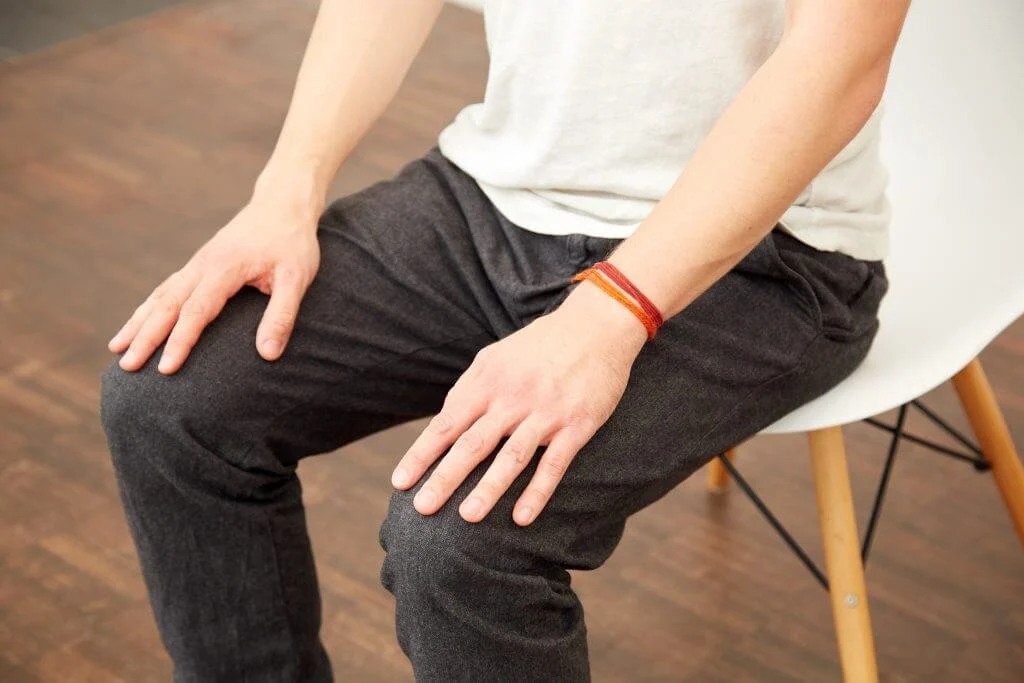
Here, too, you can try out what feels good for you. You can rest your hands in your lap, on your thighs or on your knees. Your palms can face up or down.
Should I close my eyes when meditating?
Your head is in line with your spine and slightly lowered. Your mouth is slightly open and your jaw muscles are loose. We try to keep the face relaxed – eyebrows and forehead completely soft. As for your eyes, there are two options: they are either closed or slightly open. Beginners in particular are easily distracted and therefore often prefer to meditate with their eyes closed. This not only reduces distraction but also ‘sharpens’ the other senses. For example, it becomes easier to perceive the breath, which is often used as the object of meditation.
Especially once you have a bit more practice, it’s a good idea to meditate with your eyes slightly open. That way, you don’t draw a line between meditation and the ‘outside world’. In the long run, it becomes easier to carry the benefits of meditation over into everyday life and to maintain a mindful attitude throughout the day.
If you decide to meditate with your eyes slightly open, your gaze is slightly lowered. Your eyes don’t focus on anything but gaze into empty space. What matters here is that your gaze is relaxed. So it’s no problem if your eyes do sometimes focus on the floor in front of you. Your attention, however, shouldn’t be on your gaze but should remain on the object of meditation, often the breath.
Why you can’t get it wrong
As mentioned above, there’s no right or wrong when it comes to meditation posture. Try out what suits you best. This often varies from day to day – what works one day may not be the right position for you on another. The most important thing is that your position helps you to be relaxed and focused. This is exactly the criterion you should use to decide how to sit when meditating, so that you need to worry less about your meditation posture and can be present more easily.
Further reading
If you’d like to delve deeper into meditation postures and hand positions, we have just the right article for you on the topic of mudras. We hope you enjoy reading it and look forward to seeing you there!
Deepen your meditation practice with Mindfulife
Meditation can be more than a short break in your everyday life. If you would like to understand more deeply how meditation works, how to build a steady practice of your own and how to guide others mindfully, our meditation teacher training is the next step. There you will not only get to know meditation in theory, but also develop more confidence, clarity and trust in your own practice.
Would you like to find out more about the training first? In our weekly webinar you will get an insight and learn more about what your path to becoming a meditation teacher could look like.
For regular support in your everyday life, you can also use our online meditation studio and join guided meditations flexibly via Eversports.
We look forward to accompanying you on your journey.
You can find more mindfulness inspiration on our channels too
References
Melville, G. W., Chang, D., Colagiuri, B., Marshall, P. W., & Cheema, B. S. (2012). Fifteen minutes of chair-based yoga postures or guided meditation performed in the office can elicit a relaxation response. Evidence-Based Complementary and Alternative Medicine, 2012, Article 501986. https://doi.org/10.1155/2012/501986
Jo, SH. (2019). How to Sit in Sitting Meditation. Mindfulness 10, 2468–2471. https://doi.org/10.1007/s12671-019-01189-5
Jones, C. (2016). An investigation into the role of body posture in mindfulness practice (Doctoral dissertation, Canterbury Christ Church University, Salomons Centre for Applied Psychology).https://repository.canterbury.ac.uk/item/87wx3/an-investigation-into-the-role-of-body-posture-in-mindfulness-practice
Takayama, A., & Sekiya, H. (2023). Effects of various sitting and standing postures on arousal and valence. PLOS ONE, 18(6), e0286720. https://doi.org/10.1371/journal.pone.0286720
Lin, K., & Broadbent, E. (2023). Understanding Embodied Effects of Posture: A Qualitative Study. Psych, 5(2), 447-460. https://doi.org/10.3390/psych5020030