The Power of Visualisation – Letting Go, Accepting and Feeling Lighter Inside?

 · 4 min read
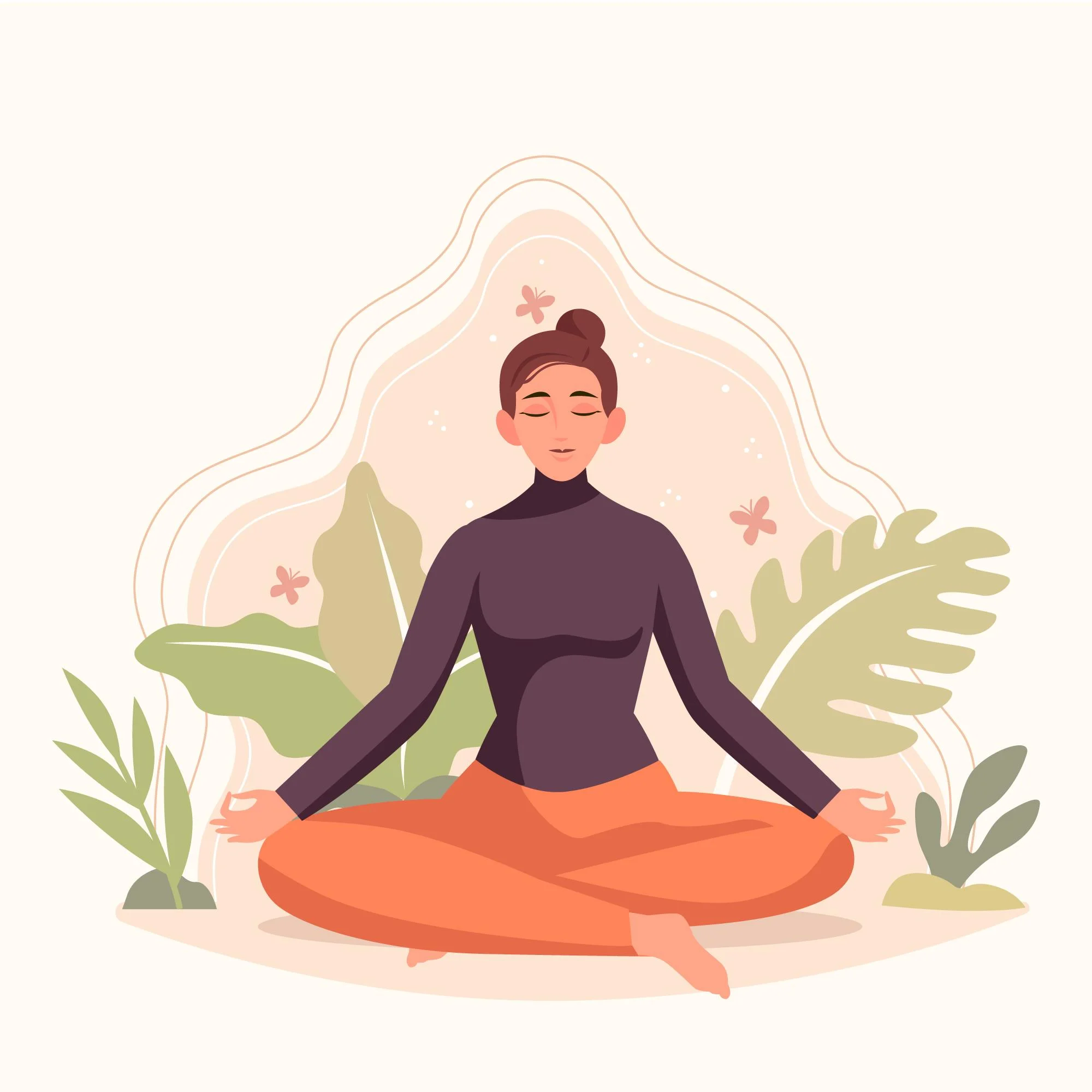
In today’s YouTube video, Phil takes you through a breathing visualisation on the theme of letting go and accepting.
He guides you through the exercise step by step: with every out-breath, dark smoke leaves your body, and with every in-breath, white light flows into you.
But behind this seemingly simple image lies far more than just a pleasant meditation. Visualisation is not an ‘esoteric add-on’ but a well-researched psychological tool that reaches deep into our perception, emotion regulation and stress processing.
This article goes deeper – into the science behind the practice and into the inner attitude that visualisation can genuinely change.
Why is letting go so hard?
We humans are masters at holding on.
To thoughts.
To old hurts.
To ideas of how things should have turned out.
From a neuropsychological point of view, this makes sense: in evolutionary terms, our brain is geared towards storing dangers. Negative experiences are processed more strongly than positive ones – a phenomenon known as the ‘negativity bias’.
So if we carry ‘heavy smoke’ around inside us, it is often not because we are weak – but because our system has learnt to protect itself.

And this is exactly where mindfulness comes in.
A scientific study showed that mindfulness training contributes significantly to reducing stress, anxiety and depressive symptoms. Particularly relevant: the effect appears to be closely linked to improved emotion regulation.
So letting go is not pushing things away.
It is relearning how to deal with inner states – and visualisation supports this process in a unique way.
What does psychology tell us about visualisation?
Visualisation uses our brain’s ability to process imagined images in a similar way to real experiences. Studies on mental simulation show that visual imagery activates neural networks that are also involved in real perception.
This means:
when you imagine dark smoke leaving your body, your nervous system does not respond with ‘That’s just fantasy’, but with a genuine physiological response.
At the same time, combining breathing and imagery strengthens parasympathetic activity – the part of the nervous system responsible for relaxation.
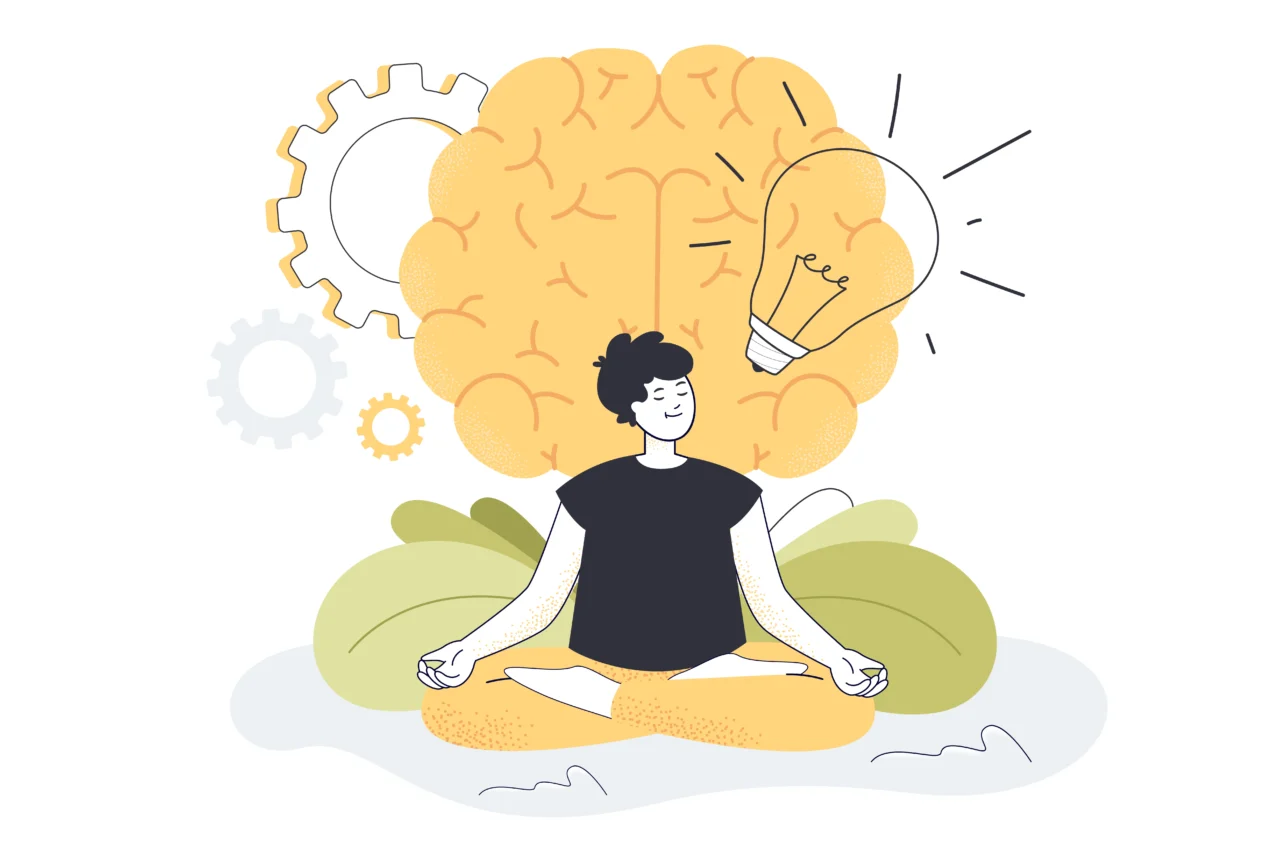
One analysis showed that mindfulness-based interventions have a positive effect on biological stress markers – including cortisol and inflammatory markers.
In other words:
the practice is not only mentally calming.
It works on a physical level.
Black smoke and white light – what happens symbolically?
The YouTube meditation works with two central images:
Breathing out = dark smoke
Breathing in = white light
Symbolically, an inner process of exchange takes place here.
The dark smoke represents:
- old hurts
- unresolved conflicts
- self-doubt
- stress
- inner heaviness
And it has two qualities:
- It only moves outwards.
- It dissolves immediately.
This second point is crucial. Many people unconsciously believe: ‘Even if I let go, it will still be there.’
But the visualisation trains exactly the opposite: ‘What you breathe out is allowed to dissolve.’
The white light, on the other hand, symbolises:
- trust
- stability
- compassion
- inner calm
- clarity
From a psychological perspective, this kind of imagery encourages a form of cognitive reappraisal (reappraisal). Instead of merely noticing stress, you actively shape your inner response to it.
One study showed that mindfulness-based techniques can amplify positive emotions and thereby dampen stress responses.
So you are not replacing ‘bad things with wishful thinking’.
You are training your nervous system to regulate itself.
Does letting go mean indifference?
A common misconception: letting go means forgetting. Letting go means being weak. Letting go means it ‘didn’t matter’.
But in reality, letting go means:
I choose to stop fighting against something that has already happened.
Acceptance-based approaches (such as those used in ACT – Acceptance and Commitment Therapy) show that psychological flexibility is one of the strongest predictors of mental health.
Psychological flexibility means allowing yourself to feel your feelings and being able to observe your thoughts. That is exactly what the breathing visualisation trains.
You observe.
You breathe out.
You let go.
You breathe in.
You accept.
What happens in the long term?
If you repeat this practice regularly, something subtle – yet profound – changes.
You no longer go through life with the underlying feeling that you constantly have to defend yourself.
Instead, you develop:
- more inner spaciousness
- more self-compassion
- less identification with distressing thoughts
Research has found that self-compassion is clearly associated with lower levels of depression, anxiety and stress.
And that is exactly what happens when you inwardly allow yourself:
‘I may let go.’
‘I may accept.’
Not because everything is perfect.
But because you no longer have to hold on to everything.
Back to the practice
In the YouTube video, Phil guides you through this breathing visualisation in practice.
If you like, use this article as background – and the video as lived experience.
Because knowledge alone changes little. Experience changes everything.
Perhaps today you can let go of something you have been carrying for far too long.
And perhaps you can accept something that has been waiting for you all along.
Breathe out.
Let go.
Breathe in.
Allow yourself light.
Miriam Sara Senf (Psychology student)
Deepen your meditation practice with Mindfulife
Meditation can be more than a short break in your everyday life. If you would like to understand more deeply how meditation works, how to build a steady practice of your own and how to guide others mindfully, our meditation teacher training is the next step. There you will not only get to know meditation in theory, but also develop more confidence, clarity and trust in your own practice.
Would you like to find out more about the training first? In our weekly webinar you will get an insight and learn more about what your path to becoming a meditation teacher could look like.
For regular support in your everyday life, you can also use our online meditation studio and join guided meditations flexibly via Eversports.
We look forward to accompanying you on your journey.
You can find more mindfulness inspiration on our channels too
References
Baumeister, R. F., Bratslavsky, E., Finkenauer, C., & Vohs, K. D. (2001). Bad is stronger than good. Review of General Psychology, 5(4), 323–370. https://doi.org/10.1037/1089-2680.5.4.323
Ferrari, M., Hunt, C., Harrysunker, A., Abbott, M. J., Beath, A. P., & Einstein, D. A. (2019). Self-compassion interventions and psychosocial outcomes: A meta-analysis. Mindfulness, 10, 1455–1473. https://doi.org/10.1007/s12671-019-01134-6
Garland, E. L., Farb, N. A., Goldin, P. R., & Fredrickson, B. L. (2015). Mindfulness broadens awareness and builds eudaimonic meaning. Psychological Inquiry, 26(4), 293–314. https://doi.org/10.1080/1047840X.2015.1064294
Gu, J., Strauss, C., Bond, R., & Cavanagh, K. (2015). How do mindfulness-based cognitive therapy and mindfulness-based stress reduction improve mental health? A systematic review and meta-analysis. Clinical Psychology Review, 37, 1–12. https://doi.org/10.1016/j.cpr.2015.01.006
Kashdan, T. B., & Rottenberg, J. (2010). Psychological flexibility as a fundamental aspect of health. Clinical Psychology Review, 30(7), 865–878. https://doi.org/10.1016/j.cpr.2010.03.001
Pascoe, M. C., Thompson, D. R., Jenkins, Z. M., & Ski, C. F. (2017). Mindfulness mediates the physiological markers of stress: Systematic review and meta-analysis. Journal of Psychiatric Research, 95, 156–178. https://doi.org/10.1016/j.jpsychires.2017.08.004
Pearson, J. (2019). The human imagination: The cognitive neuroscience of visual mental imagery. Nature Reviews Neuroscience, 20, 624–634. https://doi.org/10.1038/s41583-019-0202-9