Mindfulness in Nature: 6 Ways to Greater Wellbeing

 · 6 min read

Mindfulness in nature is on trend: forest bathing in particular, a relaxation method developed in Japan in the 1980s, can have a positive effect on our health and wellbeing. It combines slow walking with mindfulness exercises, often complemented by meditations (e.g. walking meditation) or yoga. While the Japanese concept follows a set procedure, forest bathing walks in Europe are designed more flexibly and, alongside the aspects mentioned above, may also include elements of outdoor education or natural history, for example.
Forest bathing as a relaxation method, and even as a form of therapy, is the subject of intensive scientific research. Current findings paint a picture that confirms what we already know intuitively: spending time in the forest is good for our physical and mental health, can reduce our experience of stress and can increase our wellbeing.
The following recent studies have confirmed the positive effects of forest bathing:
- A meta-analysis showed that forest bathing can help to reduce symptoms of depression and anxiety (Siah et al., 2023).
- In a study with adolescents, regular forest bathing helped to reduce the experience of stress and to increase feelings of calm, relaxation and joy (Keller et al., 2023).
- Compared with hiking, which, like forest bathing, can have a positive effect on mood, forest bathing is also able to reduce feelings of anxiety and other negative emotions (Muro et al., 2023).
Forest bathing offers more than a walk!
Many of you will probably know the feeling: you take time out for a walk, but soon notice that it’s hard to really get into it. Your thoughts keep wandering, circling around work, everyday life and problems. Every now and then your hand reaches for your phone as if on autopilot, your eyes are glued to the screen, and the natural scenery around you is all but forgotten. The relaxation you so badly want simply won’t come. That’s not really what mindfulness in nature looks like!
This is exactly where forest bathing, as a mindfulness-based relaxation method, comes in. Distractions are deliberately reduced, and the carefully selected exercises create a framework that makes it easier for us to settle down. Unlike an ordinary walk, a guided forest bathing walk follows a plan prepared in advance, designed to help you switch off and find some distance from the hustle and bustle of everyday life.
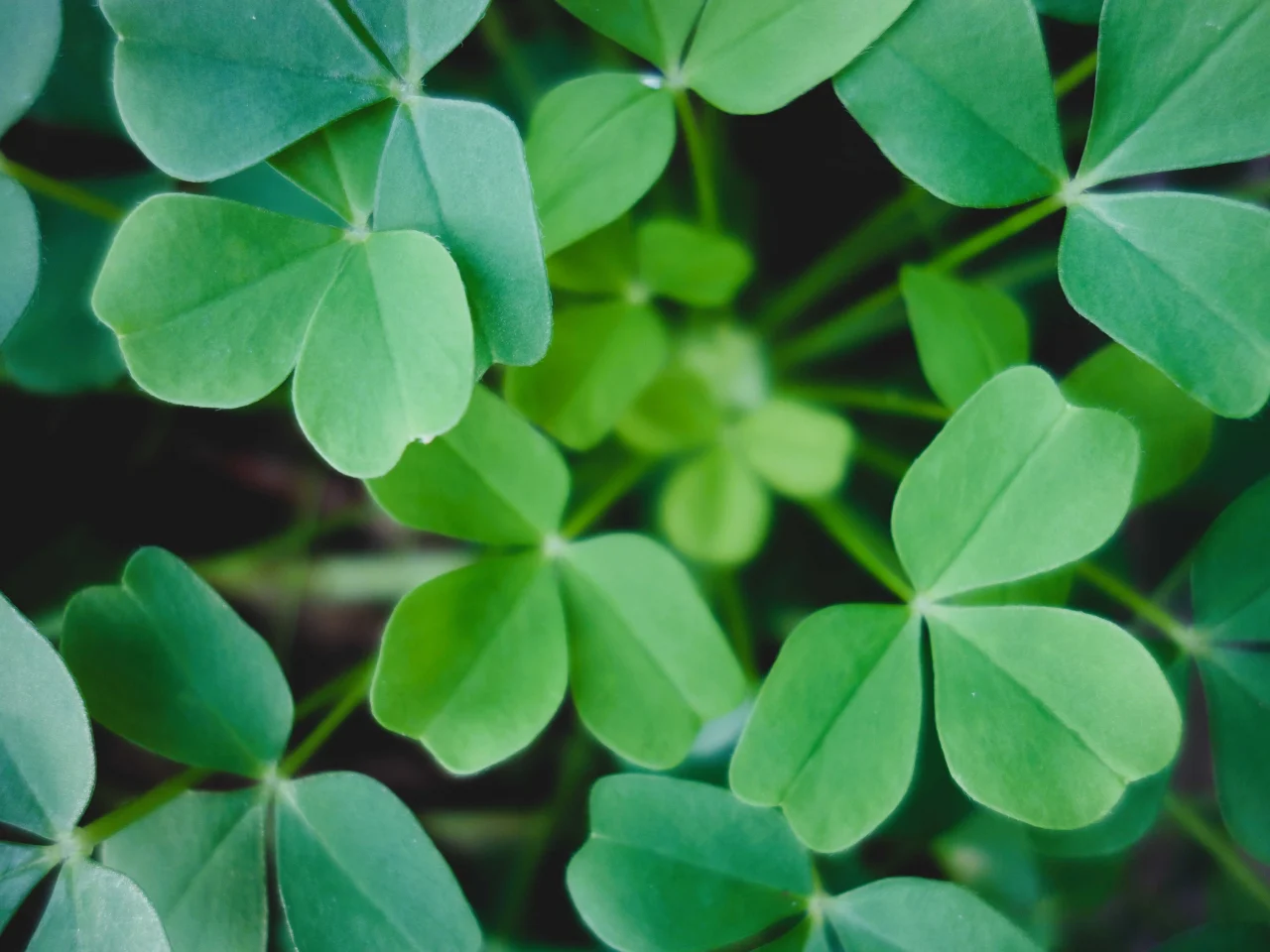
Mindfulness in nature – a first-hand account
As a forest bathing coach, I have noticed that my participants repeatedly report similar experiences or sensations during forest bathing. The attitude of mindfulness seems to be the key that allows forest bathing to unfold its positive effect on our wellbeing. We gain distance from everyday life, let go of stress and hustle, feel connected with nature and have new experiences.
Here are 6 ways in which mindfulness in nature can boost our wellbeing:
- Letting go and handing over control: Non-striving is a core aspect of a mindful attitude. Naturally, this also applies to practising mindfulness in nature. It means engaging fully with the here and now, instead of pursuing a particular goal as we usually do while constantly keeping an eye on everything. On a guided forest bathing walk, participants are invited to hand over control. They don’t have to take care of anything: there’s no need for them to know the way or what time it is. The pressure that many people feel in everyday life to always be three steps ahead in their minds and to keep track of everything can be set aside for a few hours while forest bathing. Many participants describe this as a great relief.
- Digital detox and reducing distraction: When forest bathing, phones stay at home – or at least on silent in your rucksack. What feels unfamiliar to many forest bathing participants at first, and sometimes causes slight unease, is usually experienced as a relief after just a short time. After all, not being reachable means not being distracted from outside – and not being distracted, in turn, makes it possible to arrive in the here and now and to turn your full attention to whatever you are doing. This creates the opportunity to enter a state of flow (Csíkszentmihályi, 1985): a pleasant state of becoming absorbed in the present activity, while thoughts of everything else fade into the background.
- Reducing mind-wandering: Not only the reduction of external distractions but also the fixed structure of a forest bathing walk can help to reduce drifting off into thoughts, worries or mental to-do lists. The framework of different exercises is intended to give participants the chance to notice promptly when they get lost in thoughts or plans, and to consciously return to the here and now. Mindfulness in nature and focusing on the many details waiting to be discovered in the forest can help us to anchor ourselves in the present. Many participants report that this allows them to notice things in nature that they would normally overlook: a small flower by the wayside, a majestic bracket fungus or the song of a bird.
- Gaining distance and finding fresh perspectives: By focusing on mindful perception of nature, forest bathing aims to create some distance from our everyday challenges and to take a short ‘breather’ from thinking. Although our thoughts can’t be ‘switched off’ completely, many forest bathing participants report noticing a change in their thinking after some time in the forest. Their thoughts suddenly seem to have become more flexible, an optimistic idea flashes up every now and then, and all of a sudden new solutions come to mind for problems they hadn’t even been consciously thinking about.
- Taking ourselves less seriously: Many of you will probably know this – when we gaze up at the starry sky at night, we suddenly feel very small. Against the backdrop of the infinite universe, our existence seems almost insignificant. While forest bathing, too, the sight of nature can evoke a similar feeling. For many people, this experience brings a sense of relief: as a result, we take ourselves less seriously, and our problems feel a little lighter for a moment. So practising mindfulness in nature can help us to loosen our focus on ourselves and our individual problems a little.
- Feeling connected: Mindfully perceiving nature and consciously engaging with it can strengthen our sense of connection with nature. Many participants in forest bathing walks report that in the forest they experienced themselves as part of nature and felt a sense of connection. In psychology and sociology, this experience is explained by the biophilia hypothesis, according to which we have an evolutionary tendency to connect with nature and to experience feelings of joy or aliveness in it. Small wonder, then, that spending time in nature boosts our wellbeing.
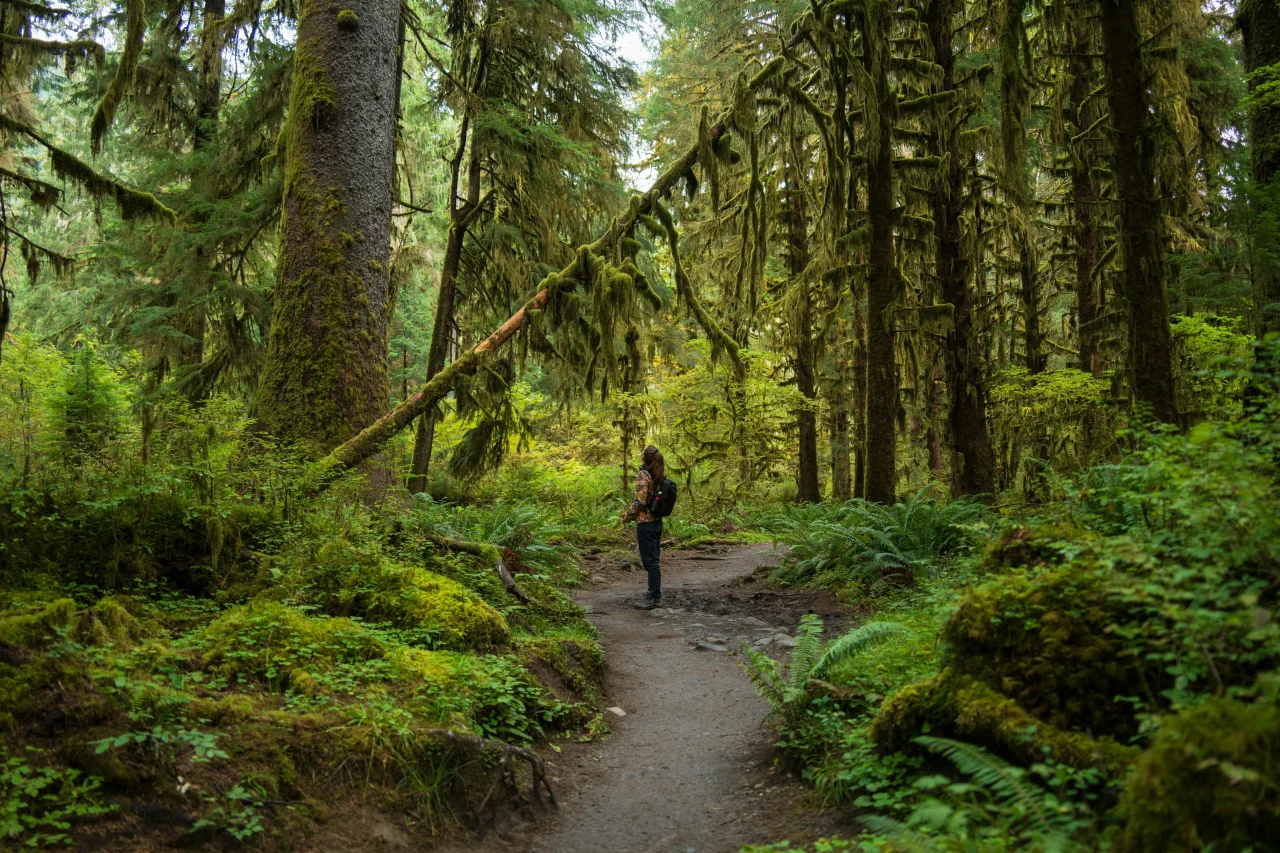
Rediscovering nature as a place of restoration
In summary, alongside the long-term effects that are usually the focus of research on forest bathing, many short-term effects of forest bathing and mindfulness in nature can also be observed in practice. The attitude of mindfulness seems to be the key that sets forest bathing apart from other activities in nature.
Especially for people who are easily carried away by their thoughts, the concept of forest bathing can help them to let go of everyday life for a while. Practising mindfulness in nature can help us to find inner calm and reduce stress.
What about you? Do you practise mindfulness in nature, or have you ever taken part in a forest bathing walk? Let us know in the comments!
Alex G. (MSc Psychology)
Deepen your meditation practice with Mindfulife
Meditation can be more than a short break in your everyday life. If you would like to understand more deeply how meditation works, how to build a steady practice of your own and how to guide others mindfully, our meditation teacher training is the next step. There you will not only get to know meditation in theory, but also develop more confidence, clarity and trust in your own practice.
Would you like to find out more about the training first? In our weekly webinar you will get an insight and learn more about what your path to becoming a meditation teacher could look like.
For regular support in your everyday life, you can also use our online meditation studio and join guided meditations flexibly via Eversports.
We look forward to accompanying you on your journey.
You can find more mindfulness inspiration on our channels too
References
Csíkszentmihályi, M. (1985). Das Flow-Erlebnis. Klett-Cotta.
Keller, J., Kayira, J., Chawla, L., & Rhoades, J. L. (2023). Forest Bathing Increases Adolescents’ Mental Well-Being: A Mixed-Methods Study. International Journal of Environmental Research and Public Health, 21(1), 8. https://doi.org/10.3390/ijerph21010008
Muro, A., Mateo, C., Parrado, E., Subirana-Malaret, M., Moya, M., Garriga, A., Canals, J., Chamarro, A., & Sanz, A. (2023). Forest bathing and hiking benefits for mental health during the COVID-19 pandemic in Mediterranean regions. European Journal of Forest Research, 142(2), 415–426. https://doi.org/10.1007/s10342-023-01531-6
Siah, C. J. R., Goh, Y. S., Lee, J., Poon, S. N., Ow Yong, J. Q. Y., & Tam, W.-S. W. (2023). The effects of forest bathing on psychological well-being: A systematic review and meta-analysis. International Journal of Mental Health Nursing, 32(4), 1038–1054. https://doi.org/10.1111/inm.13131