Struggling to set boundaries? 4 yoga and meditation tips that really help

 · 6 min read
Setting better boundaries through yoga and meditation: how mindful practice helps you recognise and respect your own boundaries
Setting boundaries means knowing your own limits and communicating them to others. It is an important skill for leading a balanced life and maintaining healthy relationships. When we set boundaries, we practise self-care and show ourselves the love we need.
Yoga and meditation are wonderful tools that can help us recognise our boundaries more clearly and maintain them. These mindful practices allow us to come into harmony with our body and mind, and give us the clarity to understand what we are comfortable with and what we are not.
The importance of mindfulness and self-love in setting boundaries
Mindfulness is like a superpower when it comes to setting boundaries. It helps us notice our own needs and feelings. When we are mindful, it becomes easier to notice when something doesn’t feel right or when we are pushing ourselves too hard.
Self-love is just as important. It forms the foundation on which we can respect our own needs and stand up for our boundaries. If we don’t value ourselves, how can we expect others to?
Yoga and meditation foster both mindfulness and self-love. They help us to settle and to connect with ourselves on a deeper level. Through regular practice, we become more aware of our thoughts, feelings and physical sensations. This awareness is the key to recognising our boundaries and having the self-confidence to uphold them.
Yoga as a mindful practice
Yoga isn’t about mastering the perfect handstand or touching your toes. It’s about listening to your own body and respecting what it needs. When we practise yoga mindfully, we learn to move in a way that feels good for us, without comparing ourselves to others or overstepping our limits.
This mindful approach to movement can help us recognise and respect both physical and emotional boundaries. If a pose doesn’t feel right, for example, we learn to adapt it or come out of it altogether. This practice of respecting our physical limits can also carry over to our emotional and mental boundaries off the mat. Some yoga poses are particularly helpful for tuning in to how we are feeling. So we’d like to introduce you to two yoga poses that will help you sense your boundaries more clearly:
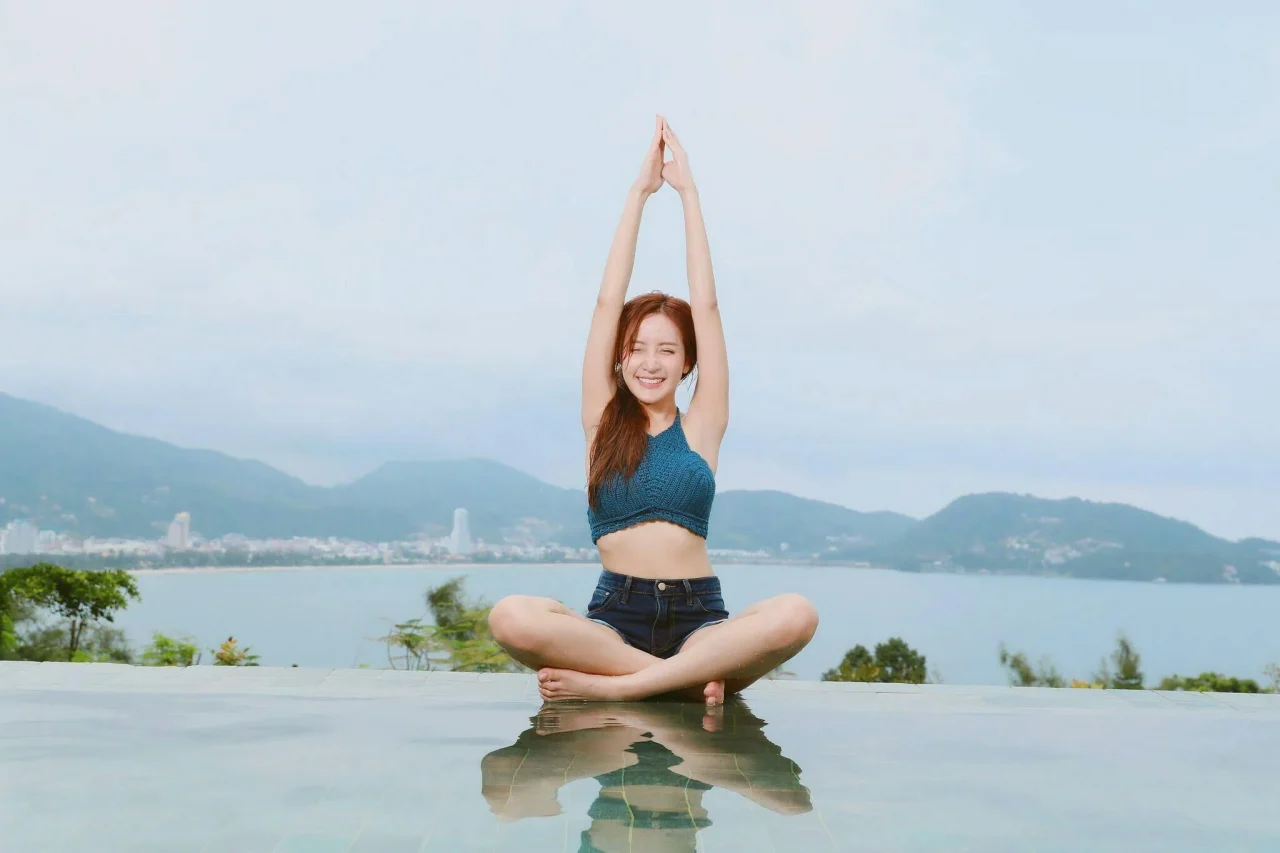
Child’s pose (Balasana)
This pose is ideal for gently tuning in to yourself and getting closer to your own boundaries.
- Description of the exercise:
Start on all fours and slowly lower your bottom onto your heels. Your arms can either be stretched out in front of you or rest relaxed alongside your body. Your head rests on the mat.
- Inner awareness:
As you stay in the pose, consciously notice whether and where you might feel a slight tension. Ask yourself: “How far can I relax into this pose without feeling any discomfort?” - Sensing boundaries:
This pose allows you to explore gently how your body feels today. Perhaps you notice that your back or shoulders need a little more support – acknowledging this and adjusting accordingly is a way of mindfully noticing and respecting your own boundaries.
Corpse pose (Savasana)
This closing pose is an opportunity to become more deeply aware of your own needs and to recognise your physical and mental boundaries.
- Description of the exercise:
Lie flat on your back with your arms and legs stretched out and relaxed. Let your breath flow and try to let go of all tension. - Inner awareness:
In Savasana, notice how your body feels on the mat, whether you are completely relaxed or still feel tension in certain places. Breathe consciously into these areas. - Sensing boundaries:
Allow yourself to relax a little more in the places that feel stiff or tense. If your body says “stop” and it feels uncomfortable, take this as a sign that this is an area that needs special attention.
Meditation for recognising and respecting inner boundaries
Meditation is like a mirror for our mind. It allows us to see our thoughts and feelings more clearly and to recognise emotional blocks or inner boundaries. Through regular meditation practice, we can become more aware of our personal needs and boundaries. We might notice that certain situations or people drain our energy. This insight can help us set better boundaries in everyday life.
Here is a practical breathing and mindfulness exercise to help you sense your personal boundaries more clearly and gain clarity about your needs:
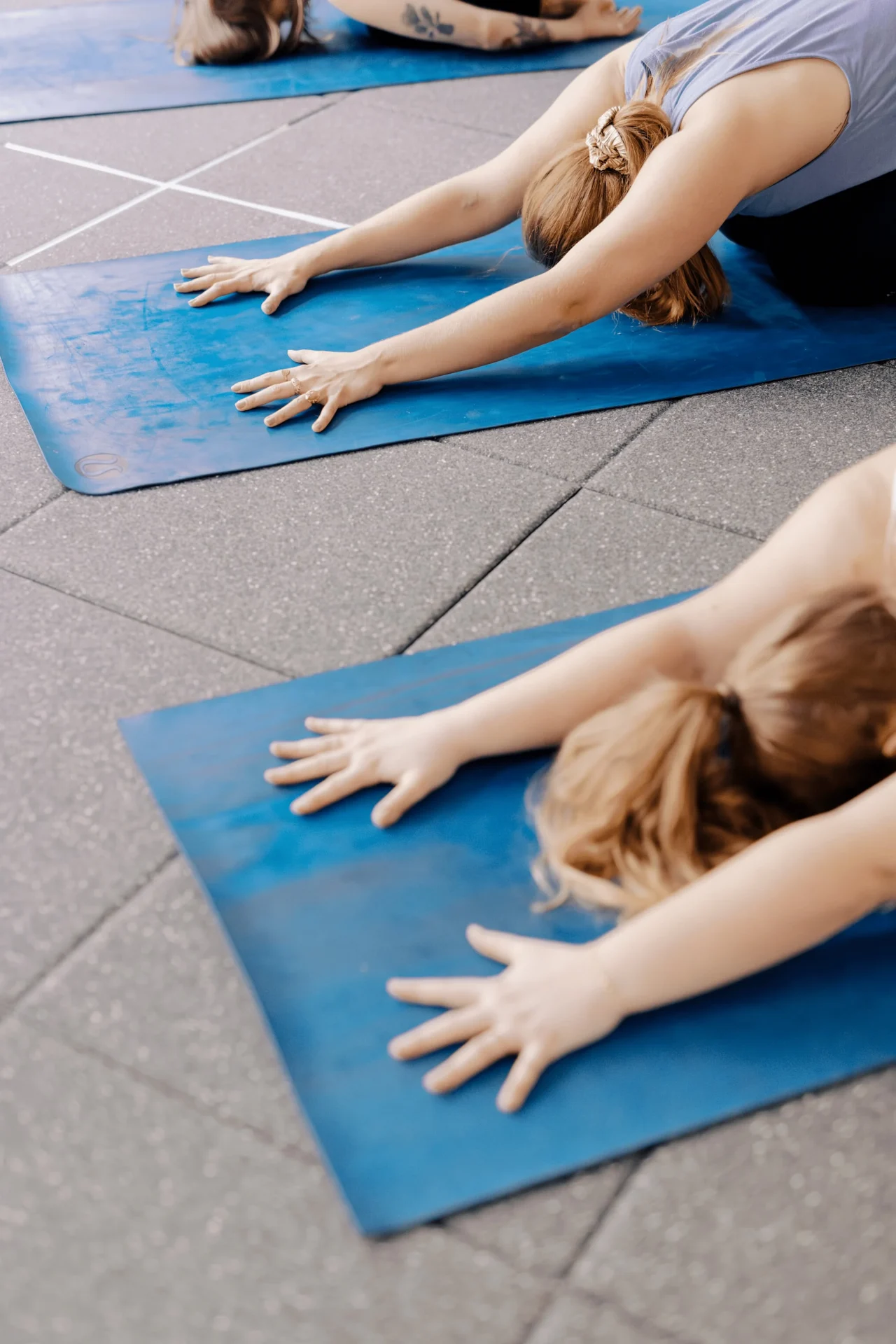
Finding calm: Sit in a comfortable position, either on a chair with your back upright or cross-legged on the floor. Rest your hands loosely on your thighs and close your eyes.
Observing the breath: Begin to notice the natural flow of your breath without changing it. Feel your belly rise with each in-breath and fall with each out-breath. Let your breath become your anchor in the present moment.
Exploring boundaries: As you continue to breathe, ask yourself: “Where do I feel strong today, and where might I feel a boundary?” Notice how your body responds, whether you feel tension, lightness or heaviness anywhere.
Accepting and letting go: As you breathe in, you can imagine bringing relaxation and energy into these areas, and with each out-breath you consciously release tension and pressure. Stay with this conscious breathing for 5-10 minutes and notice how you feel, without pushing yourself too hard.
Reflection: End the exercise by asking yourself: “What do I need today to feel good?” You might like to jot down a few thoughts to round off the exercise and bring it into your everyday life.
This simple exercise helps you consciously notice your own physical and emotional boundaries and gives you a sense of being better able to listen to your own needs.
Challenges in setting boundaries during yoga and meditation practice
Interestingly, even in practices that are meant to help us respect our boundaries, we sometimes tend to push ourselves too hard. In yoga, we may be tempted to force ourselves into challenging poses even though our body is saying “no”. In meditation, we may try to sit for longer than is comfortable for us because we think more is always better.
The key is not to overstrain our body and mind. It’s about finding the right balance, where we challenge ourselves just enough without causing ourselves harm or discomfort.
Here are a few practical tips for staying mindful and gentle with yourself in your practice:
- Listen to your body. If something hurts or doesn’t feel right, adjust it or stop.
- Remind yourself that every day is different. What felt good yesterday might not work today.
- Use props in yoga to support your body when needed.
- In meditation, start with short sessions and gradually increase the length.
Developing healthy boundaries through yoga and meditation
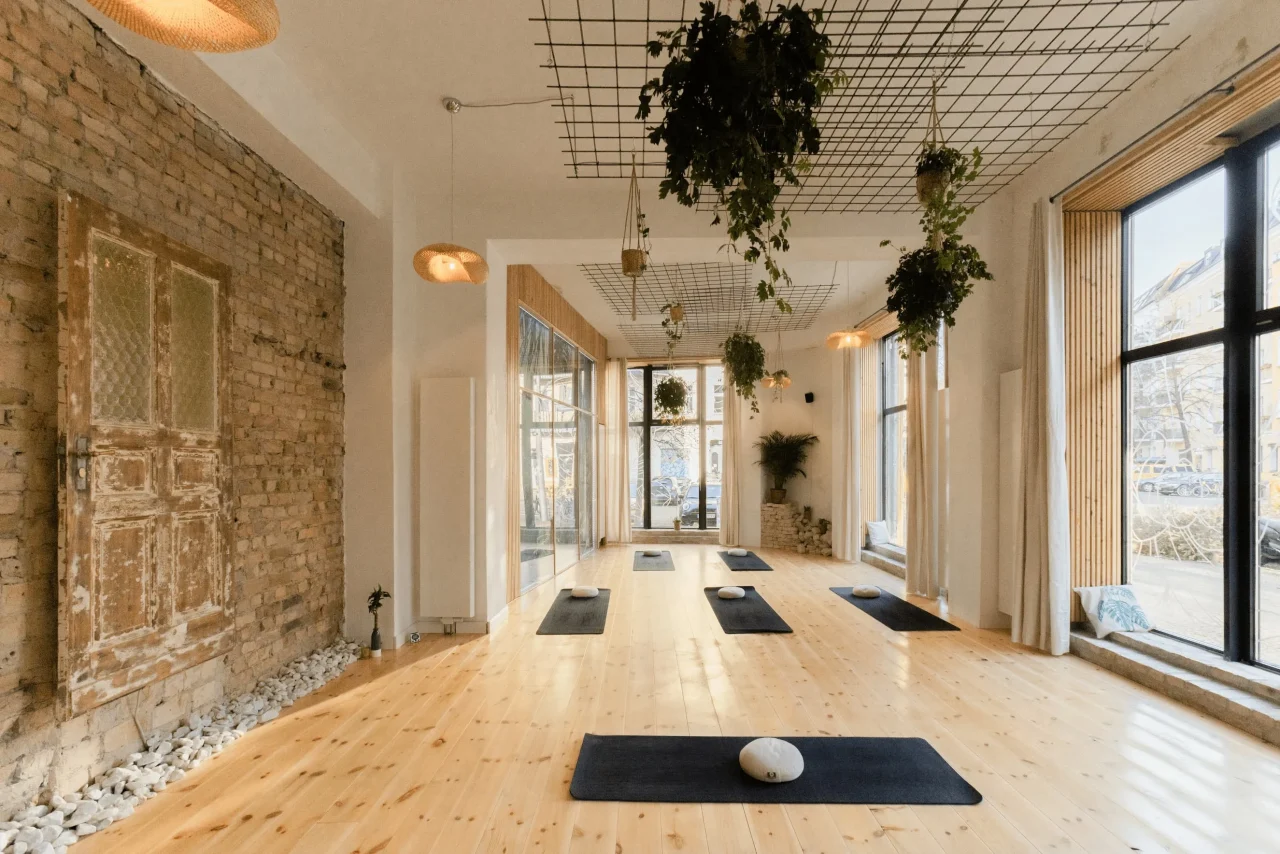
A regular yoga and meditation practice can be a powerful tool for accepting and respecting our physical limits. Why not try the exercises described above and see for yourself what transformation takes place?
Conclusion
Setting boundaries may seem restrictive at first, but it actually brings a sense of freedom. In yoga, respecting our physical limits allows us to move more freely and joyfully. In meditation, setting mental boundaries gives us the freedom to choose where we direct our attention. The combination of mindfulness, self-love and healthy boundaries creates a solid foundation for a more balanced life. It improves not only our relationships with others, but also our relationship with ourselves. And that is ultimately what it’s all about – cultivating a more loving and understanding relationship with ourselves and the world around us.
revised on 7 April 2026
by Katharina Richter (psychology student)
Deepen your meditation practice with Mindfulife
Meditation can be more than a short break in your everyday life. If you would like to understand more deeply how meditation works, how to build a steady practice of your own and how to guide others mindfully, our meditation teacher training is the next step. There you will not only get to know meditation in theory, but also develop more confidence, clarity and trust in your own practice.
Would you like to find out more about the training first? In our weekly webinar you will get an insight and learn more about what your path to becoming a meditation teacher could look like.
For regular support in your everyday life, you can also use our online meditation studio and join guided meditations flexibly via Eversports.
We look forward to accompanying you on your journey.
You can find more mindfulness inspiration on our channels too
References
Goßmann, K. (2023). Tiefenentspannt in der Leichenhaltung: Shavasana – die Totenhaltung im Yoga. YogaEasy. https://www.yogaeasy.de/artikel/tiefenentspannt-in-der-leichenhaltung
Hahn, A. (2023). Grenzen setzen und Meditation. Meditationsliebe. https://meditationsliebe.de/grenzen-setzen-und-meditation/
Hofmann, S. G., Sawyer, A. T., Witt, A. A., & Oh, D. (2010). The effect of mindfulness-based therapy on anxiety and depression: A meta-analytic review. Journal of Consulting and Clinical Psychology, 78(2), 169–183. https://doi.org/10.1037/a0018555
Maurer, K. (2023). 5 Gründe, warum wir Balasana lieben: Asana des Monats – die Kindhaltung. YogaEasy. https://www.yogaeasy.de/artikel/5-gruende-warum-wir-balasana-lieben
Mrazek, M. D., Franklin, M. S., Phillips, D. T., Baird, B., & Schooler, J. W. (2013). Mindfulness training improves working memory capacity and GRE performance while reducing mind wandering. Psychological Science, 24(5), 776–781. https://doi.org/10.1177/0956797612459659
Stülpnagel-Pomarius, B. (2023, November 23). Grenzen erkennen und achten mit Kundalini Yoga. 3HO Yogablog. https://yogablog.3ho.de/grenzen-erkennen-und-achten-mit-kundalini-yoga/
Yogabox. (2023, November 30). Abgrenzen mit Yoga lernen. https://www.yogabox.de/blog/abgrenzen-mit-yoga-lernen/