Can you learn to let go? – 5 steps to help you
Time and again, life brings situations, feelings or people that are not good for us or that hold us back. So we need to learn to let go in order to bring more freedom back into our lives.

 · 6 min read
Letting go is one of those tasks in life that we often find difficult. Yet there are people, experiences or feelings that are not good for us or that hold us back, and we need to free ourselves from them in order to move forward. This does not happen overnight, however, and it often takes time before we have fully and completely let go of something.
To help you on this journey, we have put together 5 steps in this article that can help you let go and carry on with your life with newfound freedom.
Why do I find it so hard to let go?
As humans, we naturally tend to hold on to things, because doing so gives us a sense of security and familiarity. The process of letting go is often bound up with many fears and worries about losing this security. Letting go brings change, which usually comes with a feeling of uncertainty, because we do not know what will come next. Parting with situations, feelings or relationships means letting a small part of ourselves go. Leaving it behind may at first feel like a loss.
But once we recognise that, in the long run, holding on to things from the past is far more exhausting, and we understand how much new freedom letting go can bring us, the easier it becomes to let go of things in the future.
Why is letting go so important?
Imagine a stone tied to you, pulling you further and further down in the water. If you do not let go of it and free yourself from its weight, it will drag you down with it. So you have to summon the strength to untie yourself from the stone and then let it go. Only then can you float in the water again, carefree and with a sense of lightness.

Just as a heavy stone can pull you down, feelings, people or experiences can also hold you back in life. Even if it is hard to part with them, the only way to avoid going under yourself is to let go. By letting go, you free yourself from the burden and regain lightness and freedom in your life.
5 steps to letting go
Step 1: Build awareness
Before you can let go of anything at all, you need to become aware that it is time to let go. The very fact that you are reading this article shows that, to some extent, you already realise you need to let go of something and perhaps just do not yet know exactly how. So you are already noticing that this particular situation or person is holding you back, and that you can only move forward if you free yourself from it. The awareness you already have is therefore the first step in the right direction.
Step 2: Weigh up the pros and cons
Write down all the reasons for and against letting go. Let’s take the example of wanting to distance yourself from a particular person who is not good for you. Ask yourself the following questions:
1. In which areas of my life is this person holding me back?
2. Does holding on to this person affect my relationships with other people?
3. In which areas of my life would I have more freedom again once I have let go?
Step 3: Seek support
We often find it hard to work everything out on our own, which is why it can help to talk to others around us about our thoughts and worries. When we open up to others, we soon realise that we are not alone and that many other people have already had similar experiences. Simply knowing that you are not alone with your worries and fears is often a great help on the way to successfully letting go of something.
We are often our own harshest critics. According to psychologist Kristin Neff (2011), however, self-compassion is the key to releasing emotional blockages more gently.
Step 4: Mindfulness and meditation
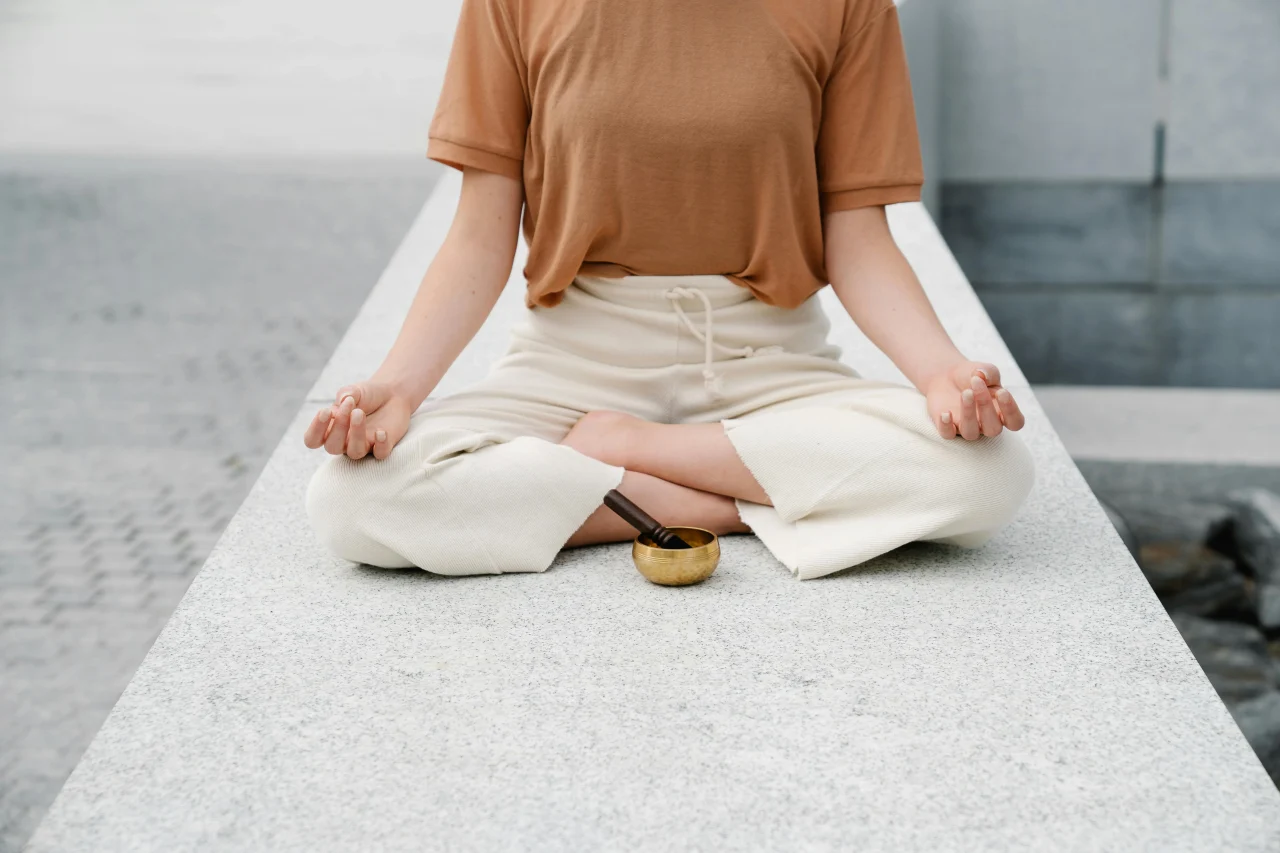
Mindfulness and meditation can help us let go of negative thoughts and memories. When we meditate, we learn to simply let our thoughts come and go, like clouds in the sky. This ability to let thoughts drift past like clouds can then also help us let go of other things in our lives and let them move on.
For a short meditation exercise, simply sit down comfortably for a moment, on a chair or on the floor, depending on where you are and what feels more comfortable for you. Breathe in and out deeply and follow your breath. With each out-breath, let go a little more and feel your body becoming lighter.
Visualise a future in which you have already let go, and feel the lightness within you. Stay with this feeling of weightlessness and notice how it feels. Good, isn’t it? And that is exactly what letting go feels like. You are flooded with a sense of lightness that spreads into every part of your body. Take this feeling with you into your everyday life, and whenever you find it hard to let go, take five minutes for this little meditation.
Mindfulness pioneer Jon Kabat-Zinn (2013) even describes letting go as one of the seven pillars of a healthy attitude of mind.
Step 5: Focus on the present
Even if we find it hard to let go, we need to remind ourselves that this is the only way to make room for something new. The longer we hold on to old feelings, situations or people, the more we close ourselves off to new things. Only when we learn to let go do we create space for new things in our lives. So focus on the present and appreciate the good things in your life. Take a moment to consciously notice all the positive things in your life: the people who stand by your side, the experiences you get to have, the little everyday things that bring you joy.
It is often precisely these little things that we overlook when we hold on to old burdens for too long and focus too much on the past. You live in the here and now, and there are so many wonderful things around you that you will notice once you have created new space and new freedom for them.

Conclusion
Letting go is therefore essential in our lives, and it helps us lead a life characterised by lightness. We often notice who or what we need to let go of when we feel that something is dragging us down and we are not making any progress. That is often the moment to let go, so that we can look ahead again. Easier said than done, as we often tend to hold on to things rather than let them go.
But letting go is something you can learn, which is why we have given you 5 steps in this article to help you let go more easily in the future. Be aware that this process often has its ups and downs and may not always go smoothly straight away, but at some point you will reach a place where you have made it, and you will be grateful to yourself for it.
This article was written by Sarah Dittmar
revised on 30 April 2026
by Katharina R. (psychology student)
Deepen your meditation practice with Mindfulife
Meditation can be more than a short break in your everyday life. If you would like to understand more deeply how meditation works, how to build a steady practice of your own and how to guide others mindfully, our meditation teacher training is the next step. There you will not only get to know meditation in theory, but also develop more confidence, clarity and trust in your own practice.
Would you like to find out more about the training first? In our weekly webinar you will get an insight and learn more about what your path to becoming a meditation teacher could look like.
For regular support in your everyday life, you can also use our online meditation studio and join guided meditations flexibly via Eversports.
We look forward to accompanying you on your journey.
You can find more mindfulness inspiration on our channels too
References
Frewen, P. A., Evans, E. M., Maraj, N., Dozois, D. J. A., & Partridge, K. (2008). Letting go: Mindfulness and negative automatic thinking. Cognitive Therapy and Research, 32(6), 758–774. https://doi.org/10.1007/s10608-007-9142-1
Hayes, S. C., Strosahl, K. D., & Wilson, K. G. (2011). Acceptance and commitment therapy: The process and practice of mindful change (2. Aufl.). Guilford Press.
Kabat-Zinn, J. (2013). Full catastrophe living: Using the wisdom of your body and mind to face stress, pain, and illness (Revised Edition). Bantam Books.
Neff, K. D. (2011). Self-compassion: The proven power of being kind to yourself. William Morrow.
Whitehead, R., Bates, G., & Elphinstone, B. (2020). Growing by letting go: Nonattachment and mindfulness as qualities of advanced psychological development. Journal of Adult Development, 27, 12–22. https://doi.org/10.1007/s10804-018-09326-5