Learning Serenity? 6 Tips for Greater Inner Calm

 · 4 min read

Ageing is a natural process that we all go through. Yet while some people approach this stage of life with worries and uncertainty, others see it as a time of inner calm and serenity. The difference often lies not in external circumstances but in our inner attitude. So how can you learn serenity and turn your focus towards the positive?

Why is serenity so important?
Over the years, we gather not only experience but also challenges. Whether it is changes at work, changes in our health or new life situations – they all call for inner balance. Anyone who lets themselves be guided by fear and stress risks placing an unnecessary burden on themselves. Inner calm, on the other hand, helps us to accept challenges and to see them as opportunities for personal growth.
Learning serenity: 6 practical tips
Serenity is not an innate trait but an inner attitude that can be practised. Here are some tried-and-tested methods to help you find more calm in everyday life:
1. Consciously steering your thoughts
Often it is not the circumstances themselves that cause stress, but our own perception of them. Our thoughts shape our reality – when we focus on problems and worries, they seem bigger than they really are. By learning to direct our thoughts consciously and to concentrate on positive aspects, we can strengthen our inner calm in the long term. A good way to do this is to keep a gratitude journal, in which you note down positive experiences or thoughts every day. Anyone who keeps focusing on the negative will feel restless. Consciously choosing a positive perspective can help you to be less easily thrown off balance.
2. Breathing exercises and meditation
Deep, conscious breathing has a calming effect on body and mind. Just a few minutes of breathing exercises a day can help to reduce stress and find inner calm. One simple technique is 4-7-8 breathing: breathe in for four seconds, hold for seven seconds and breathe out for eight seconds. A mindfulness meditation can also help to clear the mind and relate to your own thoughts more mindfully. Regular practice leads to greater inner serenity and a more conscious way of handling emotions in the long run. Together, these two techniques can help to cultivate inner calm and let go of stressful thoughts.
3. Building exercise into everyday life
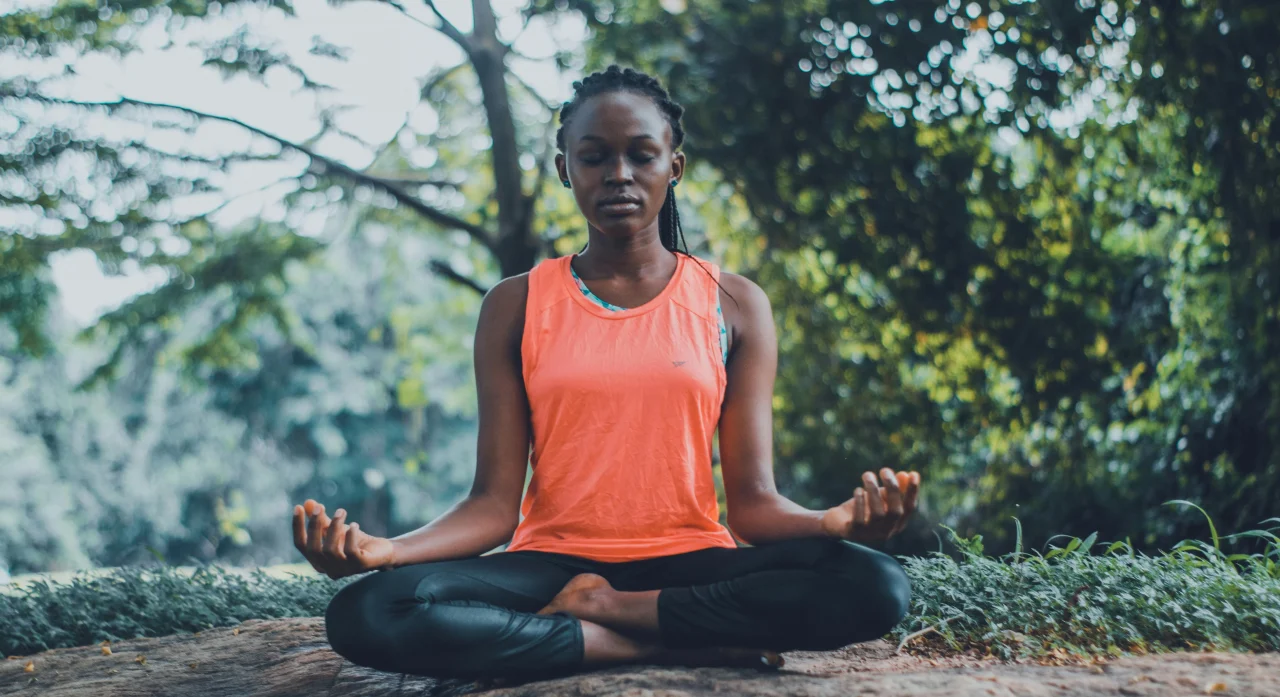
Whether it is walking, yoga or gentle stretching – physical activity helps to release tension and foster serenity. Exercise provides a natural balance, breaks down stress hormones and strengthens overall wellbeing. Walks in nature in particular (forest bathing) have a calming effect on the mind and help to clear your head. Anyone who regularly builds exercise into their daily routine benefits not only physically but also mentally, with greater inner calm. Exercise also releases endorphins, which boost wellbeing.

4. Developing acceptance
Life does not always go to plan. We often try to keep control over things that lie beyond our influence – which in turn leads to frustration and stress. The key to serenity lies in focusing on what can genuinely be changed and letting go of the rest. A good exercise is to ask yourself consciously: ‘Can I change this?’ If the answer is no, it helps to accept the situation and to focus on what really lies within your sphere of influence. Instead of fighting against things that cannot be changed, it helps to develop an attitude of acceptance. Those who accept what is can respond to challenges with greater serenity.
5. Nurturing social connections
Friendships and social relationships are a valuable source of emotional stability. Talking with others can help to put worries into perspective and gain new viewpoints. Social bonds promote not only emotional wellbeing but also physical health, as they reduce stress and strengthen a sense of belonging. Whether through regular meet-ups with people you trust, phone calls or getting involved in groups – social interaction enriches life and helps to cultivate serenity.

6. Enough sleep for greater serenity
Restful sleep is essential for our physical and mental wellbeing. Anyone who sleeps badly or too little over a long period becomes irritable, unfocused and more susceptible to stress more quickly. Good sleep hygiene, such as regular bedtimes, a relaxing evening routine and avoiding screen time before bed, can help to improve sleep quality. A pleasant sleeping environment with a comfortable mattress and dimmed lighting also helps you to wind down more quickly. When you are well rested, you can meet challenges more calmly and handle everyday life in a more relaxed way.
Living a serene life
Growing older with serenity means not letting yourself be guided by fears and uncertainties, but enjoying the moment and embracing life in all its facets. Anyone who wants to learn serenity can build it into everyday life with patience and small steps. The reward is a fulfilled, balanced life – full of inner calm and contentment.
Conclusion
Serenity is a precious asset which, especially in later life, helps us to enjoy life more consciously and with greater contentment. Those who learn to maintain inner calm, not to be guided by stress or negative thoughts, and to appreciate the moment can gain a new perspective on life and experience this phase as a time of personal growth and inner peace.
Bennet P. (psychology student)
Deepen your meditation practice with Mindfulife
Meditation can be more than a short break in your everyday life. If you would like to understand more deeply how meditation works, how to build a steady practice of your own and how to guide others mindfully, our meditation teacher training is the next step. There you will not only get to know meditation in theory, but also develop more confidence, clarity and trust in your own practice.
Would you like to find out more about the training first? In our weekly webinar you will get an insight and learn more about what your path to becoming a meditation teacher could look like.
For regular support in your everyday life, you can also use our online meditation studio and join guided meditations flexibly via Eversports.
We look forward to accompanying you on your journey.
You can find more mindfulness inspiration on our channels too
References
Brandtstädter, J. (2015). Positive Entwicklung: Zur Psychologie Gelingender Lebensführung. Springer Berlin / Heidelberg. http://ebookcentral.proquest.com/lib/badhonnef/detail.action?docID=2094790
Däfler, M.-N. (2018). Positiv denken. In M.-N. Däfler (Hrsg.), Gib mir Geduld – aber flott!: 222 Anregungen für mehr Gelassenheit und weniger Stress (S. 191–195). Springer Fachmedien. https://doi.org/10.1007/978-3-658-19730-8_23
Hoffmann, K. (2017). Deine Freiheit, deine Gelassenheit. Springer Fachmedien. https://doi.org/10.1007/978-3-658-12332-1
Master Your Sleep & Be More Alert When Awake-YouTube. (2021, Januar 11). https://www.youtube.com/watch?app=desktop&v=nm1TxQj9IsQ&t=62s
S. J., & Pausch, M. J. (2024). Depression, Trauma und Ängste: In Management und Öffentlichkeit. Springer Fachmedien. https://doi.org/10.1007/978-3-658-43966-8