Mindfulness While Swimming: Water as Meditation?

 · 5 min read
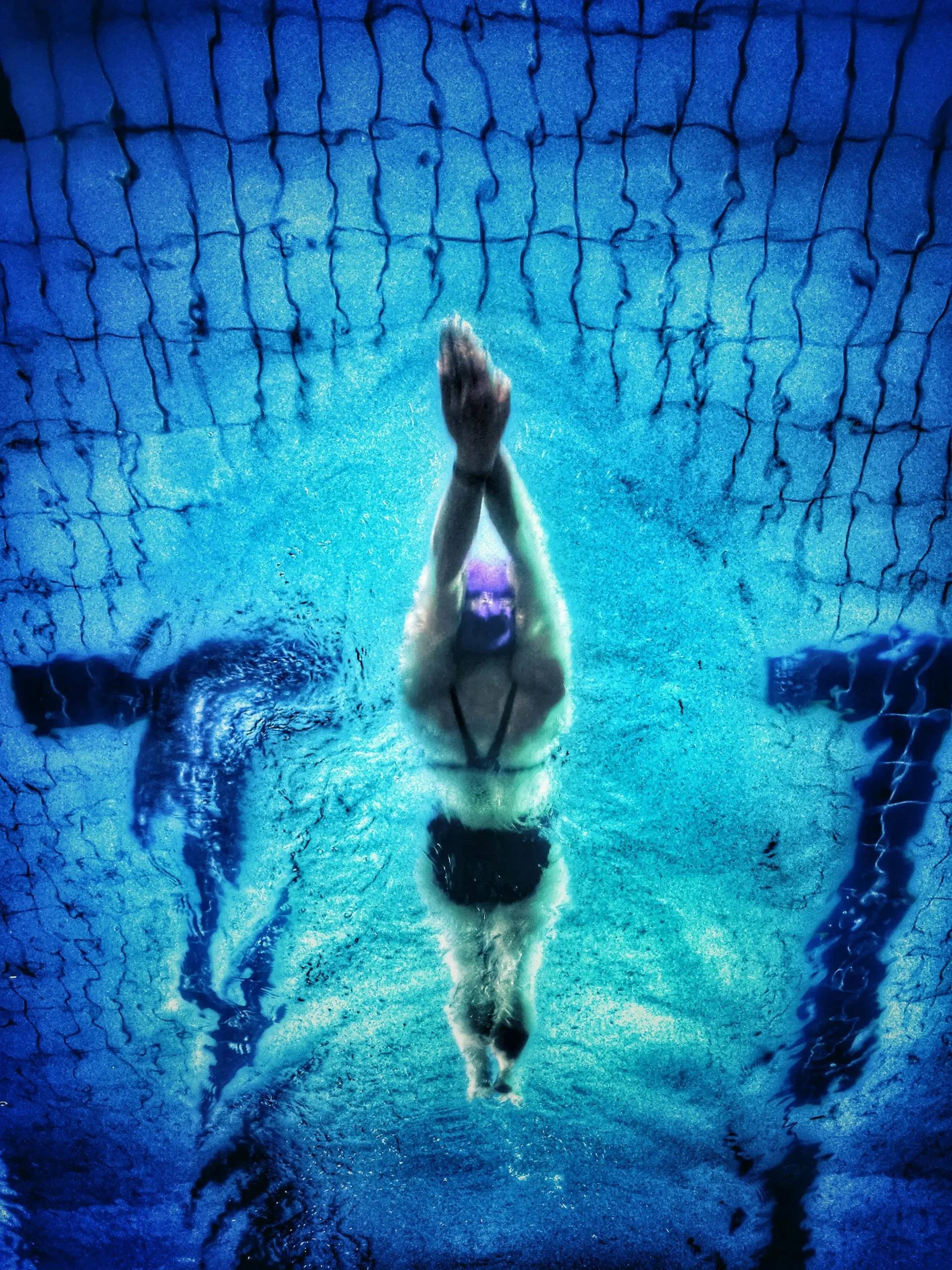
In a world where we are surrounded by ever more stimuli, constant multitasking and digital pressures, many people long for more inner calm and clarity. In this context, mindfulness – the conscious, non-judgemental awareness of the present moment – has become established as an effective way of managing stress and regulating oneself. You might first think of quiet practices such as seated meditation or yoga. But you can also experience mindfulness in motion – for example through mindful swimming, an often overlooked yet particularly powerful way to relieve stress and recharge your batteries.
What is mindful swimming?
Mindful swimming is more than simply swimming. It means being fully in the moment – consciously noticing every stroke, every breath and every touch of the water. You direct your full attention to your own body and to what is happening right now. This allows your mind to settle. Swimming becomes a kind of meditation – without music, distractions or pressure to perform.
When you swim, you experience your surroundings in a special way. The water envelops your body, sounds become quieter and there is less to distract your eyes. Underwater it grows still – above all, you hear yourself: your breath, the splash of your arms, the glide of your legs.
Breathing plays an important role here. Unlike on land, it has to be controlled quite consciously when swimming. You breathe in above the water and slowly breathe out again beneath it. This calm, steady breathing pattern resembles a moving meditation. Every breath and every phase underwater invites you to be fully in the moment.

Tessa Wardley describes it like this in her book “The Mindful Art of Wild Swimming”:
“In the first few minutes of a swim, it is often hard not to think about the problems and issues that dominate everyday life. But after a while, these thoughts slowly drift away – and you begin to focus more and more on your own breathing and the rhythm of your stroke.
Swimmers often reach a state in which they feel in tune with their emotions; physically, there is complete balance, and they simply let themselves be carried by the flow of movement.”
“Be water, my friend” – experiencing mindfulness in the water
This famous quote from Bruce Lee is a reminder to live fully in the moment. In the water, this often comes more easily: everyday life fades into the background, and all that remains is the steady sound of breathing and movement.
“Be water” also means letting go of tension and achieving a lot with little effort. Anyone who swims mindfully soon notices that too much effort disrupts the flow of movement. The same applies to the mind: rumination uses up energy that we need for clarity and calm.
Mindful swimming: scientific findings
Several psychological studies and personal accounts point to the positive effects of mindful swimming.
Research into the potential health and wellbeing benefits of spending time in green spaces such as parks and forests has led to the development of various models that bring different findings together. On this basis, a model was developed that illustrates how spending time in aquatic environments – so-called blue spaces such as rivers, lakes or coastlines – can have a particularly positive effect on health and wellbeing. There are parallels here with mindfulness-based practices in the forest, which have been shown to lower stress levels and promote wellbeing.
A review of 14 studies examining the effects of open-water swimming on mental health and wellbeing shows that this activity can help improve mood and reduce symptoms of psychological distress.
Sporting activities in water can also significantly strengthen not only physical but also mental health. A meta-analysis of 18 studies with a total of 423 participants on the effects of aqua aerobics shows that this form of exercise can have a positive influence on symptoms of anxiety.
Practical tips for mindfulness techniques
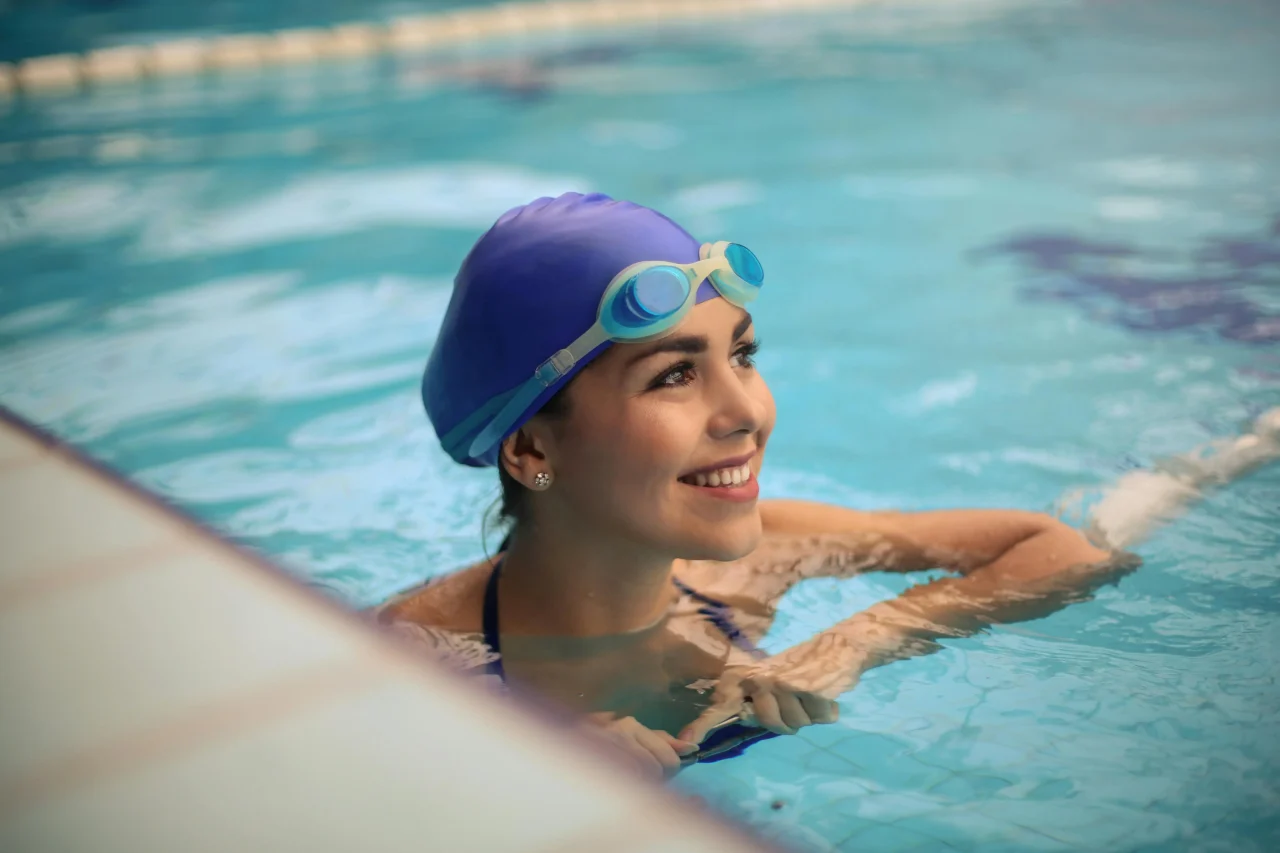
Mindfulness can be practised very practically while swimming – with these small exercises that help bring body and mind into balance.
- Body scan in the water
You carry out the body scan by moving your attention through your body as you warm up, from top to bottom or the other way round. The idea is to observe what you feel without judging or changing it. Do you feel tension in your shoulders? How does your back feel? Is your breathing calm? How does the water feel against your skin? - Mindfulness of the breath
Count your breaths and notice the sensation as you breathe in above the water and breathe out into it. Let your thoughts return again and again to your breathing. - Visual mindfulness
As you swim, consciously direct your gaze to the play of light beneath the water, the movement of the air bubbles or the lines on the bottom of the pool.
- Observing your thoughts
When thoughts arise – such as pressure to perform, to-do lists or self-criticism – observe them briefly and then let them drift past like clouds, without holding on to them.
- Swimming in silence
Consciously do without music or conversation. Leave all stimuli behind and enjoy the stillness of the water.
Diving in and letting go: tips for mindful swimming
Mindful swimming requires no special technique or previous experience, but a few tips will help you:
- Slow strokes such as breaststroke or backstroke are particularly well suited for getting started.
- Do without performance goals or timing. It is not about speed, but about presence.
- Choose a calm setting. Ideally, a quiet pool or a still lake.
- Start with short sessions (10-20 minutes) and build up gradually.
- Allow yourself breaks. Sometimes it helps simply to float and just breathe.
Conclusion
Mindful swimming combines movement, breathing and presence in a very special way. It allows you to switch off, connect with your body and let your mind settle – without pressure, goals or distractions. Whether in an indoor pool, a lake or the sea: the water invites you to let go, to drift and to experience the moment consciously. Perhaps that is exactly the appeal of this practice – it is simple, yet it can have a profound effect.
What does mindfulness mean to you – and have you ever experienced it in the water? We would love to hear about it!
Vladlena P. (Research Associate)
Deepen your meditation practice with Mindfulife
Meditation can be more than a short break in your everyday life. If you would like to understand more deeply how meditation works, how to build a steady practice of your own and how to guide others mindfully, our meditation teacher training is the next step. There you will not only get to know meditation in theory, but also develop more confidence, clarity and trust in your own practice.
Would you like to find out more about the training first? In our weekly webinar you will get an insight and learn more about what your path to becoming a meditation teacher could look like.
For regular support in your everyday life, you can also use our online meditation studio and join guided meditations flexibly via Eversports.
We look forward to accompanying you on your journey.
You can find more mindfulness inspiration on our channels too
References
Overbury, K., Conroy, B. W., & Marks, E. (2023). Swimming in nature: A scoping review of the mental health and wellbeing benefits of open water swimming. Journal of Environmental Psychology, 85, 102073. https://doi.org/10.1016/j.jenvp.2023.102073.
Tang, Z., Wang, Y., Liu, J., & Liu, Y. (2022). Effects of aquatic exercise on mood and anxiety symptoms: A systematic review and meta-analysis. Frontiers in Psychiatry, 13, 1051551. https://doi.org/10.3389/fpsyt.2022.1051551.
White, M. P., Elliott, L. R., Gascon, M., Roberts, B., & Fleming, L. E. (2020). Blue space, health and well-being: A narrative overview and synthesis of potential benefits. Environmental Research, 191, 110169. https://doi.org/10.1016/j.envres.2020.110169.