The Art of Surfing the Waves of Information Overload – A Guest Article by Doris Iding
We live in an age of radical sensory overload. Never before in human history has so much information been available to us - and never has it been so hard simply to do nothing. This article explores what lies behind our urge to be constantly online and shows concrete, mindfulness-based ways out of digital dependency.

 · 8 min read

We live in an age of radical sensory overload. Never before in human history has so much information been available to us – and never has it been so hard simply to do nothing. This article explores what lies behind our urge to be constantly online and shows concrete, mindfulness-based ways out of digital dependency.
A mindful stocktake
It usually starts innocently enough. You want to open a guided meditation. A push notification pops up. Thirty minutes later you look at the clock – and you still haven’t closed your eyes. Has this ever happened to you?! If you’re saying ‘Yes!’ right now, I can reassure you: you are not alone! Millions of people experience this every day! Because this scenario isn’t a question of lacking discipline. It is neurobiological reality.
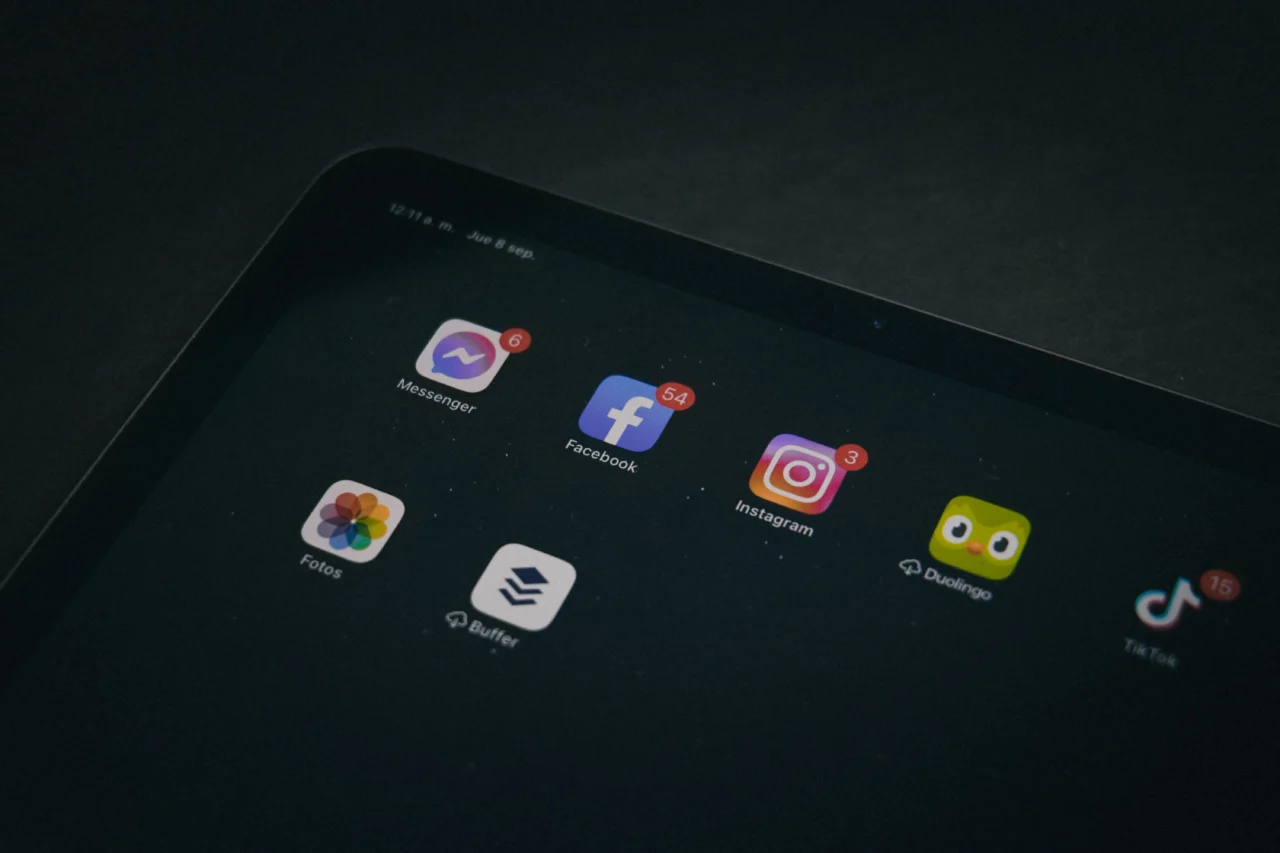
Our brain is wired by evolution to respond to novelty. Every new piece of information activates the dopaminergic reward system – the same mechanism that kicks in with gambling, sugar or social recognition. Social networks and news portals are precisely optimised to trigger this very reflex again and again. Endless scrolling, push notifications, the little red notification dot – none of this is coincidence; it is the result of years of behavioural psychology research in the service of the attention economy.
So the crucial question is not ‘Why am I so weak?’ but rather ‘Which structures exploit my basic psychological needs, and how can I consciously push back?’
The sober facts
The figures are clear: according to a recent study by the German health insurer DAK, people are interrupting their everyday activities more and more often to look things up online. The average attention span during digital consumption has shortened considerably over the past two decades. Researchers at the University of California found that after a digital interruption it takes us on average more than 23 minutes to fully refocus on a task.
This also affects your meditation practice. Time and again I notice that people used to be able to meditate for a good 40 minutes. They may have been restless, but they were still able to sit still for that length of time. Today, most beginners reach their limit after just 10 minutes, because they can no longer bear the quiet and feel they have to get back online. Some are already overwhelmed after 5 minutes.
This phenomenon is known as ‘doomscrolling‘: the compulsive consumption of negative news, even when it weighs us down. Our nervous system responds to potential threats with heightened vigilance, an ancient survival mechanism that becomes chronically overactivated by the digital flood of information. The result: ongoing stress, sleep problems, a vague sense of threat and an inability to settle down.
Particularly vulnerable groups, such as adolescents in developmental phases, people who experience loneliness and those with anxiety disorders, are at increased risk of slipping into dysfunctional patterns of use.

Becoming mindful and recognising your own dependency with compassion
A central principle of mindfulness practice is non-judgemental awareness. So before we strive for change, we need a clear, compassionate look at our own situation.
Ask yourself the following questions and simply let the answers be there, without judging them:
How many hours a day do I spend online?
How many of them were truly intentional?
Do I reach for my smartphone when I feel uncomfortable, bored or anxious?
How does the thought of being completely offline for two days feel?
Do I feel that I consume information to fill an inner emptiness?
If these questions leave you feeling distinctly uneasy, you are not alone. The WHO has already included ‘gaming disorder’ as a recognised diagnosis, and the debate about wider recognition of ‘internet use disorder’ is ongoing. This doesn’t mean that every heavy internet user needs clinical treatment. But it does mean the issue should be taken seriously, not least by ourselves.
A key difference from classic models of addiction is that, with digital consumption, we often don’t even experience pleasure. Many people describe scrolling through news feeds, in hindsight, as empty, exhausting or even shameful. What remains is not satisfaction but a quiet unease and the next urge to keep scrolling.

Self-compassion + mindfulness = self-efficacy: the magic formula for a mindful way back to yourself
Mindfulness doesn’t mean throwing your smartphone into the sea. It means developing a conscious, self-determined relationship with things – including digital media. Here are some concrete, psychologically grounded approaches:
- Honesty as the foundation
Use your device’s built-in screen time features to get a realistic picture of your consumption. Many people underestimate their daily screen time by a factor of two or three. This first confrontation with your own figures can be uncomfortable – and that is precisely why it is so valuable.
In Buddhist psychology, this step is called samma-ditthi – right view. You cannot change what you do not see clearly.
- An inner decision instead of external control
Technical blocks and app limits are helpful tools. However, they only work in the long term if they are backed by an inner decision. This decision sounds simple, but it runs deep:
‘I choose my attention. I choose my time. I choose my life.’
In Acceptance and Commitment Therapy (ACT), we talk about aligning our actions with our personal values. Ask yourself: what really matters to me? And does my digital consumption reflect that?
3. Conscious abstinence as a mindfulness exercise, not a punishment
Start step by step. Deliberately leave your smartphone in your bag for an afternoon. Travel one leg of a train journey without looking at the screen. Notice what arises in this space: restlessness, boredom, but also, after a while, a subtle awareness of the life around you.
In meditation practice we know this moment: the moment when the noise subsides and something else becomes audible. Silence. Presence. The sound of your own breathing. This quality is not the privilege of experienced meditators; it is available to anyone who is willing to pause for a moment.
One point that is often overlooked: streaming series is also part of the digital flood of information. Neurobiologically, the brain does not fundamentally distinguish between a news article and an episode of a series; both are stimuli that have to be processed. So the conscious break applies here too.
- Turn off push notifications
Push notifications are designed to hijack your attention. Every time you respond to a notification, you train your brain to react to external prompts – rather than acting from your own inner experience. Switching off push notifications is therefore not a minor technical detail but a way of reclaiming your own attention.
- Cultivate regular inner pauses
Meditation research clearly shows that even a few minutes of consciously turning inwards lowers cortisol levels, strengthens the executive functions of the prefrontal cortex and supports emotional regulation. You don’t need half an hour for this. You don’t even need an app.
Close your eyes for a moment. Bring your attention to your breath. Take three conscious breaths. That is meditation. That is enough to start a reset.
Simple sensory perceptions, too – birdsong, the weight of your own hands, the warmth of a cup of tea – are anchors that bring us back to the present without requiring any special practice.

When willpower alone isn’t enough
Sometimes self-empowerment alone isn’t enough. That isn’t weakness; it’s simply being human. I, too, know situations in which I realised: Whoa! I need support here! For me, back then, it was about establishing a regular meditation practice. I found a meditation teacher who coached and supported me for six months. Without him, I wouldn’t have turned things around. And to be honest: all my meditation teachers have teachers and coaches of their own who support them through difficult times.
So, if you notice that your digital consumption can’t be regulated despite sincere efforts, and that it is putting a strain on your relationships, your work or your sleep, then seeking professional support is not only legitimate but wise. Behavioural therapy, mindfulness-based interventions such as MBSR or MBCT, and specialist counselling services for media addiction can open up concrete paths here.
Asking for help is not giving up. It is one of the most mature forms of self-care there is.
So please keep one thing in mind. There is no enemy out there. The internet is not an adversary, and technology is not evil. What challenges us is the question of whether we let ourselves be controlled by structures – or whether we learn to engage with them consciously.
The good news: this ability can be trained. That is the very essence of every mindfulness practice. Not perfection. Not a state of permanent stillness. But the ever-repeated, compassionate return to yourself – even when you’ve lost yourself in push notifications for thirty minutes. Especially then. Especially now. And if not now, when?!
Copyright. Doris Iding 2026, www.glueckundachtsamkeit.de

Doris Iding
‘Everything that is may be – including the inner critic, fear, illness and everything we don’t like about ourselves.’
This sentence describes the attitude that shapes my work. For me, the key to greater inner peace, calm and joy in life lies in meeting the present moment with openness, curiosity and kindness. Because only when we acknowledge what is here right now can real change happen.
In my courses, seminars and training programmes, I teach mindfulness, meditation, yoga and yoga philosophy in an undogmatic, down-to-earth way. It’s not about living up to an ideal, but about meeting yourself with more compassion and rediscovering your own inner wisdom. Time and again I experience touching moments of stillness, connection and the realisation that we are already whole – while still remaining open to personal growth.
I am a meditation and mindfulness teacher, the author of numerous psychological and spiritual books, 18 of which have been translated into other languages, and a member of the editorial team of the yoga magazine Yoga Aktuell. I also offer initial and advanced training in yoga philosophy and trauma-sensitive yoga, and lead seminars and retreats in Germany and abroad.
Find out more at: www.glueckundachtsamkeit.de
We would like to thank Doris for enriching our blog with her article!
Deepen your meditation practice with Mindfulife
Meditation can be more than a short break in your everyday life. If you would like to understand more deeply how meditation works, how to build a steady practice of your own and how to guide others mindfully, our meditation teacher training is the next step. There you will not only get to know meditation in theory, but also develop more confidence, clarity and trust in your own practice.
Would you like to find out more about the training first? In our weekly webinar you will get an insight and learn more about what your path to becoming a meditation teacher could look like.
For regular support in your everyday life, you can also use our online meditation studio and join guided meditations flexibly via Eversports.
We look forward to accompanying you on your journey.