Coaching vs. Therapy: What Does Better Call Casy Say?
Sometimes you may sense that things simply can't carry on the way they are. This can become a big issue, especially in challenging times or when we're not doing well. A question that often comes up is: do I need therapy - or is coaching "enough"? That's exactly what we talk about in today's podcast episode with Casy M. Dinsing, a psychologist and, above all, a coach with a clear, down-to-earth approach. This article takes up her perspective and adds a few pointers for you if you're unsure whether therapy or coaching makes more sense.

 · 5 min read
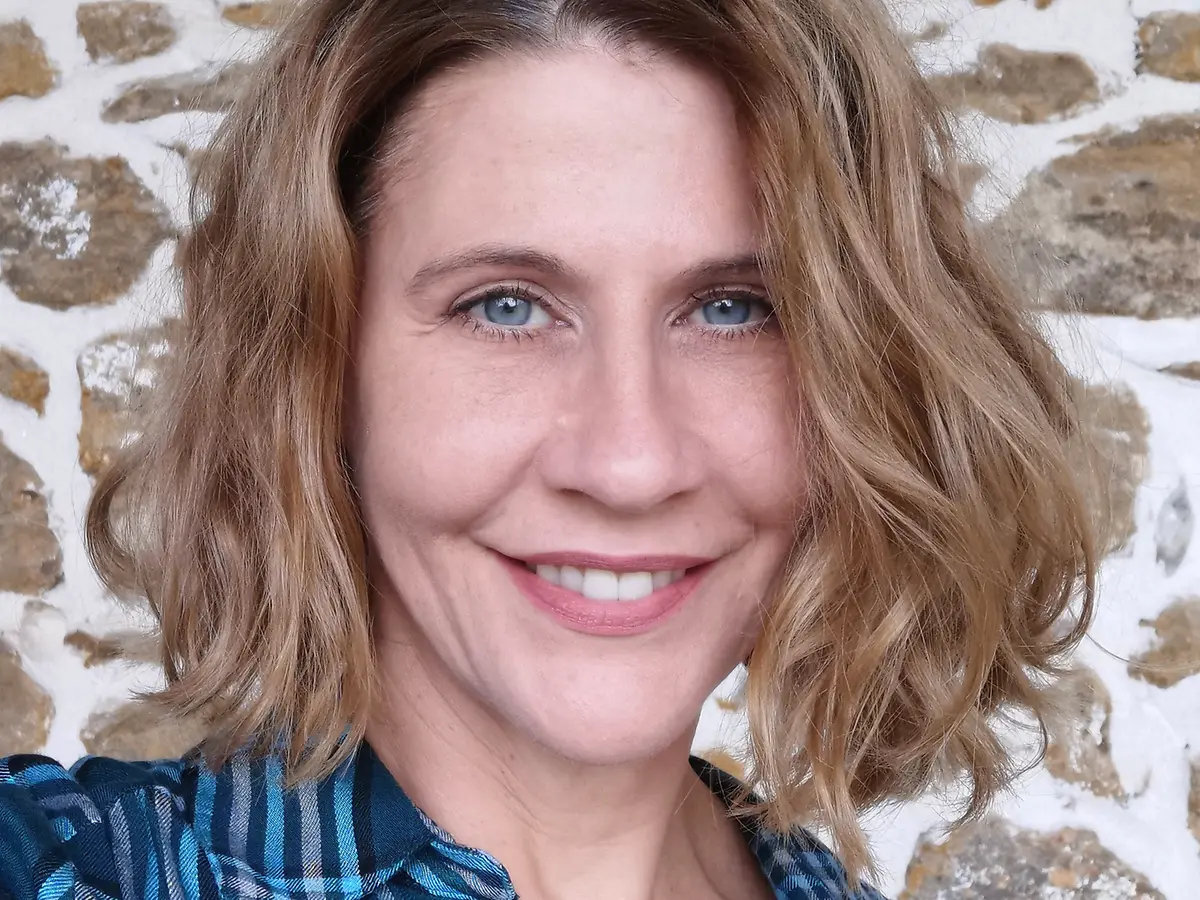
Coaching vs. therapy: how to make the right choice
Sometimes you may sense that things simply can’t carry on the way they are. This can become a big issue, especially in challenging times or when we’re not doing well. A question that often comes up is: do I need therapy – or is coaching “enough”? That’s exactly what we talk about in today’s podcast episode with Casy M. Dinsing, a psychologist and, above all, a coach with a clear, down-to-earth approach. This article takes up her perspective and adds a few pointers for you if you’re unsure whether therapy or coaching makes more sense.
But how can you actually work this out for yourself?

That isn’t always easy and can leave us feeling quite overwhelmed. As a rough rule of thumb: therapy is particularly important if your mental and emotional experience is of clinical significance, if you yourself are experiencing real distress, or if you notice that you can barely cope with everyday life. Therapy is often about stabilisation and working on deep wounds. Therapists are state-qualified, frequently work with diagnoses and often over a longer period, sometimes covered by health insurance. Most coaching services, by contrast, focus on personal issues without “clinical significance”. These might include questions about your career and calling, self-doubt, relationship patterns, phases of reorientation, inner blocks or the feeling of being stuck in a rut.
As you may already have noticed, coaching focuses more on what you specifically want to change and which steps can take you there. The focus is forward-looking: what do you need to shape your life more actively? At this point it’s important to recognise that both paths are valuable and can help us – just in different situations.
Our guest Casy deliberately doesn’t do therapy with her clients, and for her this is above all a question of attitude. She works mainly with people who aren’t in a “clinical crisis” but may clearly notice: I’m getting in my own way. Casy’s basic stance is clear: moaning is allowed, feelings are welcome, but at some point you also need to take the step into action. “Take your life into your own hands and do something” sums up very well how she works – challenging, yet warm and solution-focused. She also considers the following distinction important: not every difficult childhood and not every distressing experience automatically makes you “ill”.
You may have been shaped by suffering without that meaning you need a diagnosis. In coaching, these experiences are given space, but they don’t define you. What matters is what you want to create from where you are today. Casy therefore puts the focus on the here and now and on your future. “The past is part of you, but life takes place in the present moment.” And that’s exactly where Casy starts. What she is particularly critical of is the inflationary use of diagnoses and terms such as “narcissism” or “trauma“.
In coaching, our guest says, the focus is on the person and their specific concern, not on the label that gets attached to it. She draws on psychological expertise, but doesn’t just work with diagnoses in the medical sense – she works with you as a person, with your patterns, your story and your goals.
She wants to see the person sitting in front of her, not a template. In sessions she gets straight to the point and tries, within the first few minutes, to get a sense of what’s really going on, so that the time together can be used as effectively as possible. She even sees the fact that she often knows little about her clients’ background as an advantage: she meets everyone without preconceptions. At the same time, her psychological background is indispensable to her: for Casy, coaching doesn’t mean “just talking”, but handling psychological knowledge responsibly.
Perhaps you’re wondering what suits your situation. If you’ve been suffering for a long time, or if you feel your everyday life is falling apart, therapy is more likely to be the right setting. If, on the other hand, you notice that you’re stuck, e.g. in decisions, in relationships, in your work situation or in your self-image, coaching can be a good way to get moving again.
You might also ask yourself whether, right now, you need stability and protection, or whether you have enough strength to actively get going. Both can be true, and both are okay. Whatever you decide: it’s not about optimising yourself, but about being there for yourself – with your pain, your wishes and your responsibility for your life. Therapy and coaching aren’t opposites, but two different ways of turning towards yourself: one more profound and stabilising, the other more activating and future-oriented.
Betty Schneider (B.Sc. Psychology)
Videos on this topic
If you’d like to delve deeper into the topic, you’ll find a wide range of relevant videos on the YouTube channel “Tonka & Phil”. There is also a video called “Better Call Casy – Die Wahrheit über Coaching vs. Therapie” (Better Call Casy – The truth about coaching vs. therapy), which goes well with this article.
Deepen your meditation practice with Mindfulife
Meditation can be more than a short break in your everyday life. If you would like to understand more deeply how meditation works, how to build a steady practice of your own and how to guide others mindfully, our meditation teacher training is the next step. There you will not only get to know meditation in theory, but also develop more confidence, clarity and trust in your own practice.
Would you like to find out more about the training first? In our weekly webinar you will get an insight and learn more about what your path to becoming a meditation teacher could look like.
For regular support in your everyday life, you can also use our online meditation studio and join guided meditations flexibly via Eversports.
We look forward to accompanying you on your journey.