Building a Routine: Why It’s So Hard – and How to Stick With It

 · 4 min read
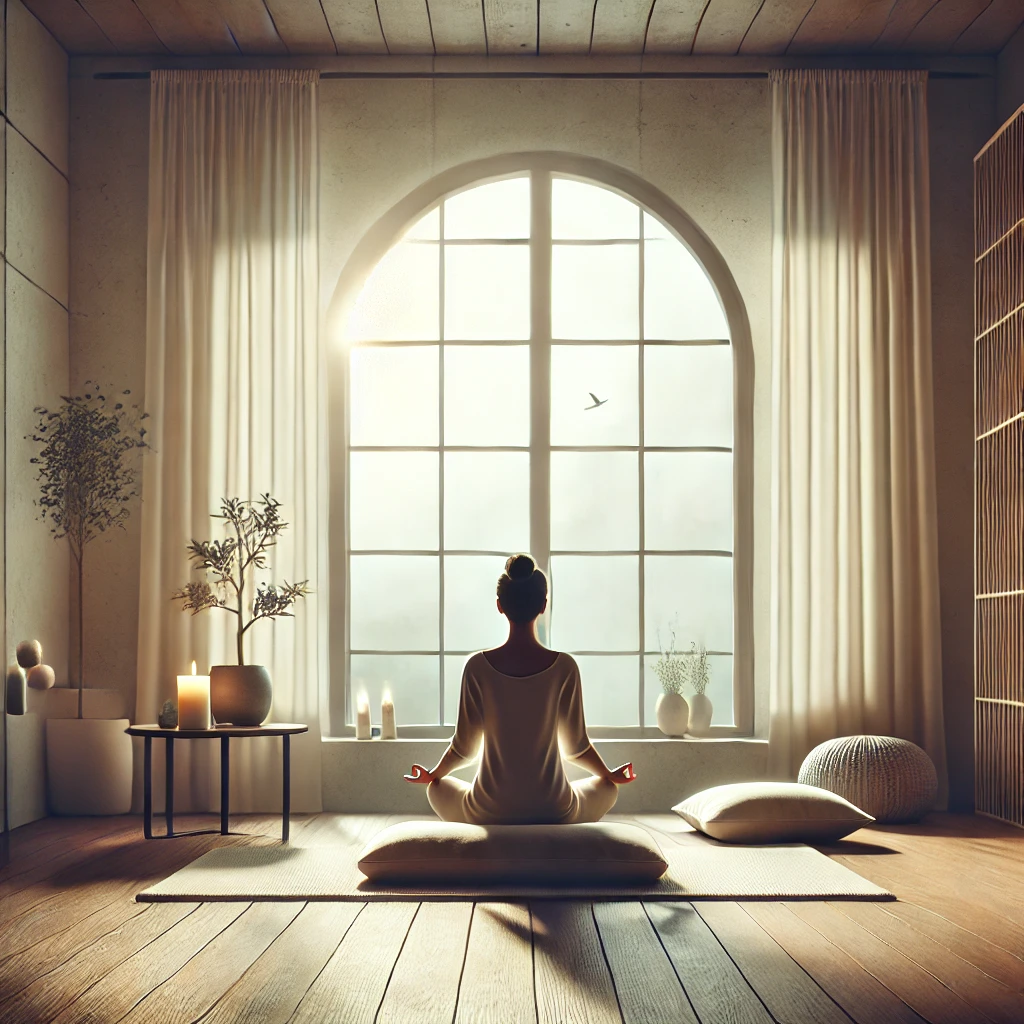
Many people find it hard to build a routine: you make good resolutions – exercise more, eat more healthily, go for walks more often or ring your parents more regularly. At first you’re motivated and you stick with it, but before long old habits start creeping back in. Perhaps this has already happened to you when trying to meditate regularly. In our often hectic everyday lives, there simply never seems to be enough time to pause consciously and use the moment just for yourself. And even when you do take that time, your thoughts keep wandering or other appointments get in the way. Don’t worry, you’re not alone.
In this article, we’d like to give you some tips to help you build your meditation routine.
How can I make a meditation routine a fixed part of my everyday life?
1. Regularity:
Meditating repeatedly is what makes the difference. Set a fixed time slot for your daily meditation when you realistically have time every day. It’s completely normal for meditation not to feel easy every time. What matters is that you keep at it. Focus less on individual sessions and more on regularity.
2. Build it into your routine:
Combine your daily meditation with a habit that is already firmly anchored in your everyday life. Morning routines are particularly well suited, as new habits are easier to establish at this time of day. However, if it suits you better to fit your daily meditation in after your evening workout or before going to bed, that makes just as much sense. The key thing is that meditation becomes part of your daily routine.
3. Start small:
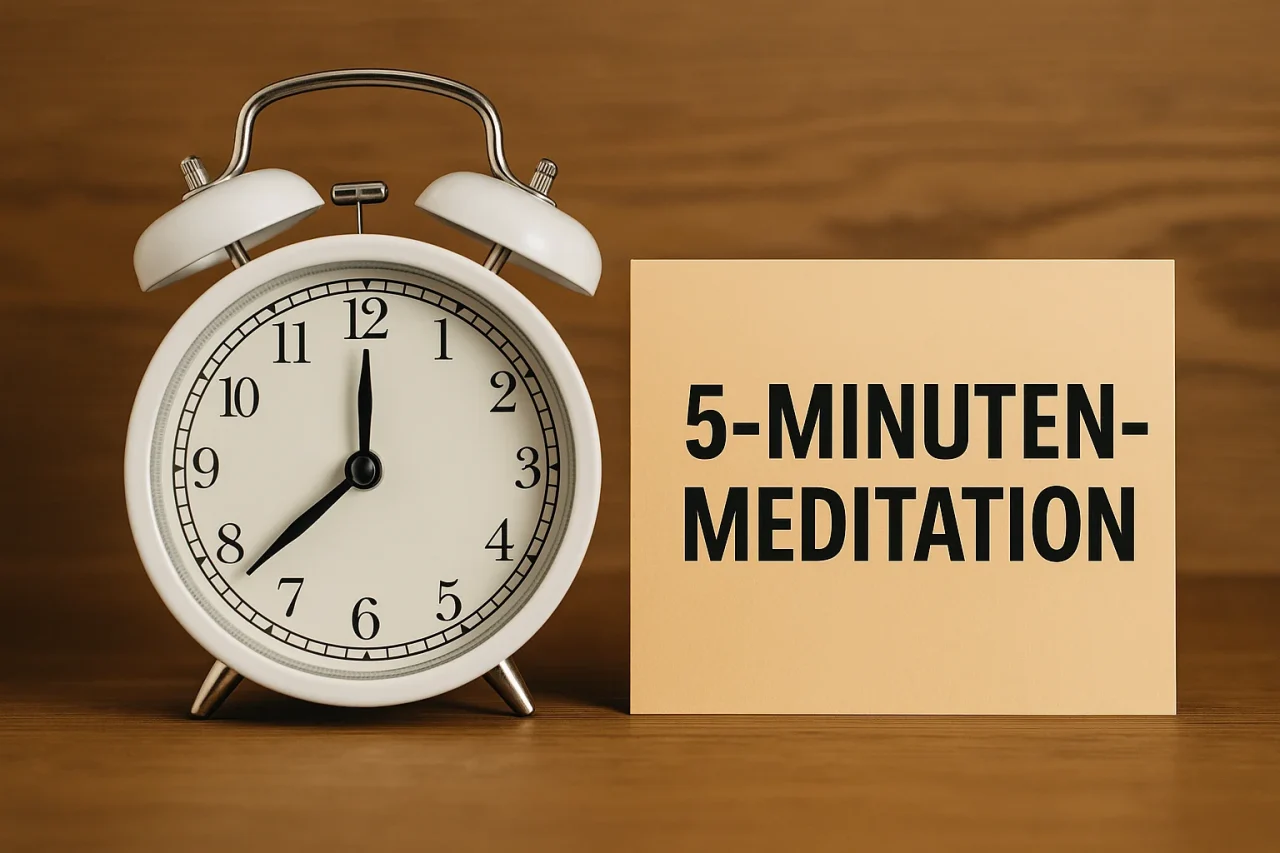
At the beginning, you should start with short meditation sessions so that you really keep up the daily practice. You can start with as little as one or two minutes – depending on what feels right for you and what is manageable. So it’s perfectly fine if you meditate for less than five minutes at first.
4. Find your meditation corner:
Set up a fixed place at home where you meditate. This place should be suitable for meditation: it should be quiet, with nothing to distract you. To make yourself comfortable, you can also use a meditation cushion, a meditation mat or other aids.
5. Stick to one method:
To notice progress, you should stick to one meditation method at the beginning. This allows practice effects to develop. A good method for beginners, for example, is one in which you concentrate on your breath: feel the breath coming in and going out again. Here, your breath serves as an anchor that you keep returning to in order to refocus.
6. Keep going and build up gradually:
If, after a few weeks, you notice that meditation has become a fixed part of your everyday life, you can gently extend its length. You may need some time to find the method, posture and ideal place for meditation that suit you. That’s completely normal. What matters is that you focus on regularity first before making your meditation longer.
How long does it take to build my routine?
In one study, researchers (Lally et al., 2010) found that it takes an average of around 66 days for a new habit to become established. This means that a new behaviour needs to be carried out over a longer period, ideally every day, for it to develop into a firm routine. However, the odd day on which you skip the new habit won’t undo the process straight away. What counts are regular repetitions, especially in the early phase of building a routine.

Bear in mind, however, that the 66 days mentioned are only a guideline. Everyone is different, and building a routine may take more or less time. To stay motivated, it can help to consciously notice and appreciate even small steps forward – because every single step brings you closer to your goal.
Conclusion
So if you’re trying to build your meditation routine, don’t give up straight away if it didn’t work out one day. What matters far more is that you keep trying to establish regularity, so that meditation gradually becomes a fixed part of your everyday life. Start small and build up your meditation once you notice that a regular rhythm has settled in.
To help you get started with your meditation routine, we recommend the “30-Day Meditation Challenge“, which you can find on the YouTube channel “Phil Pham Meditation”. For 30 days, we upload a video every day to support you in starting your meditation routine. We’d love for you to join in!
Annika H. (psychology student)
Videos on this topic:
If you’d like to explore the topic in more depth, you’ll find a wide range of related videos on the YouTube channel “Phil Pham Meditation“. There is also a video called “With these 6 tips, you’ll build a meditation routine from scratch“, which goes well with this article.
Deepen your meditation practice with Mindfulife
Meditation can be more than a short break in your everyday life. If you would like to understand more deeply how meditation works, how to build a steady practice of your own and how to guide others mindfully, our meditation teacher training is the next step. There you will not only get to know meditation in theory, but also develop more confidence, clarity and trust in your own practice.
Would you like to find out more about the training first? In our weekly webinar you will get an insight and learn more about what your path to becoming a meditation teacher could look like.
For regular support in your everyday life, you can also use our online meditation studio and join guided meditations flexibly via Eversports.
We look forward to accompanying you on your journey.
You can find more mindfulness inspiration on our channels too
References
Lally, P., van Jaarsveld, C.H.M., Potts, H.W.W. & Wardle, J. (2010). How are habits formed: Modelling habit formation in the real world. European Journal of Social Psychology,40, 998-1009. https://doi.org/10.1002/ejsp.674
Securvita (2021). Gewohnheiten ändern – Zeit für Neues. Securvital, 2, 6 – 10. https://www.securvita.de/fileadmin/inhalt/dokumente/auszuege_SECURVITAL/202102/securvital_0221_6-11.pdf