What are meditation retreats? An intensive experience for mind and soul
A meditation retreat is more than just a break from everyday life - it is a journey inwards. Whether you want to discover meditation for the first time or have already gained some experience, the combination of mindfulness, conscious movement and nature allows you to connect with yourself on a deep level. Beginners in particular benefit from the caring guidance and clear structures that many retreats offer. Perhaps now is exactly the right moment for your retreat - and your fresh start.

 · 3 min read
In a world full of stimuli, speed and constant availability, more and more people are longing for a break and a genuine reset for body, mind and soul. A meditation retreat offers exactly that: an intensive experience, usually lasting several days, in which you can focus entirely on yourself, your inner world and the present moment. Places of retreat like these have the potential to change your life in lasting ways. But what exactly happens on a meditation holiday like this, and what effects does it have?
What is a meditation retreat?
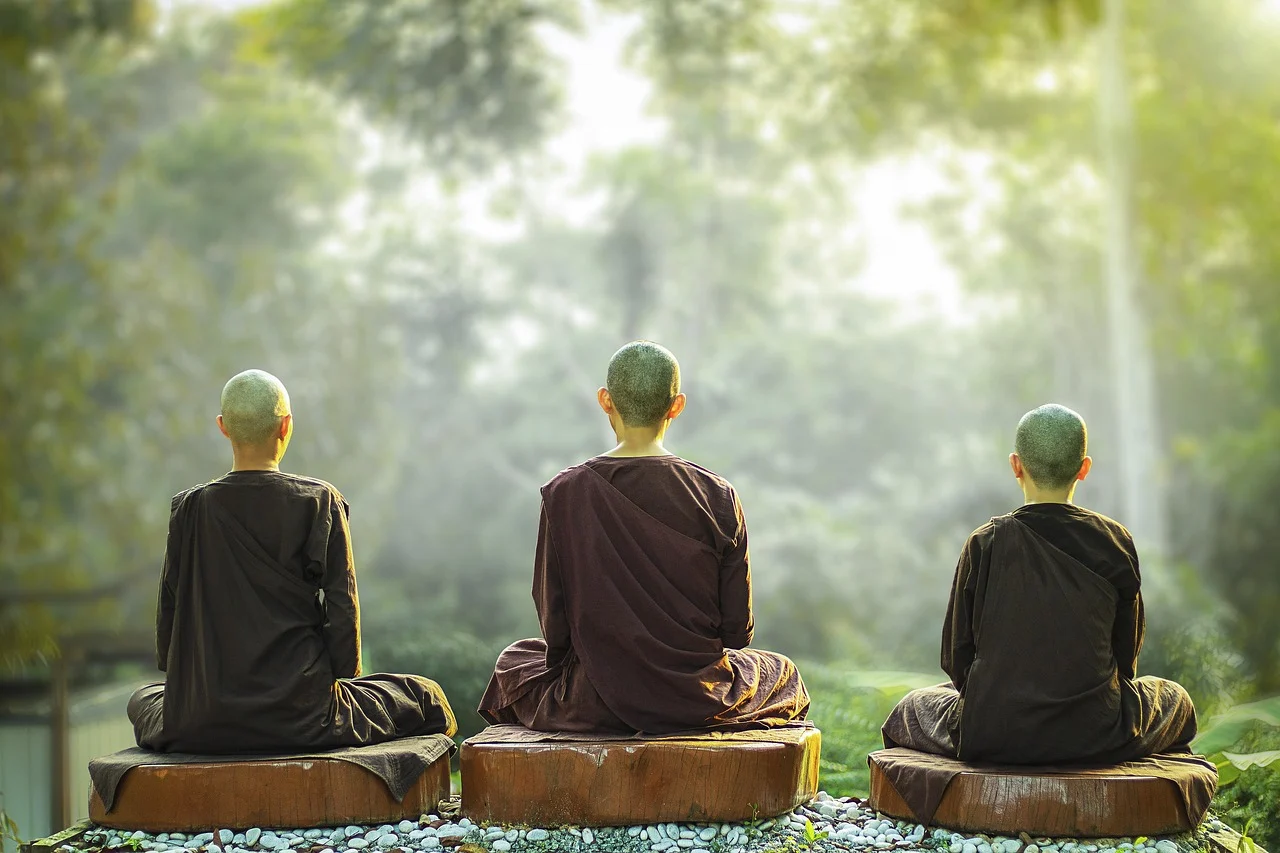
A meditation retreat is more than just a holiday. It is a conscious withdrawal from everyday life in order to find new clarity, energy and inner calm through meditation and silence. Retreats often take place in quiet locations close to nature – far away from noise and digital distractions. Participants spend several days (sometimes even weeks) in guided or silent meditation sessions, mindful walks, mindful eating and deep processes of reflection.
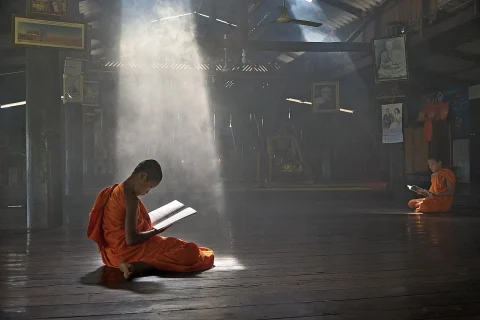
Retreats like these have their origins in Buddhism, but they now also resonate strongly in the West, and many different yoga and meditation getaways are on offer, in the mountains of Germany, Austria and Switzerland as well as by the sea in Portugal or Greece. The length of stay can also vary enormously, from a weekend to a whole month.
Why a retreat is so effective
The effect of a retreat can be compared to a deep mental and emotional cleanse. Regular meditation practice (sometimes for hours a day) creates space for insight, emotional healing and deep letting go. For many people, it is the first time they have truly come to rest. Thoughts are allowed to be there without being judged. Feelings arise without being suppressed. At this depth, you encounter yourself in a completely new way.
Ideal for beginners: learning to meditate
Many people think a retreat is only for those with a lot of spiritual experience. But the opposite is true: a meditation retreat for beginners is the perfect introduction to the world of mindfulness. Most retreats offer structured daily schedules with clear instructions, gentle meditation sessions and personal guidance from experienced teachers. This means that even newcomers can immerse themselves in the practice step by step – without feeling overwhelmed.
If you are new to meditation, a retreat is a wonderful opportunity to learn the basics properly and to dive straight into a deeper practice than would be possible on your own at home.
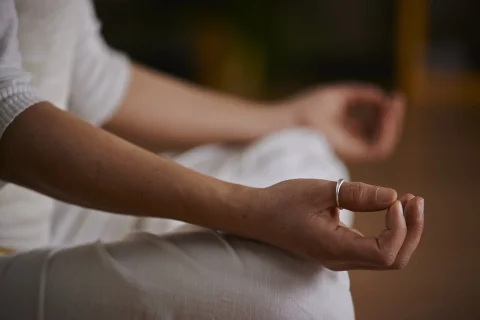
What types are there?
Vipassana (silent meditation)
Vipassana retreats consist of several days of silence and intensive self-observation. By focusing on bodily sensations and thoughts, participants aim to reach deeper self-knowledge.
Zen meditation
These retreats follow a strict daily structure with sitting meditation (zazen), a focus on the breath and rituals. The aim is to attain inner clarity through discipline and mindfulness.
Mindfulness retreats
This variant encourages conscious experience of the present moment and is often based on MBSR (Mindfulness-Based Stress Reduction). Meditation, breathing exercises and gentle movement help to reduce stress and increase wellbeing.
Yoga & meditation combined
Here, yoga exercises are combined with meditation to bring body and mind into harmony. The focus is on physical relaxation, mental clarity and inner balance.
Spiritual or Buddhist retreats
Often rooted in a religious or spiritual tradition, these retreats pass on deeper teachings. They include guided meditations, rituals and talks on self-knowledge and inner development.
What you take away from a retreat
Studies show that:
- Stress hormones such as cortisol are reduced
- Emotional resilience is strengthened
- Positive changes occur in brain structure (e.g. in the prefrontal cortex, which is responsible for self-reflection)
- The immune system and sleep quality improve
What is particularly exciting is that many participants report a changed self-image and long-term mental effects.
Conclusion: a gift to yourself
Whether you are an experienced yogi or are just taking your first steps into the world of meditation – a meditation or yoga retreat is an investment in your wellbeing and your mental health. It is a gift to yourself whose effects last long afterwards.
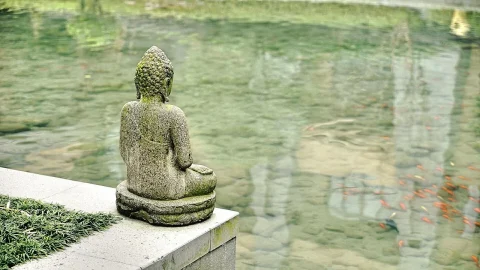
So if you feel that it is time to pause, to go deeper and to reconnect with your inner compass – then a break like this could be just what you need.
Selina C. (psychology student)
Deepen your meditation practice with Mindfulife
Meditation can be more than a short break in your everyday life. If you would like to understand more deeply how meditation works, how to build a steady practice of your own and how to guide others mindfully, our meditation teacher training is the next step. There you will not only get to know meditation in theory, but also develop more confidence, clarity and trust in your own practice.
Would you like to find out more about the training first? In our weekly webinar you will get an insight and learn more about what your path to becoming a meditation teacher could look like.
For regular support in your everyday life, you can also use our online meditation studio and join guided meditations flexibly via Eversports.
We look forward to accompanying you on your journey.
You can find more mindfulness inspiration on our channels too
References
Kabat-Zinn, J. (2013). Gesund durch Meditation: Das große Buch der Selbstheilung mit MBSR (H.Kappen, Übers.) (Vollständig überarbeitete Neuausgabe). Knaur Mens sana: Bd. 87568.
Knaur.
Ott, U. (2011). Meditation für Skeptiker: Ein Neurowissenschaftler erklärt den Weg zum Selbst. OW Barth. (eBook)
Stenger, K. (n.d.). Glücklicher durch Meditation: Erkenntnisse aus der Hirnforschung. Abgerufen am 11. April 2025, von https://katharina-stenger.de/gluecklicher-durch-meditation-erkenntnisse-aus-der-hirnforschung/
Vipassana Meditationszentrum Dhamma e.V. (n.d.). Verhaltenskodex für Teilnehmer an einem Vipassana-Kurs nach S. N. Goenka. Abgerufen am 11. April 2025, von https://www.dhamma.org/de/about/code#:~:text=Man%20beginnt%20mit%20der%20Beobachtung,des%20Leidens%20und%20der%20Ichlosigkeit
7Mind GmbH. (n.d.). Zen-Meditation: Was du über Gedanken, Atmung und Körperhaltung wissen solltest. Abgerufen am 11. April 2025, von https://www.7mind.de/magazin/zen-meditation-gedanken-atmung-koerperhaltung
MBSR-MBCT Verband e.V. (n.d.). MBSR – Achtsamkeit durch Meditation. Abgerufen am 11. April 2025, von https://www.mbsr-verband.de/achtsamkeit/mbsr