How do you find the perfect meditation cushion?
Find the ideal meditation cushion for your practice. Tips on choosing one, using it correctly and finding the best height for deeply relaxed meditation.

 · 7 min read
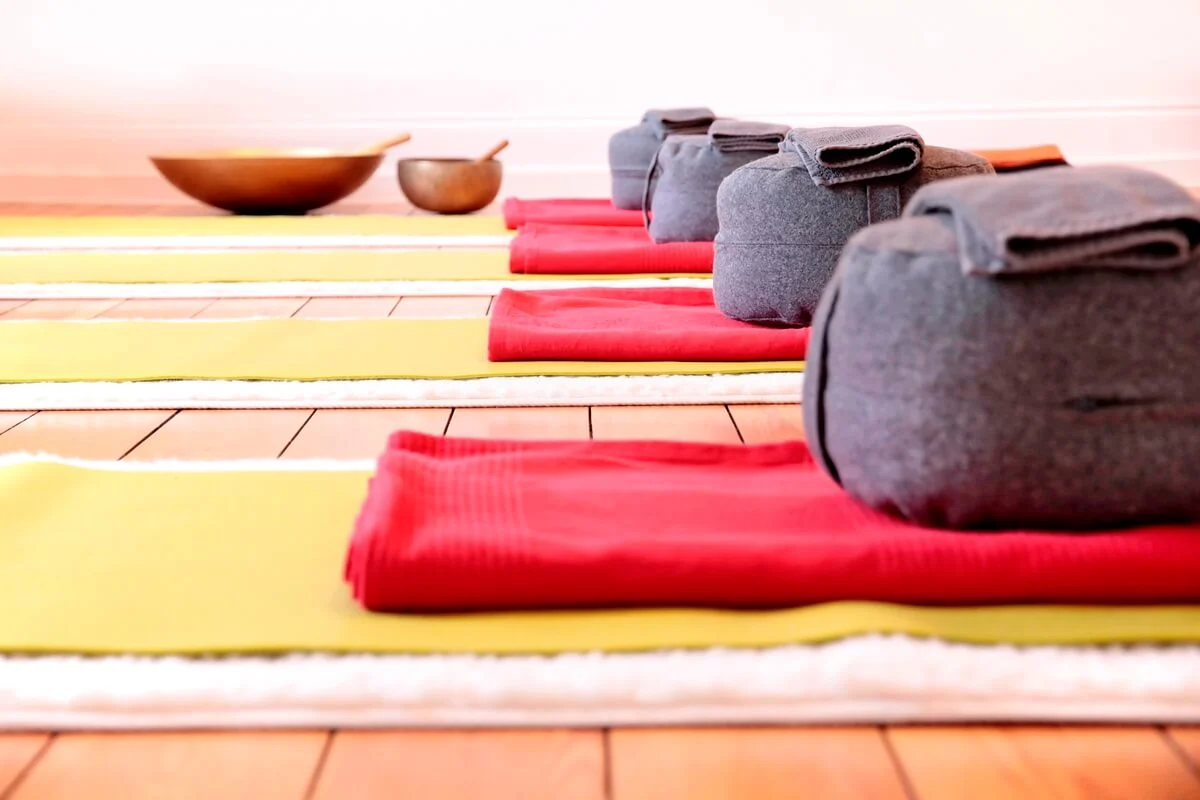
Meditation is a powerful practice that brings body, mind and soul into harmony. Yet the path to a deep meditation experience can sometimes be disrupted by simple factors such as discomfort or an awkward sitting position. This is where the meditation cushion comes in – an often underestimated aid that can transform your meditation practice. But how do you find the perfect yoga cushion to suit your needs? In this guide, we cover all the important aspects you should consider – from choosing the right cushion to using it to best effect.
Why is a meditation cushion useful?
A meditation cushion is more than just a decorative accessory in your yoga or meditation room. It is an essential tool that can significantly affect the quality of your meditation experience. When you meditate on the floor, the direct strain on your back, hips and knees can often lead to discomfort, which impairs your ability to concentrate. This is where the meditation cushion comes in: it raises your hips slightly and brings your knees closer to the floor, encouraging a more natural and stable sitting posture. This improved posture reduces tension in the joints and lower back, allowing you to focus on your meditation for longer and in a more relaxed way.
For beginners in particular, who may not yet be very flexible, a yoga cushion offers important support in finding the right posture. But experienced meditators can also benefit from a well-chosen meditation cushion, as it helps them immerse themselves more deeply in their practice and makes longer meditation sessions more comfortable.
How do I find the right meditation cushion?
Material and filling
The material and filling of a meditation cushion are crucial for comfort and durability. Covers made from natural materials such as cotton, linen or velvet are especially popular because they are breathable and kind to the skin. They make sure you don’t start sweating, even during longer meditation sessions.
The filling also plays an important role. Spelt husks and buckwheat hulls are the most commonly used filling materials. Both adapt well to the shape of your body and provide stable support that allows you to sit comfortably. Spelt husks are slightly softer and springier, while buckwheat hulls feel firmer. An alternative filling is kapok, a plant fibre that also offers good support but is somewhat softer and lighter.
Shape and design
Meditation cushions come in various shapes, each offering different benefits. The classic round shape is versatile and suitable for a wide range of sitting positions. Crescent-shaped cushions, also known as zafus, are particularly useful if you need more support for your thighs and more legroom. Rectangular cushions can be used both for kneeling and for sitting cross-legged, and offer a larger seating surface.
The design of the cushion should be not only functional but also aesthetically pleasing. A beautiful cushion that suits your meditation space can have a positive effect on the atmosphere and motivate you even more to meditate regularly.
Size and height
The size and height of the meditation cushion are crucial to how comfortably you can sit on it. Larger cushions offer more seating space and are especially suitable for people with a larger build. The height of the cushion depends largely on your flexibility and your preferred sitting position.
A higher meditation cushion (such as this one with a height of 15 cm) is ideal for beginners or people with limited mobility, as it raises the hips and takes pressure off the knees. It helps position the hips higher than the knees, which reduces the strain on the joints. Lower cushions (5-10 cm) are better suited to more flexible people or those who want to feel a stronger connection to the ground.
How do you use a meditation cushion correctly?
Sitting positions on the meditation cushion
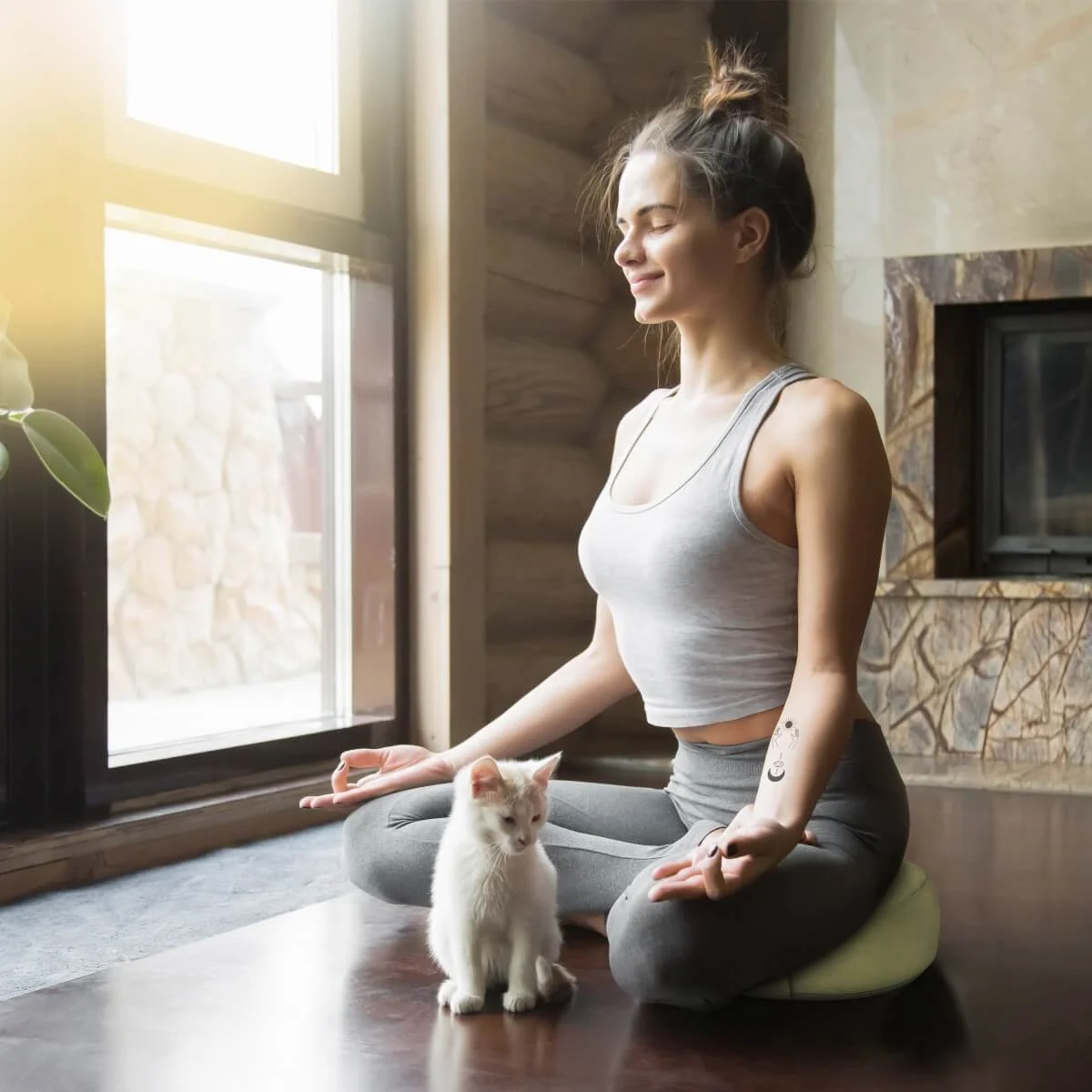
The way you use your meditation cushion can significantly improve your meditation experience. The most common sitting position on a meditation cushion is the cross-legged seat (Sukhasana). In this position, you sit on the cushion with your legs crossed, which raises your hips and supports a straight spine. This reduces the pressure on your knees, and you can sit comfortably for longer.
For those who prefer the lotus position (Padmasana), a meditation cushion provides extra support by raising the hips and holding the knees in a stable position. If you prefer to meditate in a kneeling position (Vajrasana), a rectangular cushion can be placed under your buttocks to reduce pressure on your ankles and lower back.
Tips for getting the most out of it
To get the most out of your meditation cushion, it is important to adjust your sitting position regularly to avoid tension. Make sure your hips are higher than your knees to ensure an upright posture. This position helps you deepen your breathing and focus on your meditation for longer. If you meditate for longer periods, change position from time to time to maximise comfort and promote circulation.
How high should a meditation cushion be?
The ideal height of a meditation cushion depends on several factors, including your height, flexibility and preferred sitting position. As a general rule of thumb, less flexible people should choose higher cushions to raise the hips and take pressure off the knees. A cushion around 15-20 cm high is ideal for beginners or people with limited mobility.
For advanced practitioners or very flexible people looking for a more intense connection to the ground, lower cushions with a height of 5-10 cm are more suitable. These cushions allow for deeper grounding and encourage a stronger bond with the earth, which deepens the meditation.
Different meditation cushions for different needs
Meditation cushions come in a wide variety of styles and shapes, tailored to different needs and preferences. Here are a few examples:
- Zafu cushion: This classic round cushion is traditionally used in Zen meditation and provides a stable and comfortable sitting position. It suits various sitting postures and is particularly good for those who prefer an upright posture.
- Crescent-shaped cushions: These cushions provide extra support for the thighs and encourage an open hip position. They are ideal for people who need more legroom or are looking for a closer connection to the ground.
- Rectangular cushions (zabuton): These flat, rectangular cushions offer a larger surface and can be used under a zafu cushion or directly on the floor. They work well for kneeling positions and provide extra comfort for the ankles and lower back.
- Travel cushions: If you are often on the move but don’t want to give up your meditation practice, lightweight and compact travel cushions are the ideal choice. They are easy to carry and still provide enough support for a comfortable sitting posture.
Caring for and cleaning your meditation cushion
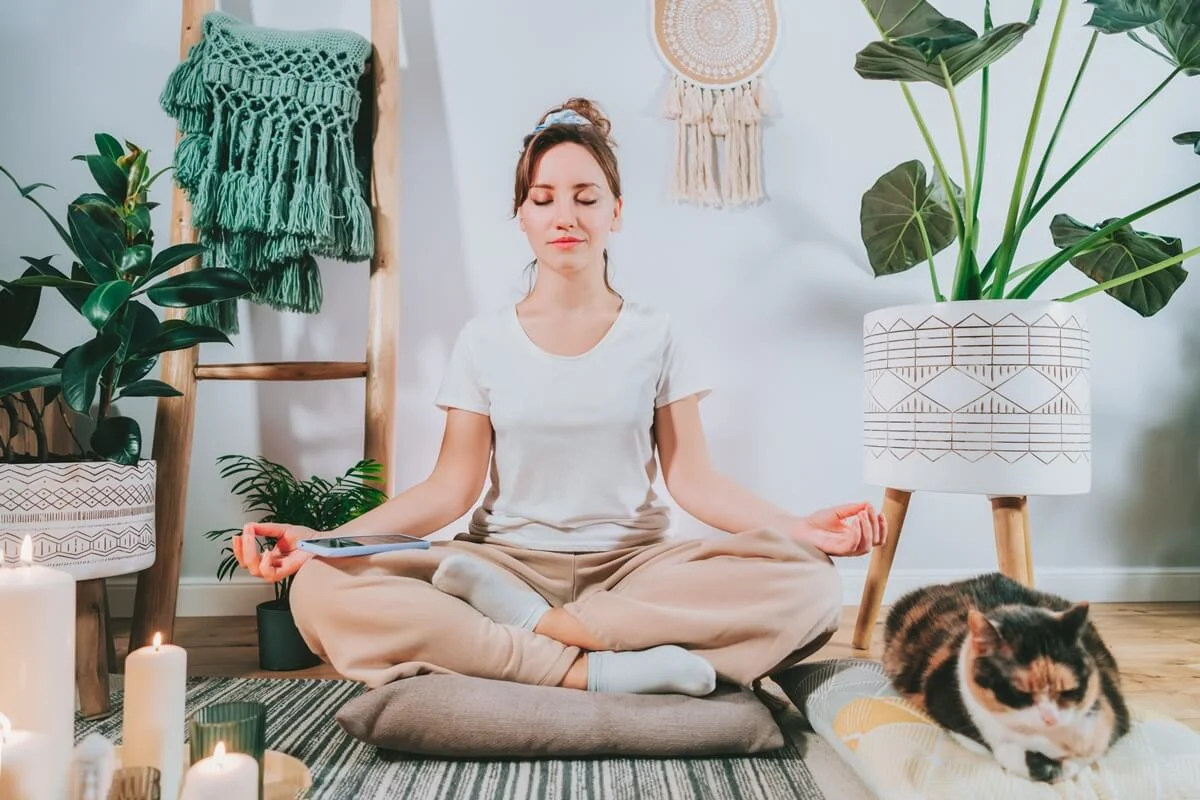
To make sure your meditation cushion lasts a long time and stays in good condition, proper care is essential. Many cushion covers are removable and machine washable. However, be sure to follow the manufacturer’s care instructions so that the cover doesn’t shrink or fade.
The filling should also be checked regularly and topped up or replaced as needed. Spelt husks and buckwheat hulls in particular can compact over time and should be replaced to ensure optimal support. Store your cushion in a dry place to avoid damp damage, and protect it from direct sunlight to preserve the material.
Conclusion: the perfect meditation cushion as the key to deep relaxation
A meditation cushion can significantly improve your meditation experience by helping you find a comfortable and stable sitting position. It reduces the strain on your back and joints, allowing you to engage with your meditation for longer and with greater focus. Material, shape, size and height all play a crucial role in choosing the right cushion. By finding the perfect meditation cushion for your needs, you open the way to a deeper and more fulfilling meditation practice.
Whether you are a beginner or already more advanced – with the right meditation cushion, you can take your meditation practice to the next level. Invest in a cushion that meets your individual needs and enjoy the benefits of deep, relaxed meditation. Your body and mind will thank you.
About the guest author Roland Späht
Roland Späht is the founder of BACKLAXX® and a content strategist. Since childhood, he has struggled with back pain due to scoliosis. After studying engineering, he worked in project management for many years, during which time he devoted himself intensively to treating his worsening back pain.
His goal was to fight his way out of this downward spiral of pain without medication or ongoing medical treatment. Along the way, he found ways and means that relieved his pain for good. He is firmly convinced that everyone can find an alternative way out of pain.
Deepen your meditation practice with Mindfulife
Meditation can be more than a short break in your everyday life. If you would like to understand more deeply how meditation works, how to build a steady practice of your own and how to guide others mindfully, our meditation teacher training is the next step. There you will not only get to know meditation in theory, but also develop more confidence, clarity and trust in your own practice.
Would you like to find out more about the training first? In our weekly webinar you will get an insight and learn more about what your path to becoming a meditation teacher could look like.
For regular support in your everyday life, you can also use our online meditation studio and join guided meditations flexibly via Eversports.
We look forward to accompanying you on your journey.
You can find more mindfulness inspiration on our channels too
References
"Meditation." (2024). Wikipedia. Verfügbar unter: https://de.wikipedia.org/wiki/Meditation (abgerufen am 26. August 2024).
Peters, T. (2020). "Meditation und Wissenschaft." Forschung und Lehre. Verfügbar unter: https://www.forschung-und-lehre.de/forschung/meditation-und-wissenschaft-194 (abgerufen am 26. August 2024).
Bildquellen: cmfotoworks@despositfotos.com, OKrasyuk@despositfotos.com