Mindfulness exercise: 5 steps to inner calm with tea
Mindfulness is the ability to be in the here and now and to perceive the moment consciously. Find out in the following article how you can do an effective mindfulness exercise with nothing more than a cup of tea!

 · 6 min read
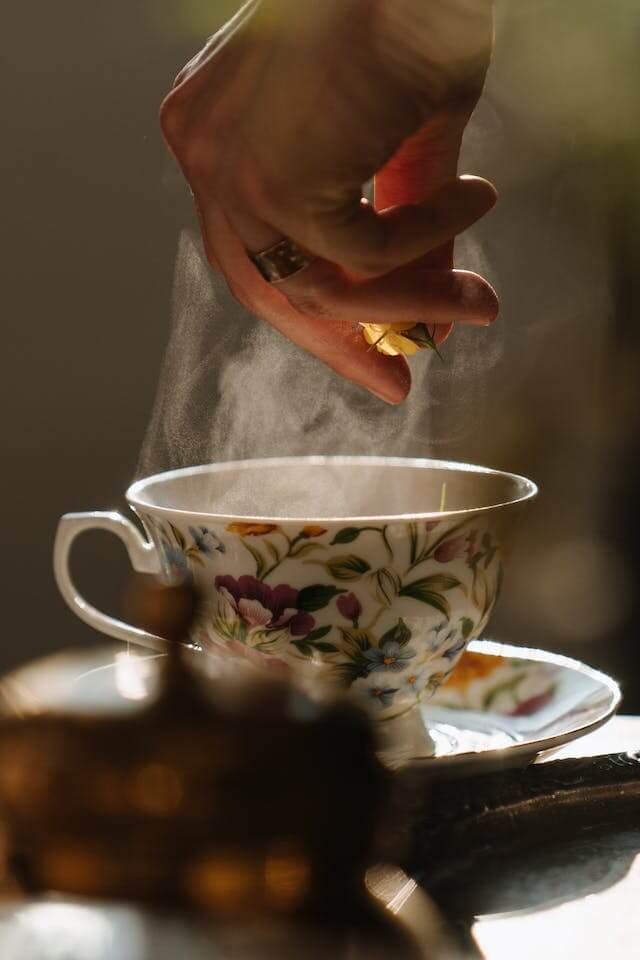
Mindfulness is the ability to be in the here and now and to perceive the moment consciously. Find out in the following article how you can do an effective mindfulness exercise with nothing more than a cup of tea!
How are mindfulness and tea connected?
Mindfulness and tea – how do they fit together? Mindfulness is the opposite of multitasking. It describes the ability to be in the here and now without distractions, to perceive the moment consciously and without judgement, and to focus on just one thing. In our hectic everyday lives, where we are always reachable, this ability can quickly get lost. So that you too can benefit from the positive effects of mindfulness, today we are showing you a mindfulness exercise that you can easily build into your daily routine – drinking tea.
The world of tea cultures is as diverse as the leaves of the tea plant itself. The history of tea reveals a rich tradition stretching back centuries: from the spiritual Japanese tea ceremony and the convivial East Frisian ‘Teetied’ (tea time) to South American mate, also known as the ‘green gold of the Indigenous peoples’. Tea has long fascinated humanity with its effects on body and mind, which is why it is often used as an aid for mindfulness exercises and meditation.
So instead of drinking our tea over breakfast, while working or while reading, we want to take 15 minutes, in the spirit of a mindfulness exercise, to experience the entire process from preparing the tea to drinking it with all our senses. If you’re not yet sure which tea is right for you, or you’d like to learn more about the effects of the different types of tea, we’ll first introduce you to a few varieties.
Different types of tea – different effects?
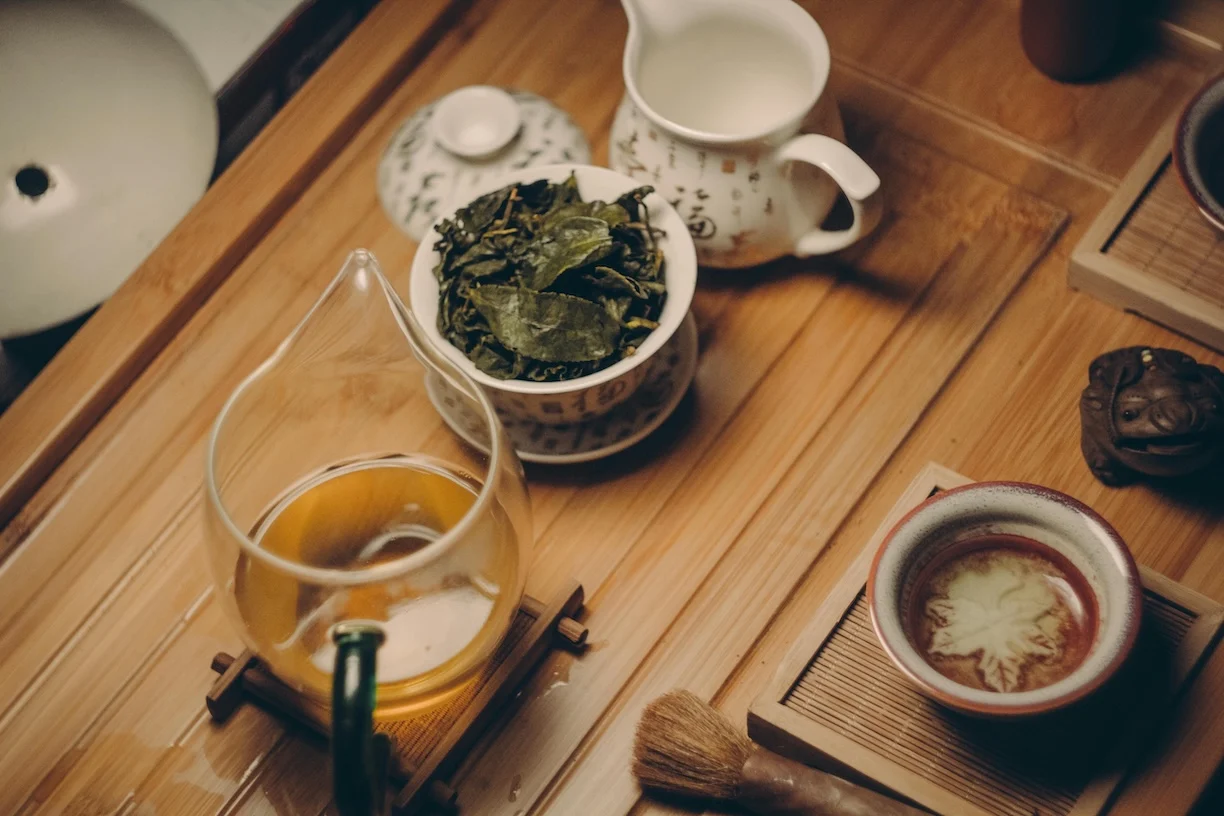
Just as the various types of tea taste different, they also have different effects. Below, we introduce you to the best-known types of tea and their effects.
Green tea:
Green tea is particularly popular in Asian regions, not least because of its history and the cultivation of tea leaves there. Green tea offers a whole range of benefits. Among other things, it contains magnesium, vitamin C, calcium and theanine. The latter in particular creates a feeling of relaxation in the body and contributes to stress reduction. Green tea not only cares for the skin and keeps it hydrated, but also protects our body’s cells. It can also help with weight loss and, when consumed regularly, may lower the risk of cancer. So green tea is quite the all-rounder among the different types of tea.
Thanks to the caffeine it contains, green tea can also be described as a pick-me-up and is a good alternative to your morning cup of coffee. Accordingly, you should avoid green tea before going to bed. When preparing green tea, be sure to stick to the brewing time given by the manufacturer, otherwise your tea will quickly take on a grassy taste.
Fruit tea:
As the name suggests, fruit tea is made from various kinds of fruit. These are dried and then infused with hot water. Fruit tea not only usually has a lovely red colour – it also provides the body with important minerals and vitamins. Fruit tea contains no caffeine and, thanks to its natural sweetness, is very popular with children.
Herbal tea:
Herbal tea is perceived as particularly aromatic. Probably the best-known herbal teas are peppermint, camomile and nettle tea. Especially with gastrointestinal complaints, a cup of herbal tea can support the body. Besides its classic use as a drink, it can also work wonders as a steam bath for colds. To do this, the tea is brewed as usual and then inhaled to clear and relax the airways.
Black tea:
You probably know black tea as a pick-me-up. It contains a particularly high amount of caffeine and is therefore often drunk at breakfast. Unlike with coffee, the caffeine in black tea is not released immediately. Caffeine levels rise in our body over several hours – the advantage: we stay awake and focused without experiencing a so-called ‘crash’. However, because of the caffeine, pregnant women and people with high blood pressure should not drink more than one or two cups a day.
Chai tea, a subcategory of black tea, is drunk especially in the southern regions of Asia. It consists of black tea, the typical chai spices (cinnamon, cloves, ginger, cardamom) and a dash of milk.
White tea:
White tea is the least processed tea. It contains particularly high levels of potassium and fluoride and therefore protects and strengthens your teeth and the surrounding gums in particular. White tea doesn’t stain your teeth and also protects them from the acid produced by tooth-decay bacteria in the mouth. It helps your body to reduce stress, making it especially well suited to a mindfulness exercise. The same applies to its preparation as to green tea – if it steeps for too long, it tastes bitter.
Now that you’ve been introduced to the best-known types of tea and their various effects, we can begin the mindfulness exercise. Make yourself a cup of a tea that suits you and your needs, and off we go.

Mindfulness exercise: instructions
Before you begin, try to find a quiet place away from distractions such as your smartphone and laptop. Choose a comfortable spot where you won’t be disturbed for the next 15 minutes and can do the mindfulness exercise.
Step 1: Start with a few conscious breaths to fully arrive in the moment and open yourself up to the exercise ahead.
Step 2: First, use all your senses to notice how you put the tea into the cup. Look closely at the cup. What colour is it? How does the surface of the cup feel against your skin? Is it rough or smooth – cold or warm – wide or narrow? What does the tea look like – what ingredients and colours does it have? What does the tea smell like? Is it heavy or light? How does the weight of your cup change when you add the tea?
Step 3: Next, bring the water to the boil. Perhaps in a kettle or in a pan? Do you feel the heaviness in your arm as you pour the water in? What does it sound like when the water hits the bottom? Does it take long for the water to start boiling? Notice the sounds of the water coming to the boil and observe where the steam escapes. Can you see the boiling water and follow the steam with your eyes?
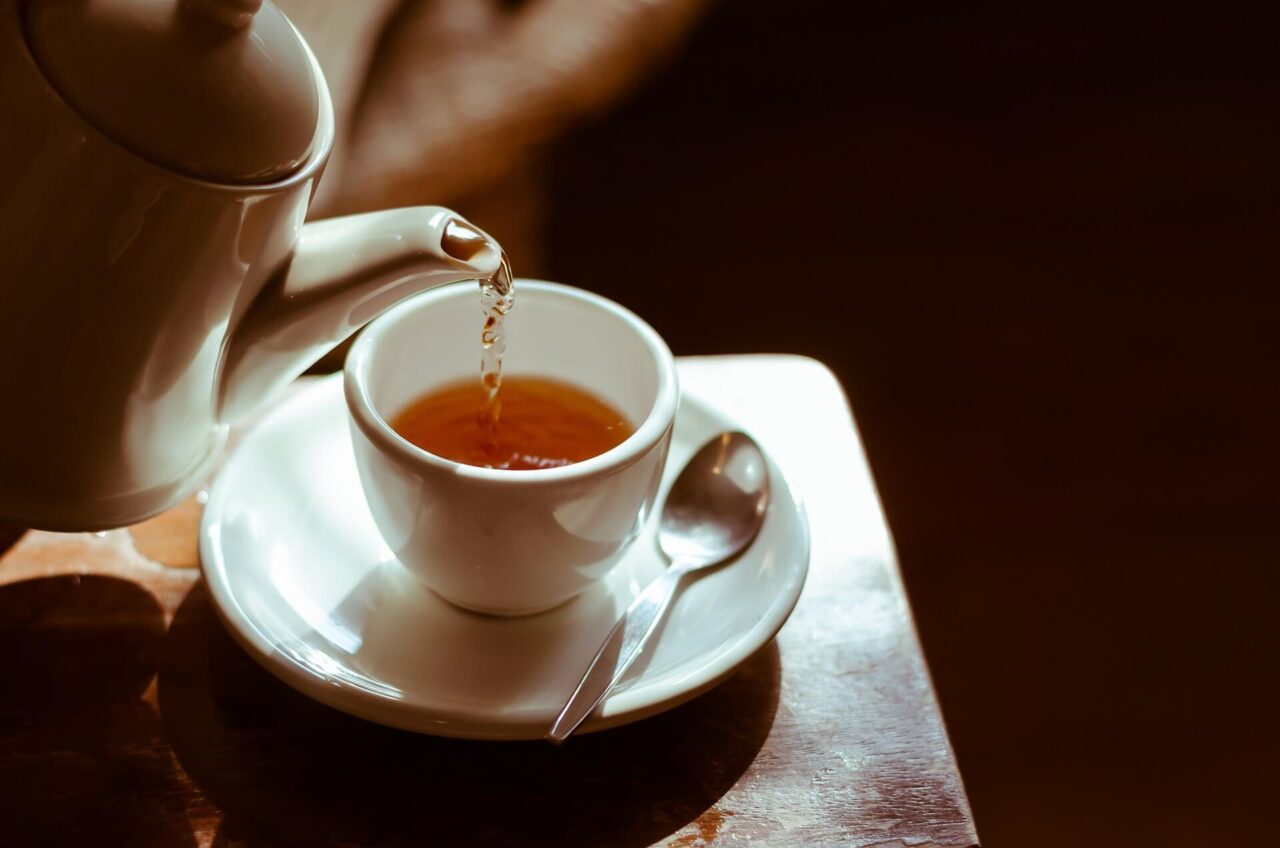
Step 4: Now involve all your senses as you pour the water over the tea. Notice the sounds of the water and the temperature of the teacup in your hands. You can watch the water flow into the cup and slowly take on the colour of the tea. What does the rising steam smell like?
Step 5: Try to stay in the moment as you drink the tea. If disruptive or distracting thoughts arise, calmly refocus on your tea with your next breath. What does it taste like? Can you pick out individual ingredients? How does the temperature in your hands change? How do your mouth and throat feel? How big are the sips you take?
Bringing it into everyday life
We hope you enjoyed the mindfulness exercise. When practising, regularity is what matters most. You’ll experience positive effects more quickly if you practise a little every day rather than a lot all at once every two weeks. Perhaps you’d even like to make the mindfulness exercise a regular part of your everyday life, for example your morning routine. If you’d like to know how best to do this, take a look at our blog articles on the topic!
Deepen your meditation practice with Mindfulife
Meditation can be more than a short break in your everyday life. If you would like to understand more deeply how meditation works, how to build a steady practice of your own and how to guide others mindfully, our meditation teacher training is the next step. There you will not only get to know meditation in theory, but also develop more confidence, clarity and trust in your own practice.
Would you like to find out more about the training first? In our weekly webinar you will get an insight and learn more about what your path to becoming a meditation teacher could look like.
For regular support in your everyday life, you can also use our online meditation studio and join guided meditations flexibly via Eversports.
We look forward to accompanying you on your journey.
You can find more mindfulness inspiration on our channels too
References
Diepvens, K., Westerterp, K. R., & Westerterp-Plantenga, M. S. (2007). Obesity and thermogenesis related to the consumption of caffeine, ephedrine, capsaicin, and green tea. American Journal of Physiology-Regulatory, Integrative and Comparative Physiology, 292(1), R77–R85. https://doi.org/10.1152/ajpregu.00832.2005
Imai, K., Suga, K., & Nakachi, K. (1997). Cancer-preventive effects of drinking green tea among a Japanese population. Preventive Medicine, 26(6), 769–775. https://doi.org/10.1006/pmed.1997.0242
Katiyar, S. K., Ahmad, N., & Mukhtar, H. (2000). Green tea and skin. Archives of Dermatology, 136(8), 989–994. https://doi.org/10.1001/archderm.136.8.989
Tang, G. Y., Meng, X., Gan, R. Y., Zhao, C. N., Liu, Q., Feng, Y. B., Li, S., Wei, X. L., Atanasov, A. G., Corke, H., & Li, H. B. (2019). Health functions and related molecular mechanisms of tea components: An update review. International Journal of Molecular Sciences, 20(24), 6196. https://doi.org/10.3390/ijms20246196