Focus meditation: how do I guide it?
Basic tips for guiding meditation, using focus meditation, a simple breathing meditation, as an example.

 · 5 min read
Introduction: how can I share meditation with others?
Perhaps you have been practising meditation yourself for some time and would now like to share your experience with others. But how do you guide people through a meditation safely and sensitively? What should you pay attention to so that participants feel comfortable and are able to engage with the practice?
Meditation has evolved from a spiritual practice into a recognised method of stress management and health promotion. Focus meditation in particular – often practised as a breathing meditation – is suitable for beginners and experienced meditators alike. It helps you to direct your attention consciously, encourages inner calm and cultivates mindfulness.
In this article, you will learn the five essential steps for successfully guiding a focus meditation. You will also find concrete examples of wording that make it easier to put them into practice. In addition, I’ll give you practical tips on how to create a relaxed atmosphere and respond to individual needs.
How do I prepare for a focus meditation?
Before you begin the meditation, participants should find a posture that is relaxed and upright at the same time. Finding the right sitting position is often a challenge, especially for beginners. So briefly explain that they can sit either on a chair or on a cushion – what matters most is that they feel comfortable.
Also emphasise that nobody has to endure pain or discomfort. Small movements or a change of position during the meditation are perfectly fine. This is the only way participants can truly let go and settle into the practice.
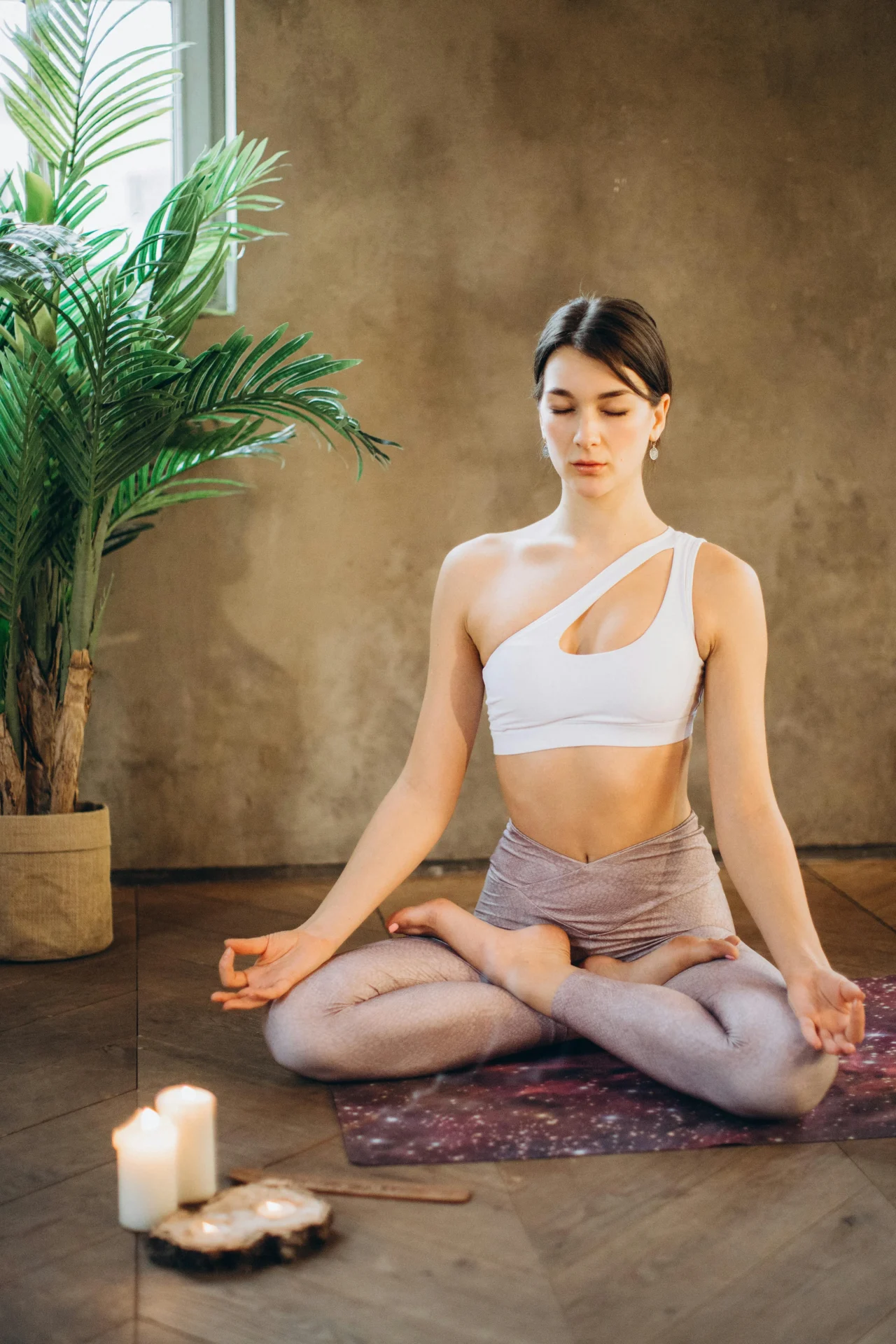
Example phrase:
‘Find an upright but relaxed sitting posture – whether on a chair or on a cushion. If you notice during the meditation that something becomes uncomfortable, allow yourself to change your position gently.’
Tip: Create a pleasant environment: soft sounds, dimmed lighting or a quiet corner can noticeably enhance the meditation experience.
How do I begin the focus meditation?
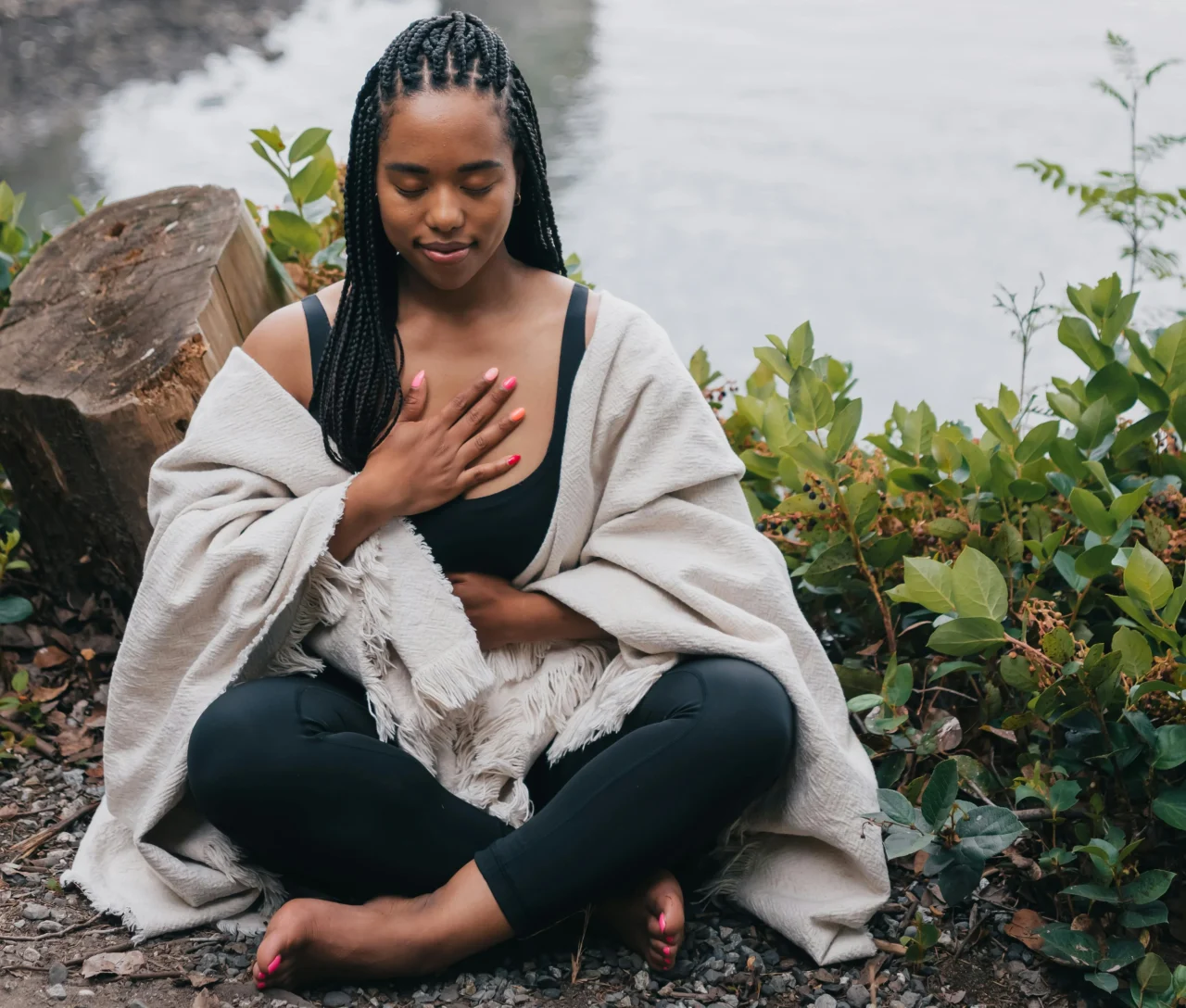
Once everyone has found a comfortable position, guide them to close their eyes and gently turn their attention to the breath. The aim is not to change the breath, but to perceive it consciously – just as it is right now. This step helps people step out of the everyday ‘autopilot’ and shift into a state of mindfulness.
Example phrase:
‘When you’re ready, gently close your eyes and bring your attention to your breath – without changing it, simply noticing how it comes and goes.’
How do I perceive the breath during focus meditation?
Awareness of the breath is at the heart of focus meditation. The crucial point is that the breath is not controlled, only observed. Participants are free to choose where they can feel their breath most clearly – at the nose, in the chest or in the abdomen. This openness makes it easier to perceive one’s own breath consciously, without pressure or expectation.
Example phrase:
‘You don’t need to change anything about your breath – it can be exactly as it is right now. Feel it wherever it is easiest for you: perhaps at the nose, as you notice the air flowing in and out. Or in your upper body, where your chest or belly rises and falls as you breathe. Simply feel the breath wherever you can sense it well.’
Tip: Encourage participants to gently turn their senses to sounds, smells or bodily sensations as well, to anchor their mindfulness even more firmly.
How do I deal with thoughts during focus meditation?
A wandering mind is completely normal and part of meditation. What matters is noticing these thoughts without judgement and gently guiding the attention back to the breath. The breath serves as an anchor that you can return to again and again – as often as needed.
Example phrase:
‘When you notice that your thoughts are drifting, kindly return to the breath. Feel how your breath comes and goes. Use the breath as an anchor you can come back to again and again.’
Tip: A brief reminder that perfection is not the goal can take the pressure off participants: it’s not about switching thoughts off, but about noticing them consciously.
How do I end a focus meditation?
To close, attention is guided away from the breath and back to the whole body. Participants consciously notice their posture and then open their eyes. This allows for a gentle transition from the meditative state back into everyday life.
Example phrase:
‘Become aware of your body again and notice how you are sitting right now. Let the experience linger for a moment. If your eyes were closed, feel free to open them again whenever you’re ready.’
Tip: A short debrief or an exchange about the experience can be especially helpful for beginners, allowing them to reflect on and appreciate the effects of the meditation.
Does focus meditation really help?
Scientific studies confirm the effectiveness of focus meditation: regular practice can reduce stress, increase psychological wellbeing and improve quality of life (Van der Riet, Levett-Jones & Aquino-Russell, 2018).
A 2013 review summarises the findings of 47 studies and shows that meditation techniques such as focus meditation have positive effects on mental health, stress management and general wellbeing. The study highlights that regular meditation practice leads to a significant reduction in stress and psychological symptoms and improves quality of life (Keng, Smoski & Robins, 2013).
Conclusion: why is guiding meditation worthwhile?
Guiding a meditation is an enriching experience that allows you to accompany others on their path towards greater mindfulness. Patience, clear and calming language, and openness are key. Focus meditations in particular offer beginners an easy way in and help to integrate mindfulness into everyday life step by step.
With the steps presented here, you can design your meditation sessions in a structured and sensitive way. Remember: every experience is individual, and even small progress among participants is a great success.
I hope these tips support you as you guide your own meditations. If you enjoyed the article, feel free to share your thoughts in the comments. If you are interested in training as a meditation teacher, you can find more information here. Enjoy your meditation!
revised on 28 August 2025
by Katharina R. (psychology student)
Deepen your meditation practice with Mindfulife
Meditation can be more than a short break in your everyday life. If you would like to understand more deeply how meditation works, how to build a steady practice of your own and how to guide others mindfully, our meditation teacher training is the next step. There you will not only get to know meditation in theory, but also develop more confidence, clarity and trust in your own practice.
Would you like to find out more about the training first? In our weekly webinar you will get an insight and learn more about what your path to becoming a meditation teacher could look like.
For regular support in your everyday life, you can also use our online meditation studio and join guided meditations flexibly via Eversports.
We look forward to accompanying you on your journey.
You can find more mindfulness inspiration on our channels too
References
Beltz Verlagsgruppe GmbH & Co. KG. (Hrsg.). (2020). Psychologie Heute Compact 60: Yoga, Meditation, Achtsamkeit – Was die drei Lehren ausmacht und wie wir sie für unseren Alltag nutzen können. Beltz.
Beltz Verlagsgruppe GmbH & Co. KG. (Hrsg.). (2018). Psychologie Heute 3/2018: Heilkraft Meditation – Wie Sie durch Innehalten Körper und Seele stärken (1. Aufl., 108 S.). Beltz.
Calm Editorial Team. (2023, November 20). How to use focused attention meditation to boost concentration. Calm. https://www.calm.com/blog/focused-meditation
Frey, R. (Hrsg.). (2020). Meditation und die Zukunft der Bildung: Spiritualität und Wissenschaft. Beltz Juventa. https://content-select.com/de/portal/media/view/5e623539-cd60-46c8-b5a4-4a1db0dd2d03
Heidenreich, T., & Michalak, J. (Hrsg.). (2009). Achtsamkeit und Akzeptanz in der Psychotherapie. Hogrefe.
Hilbrecht, H. (2018). Meditation und Gehirn: Alte Weisheit und moderne Wissenschaft. Schattauer Verlag. https://doi.org/10.5555/9783608266269
Ishikawa, H., Muta, T., Abe, T., Imajo, N., & Koshikawa, F. (2025). The individual and sequential effect of focused attention and open monitoring meditation on mindfulness skills. PLOS ONE, 20(5), e0322537. https://doi.org/10.1371/journal.pone.0322537
Kabat-Zinn, J. (2019). Im Alltag Ruhe finden. Meditationen für ein gelassenes Leben. Knaur.
Keng, S. L., Smoski, M. J., & Robins, C. J. (2013). Effects of mindfulness on psychological health: A review of empirical studies. Clinical Psychology Review, 33(6), 763–771. https://doi.org/10.1016/j.cpr.2013.05.005
McGreevey, S. (2012, November 13). Meditation’s positive residual effects. Harvard Gazette. Massachusetts General Hospital Public Affairs. https://news.harvard.edu/gazette/story/2012/11/meditations-positive-residual-effects/
Ott, U. (2010). Meditation für Skeptiker. Ein Neurowissenschaftler erklärt den Weg zum Selbst. Droemer.
Schwalbach, M. (2016). Gute Führung durch Yoga und Meditation: Mit der uralten Weisheitslehre Yoga zu mehr Führungsqualität. Springer Vieweg. https://ebookcentral.proquest.com/lib/badhonnef/reader.action?docID=4560612&c=UERG
Sonntag, A. (2016). Stressbewältigung durch Meditation: Eine Einführung für Psychologen, Berater und soziale Berufe. Springer Fachmedien Wiesbaden. https://ebookcentral.proquest.com/lib/badhonnef/reader.action?docID=4591932&c=UERG&ppg=1
Van der Riet, P., Levett-Jones, T., & Aquino-Russell, C. (2018). The effectiveness of mindfulness meditation for nurses and nursing students: An integrated literature review. Nurse Education Today, 65, 201–211. https://doi.org/10.1016/j.nedt.2018.03.018
YogaEasy GmbH. (2023, November 20). Alles über Meditation für Yogis. https://www.yogaeasy.de/artikel/alles-ueber-meditation-fuer-yogis