Balancing Silence and Guidance: 4 Helpful Tips
The art of meditation: finding the balance between guidance and silence

 · 3 min read
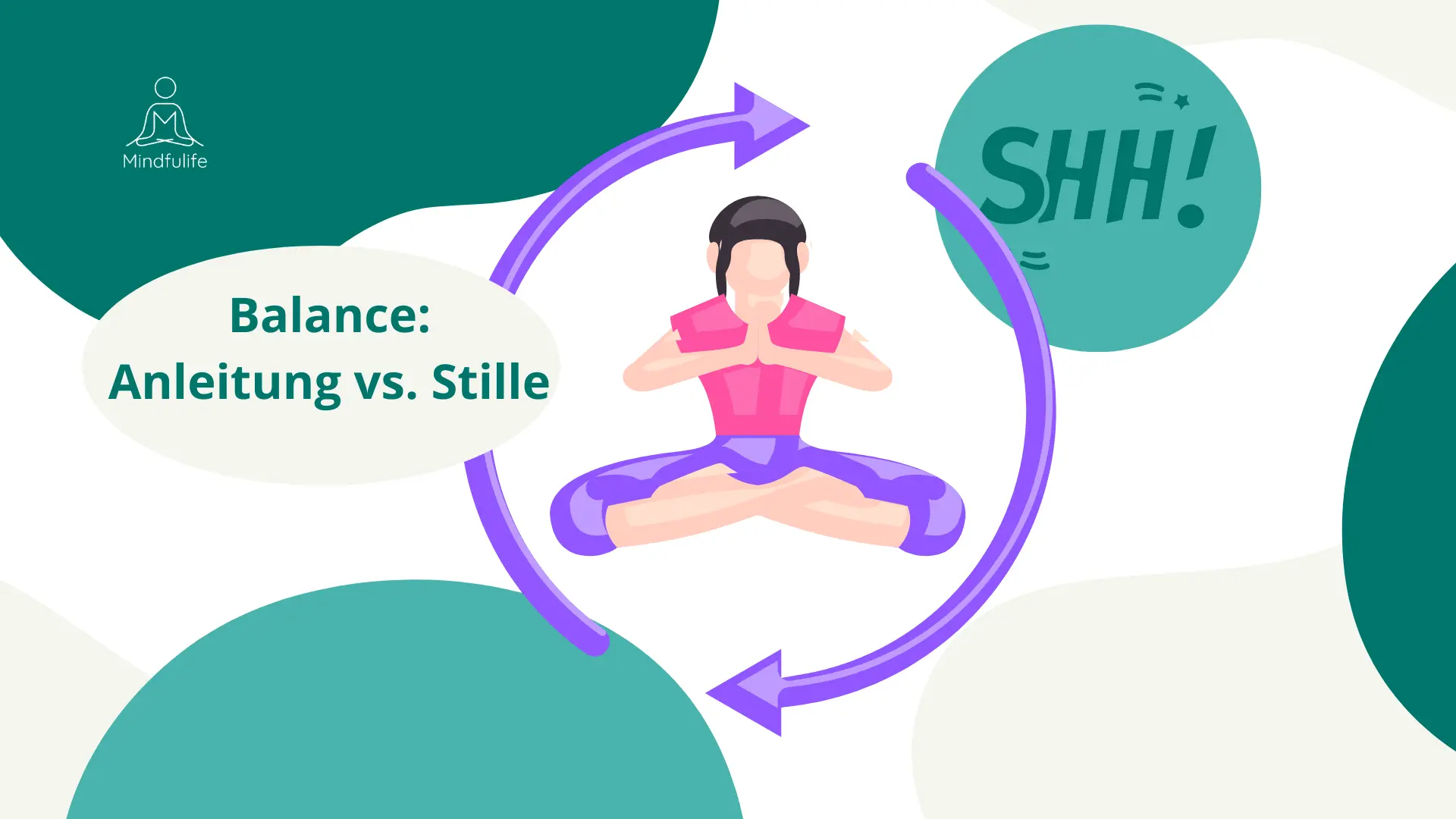
Meditation is an ancient practice that is becoming increasingly important in today’s world. More and more people are looking for calm, clarity and inner peace in a hectic world. One question that comes up again and again is: how much should you actually talk during a meditation as a meditation teacher? Should you give constant guidance, or rather stay quiet and leave room for silence? This article explores this question and looks at the various aspects of guiding meditation.
How does your own individuality shape meditation?
Meditation practice is highly individual and personal. Meditation teachers have their own style and different preferences when it comes to how much is said during a meditation. Some teachers prefer to speak and give instructions throughout the entire meditation, while others prefer silence and leave room for self-reflection. It is important to choose an approach that feels authentic.
How much experience do the participants have?
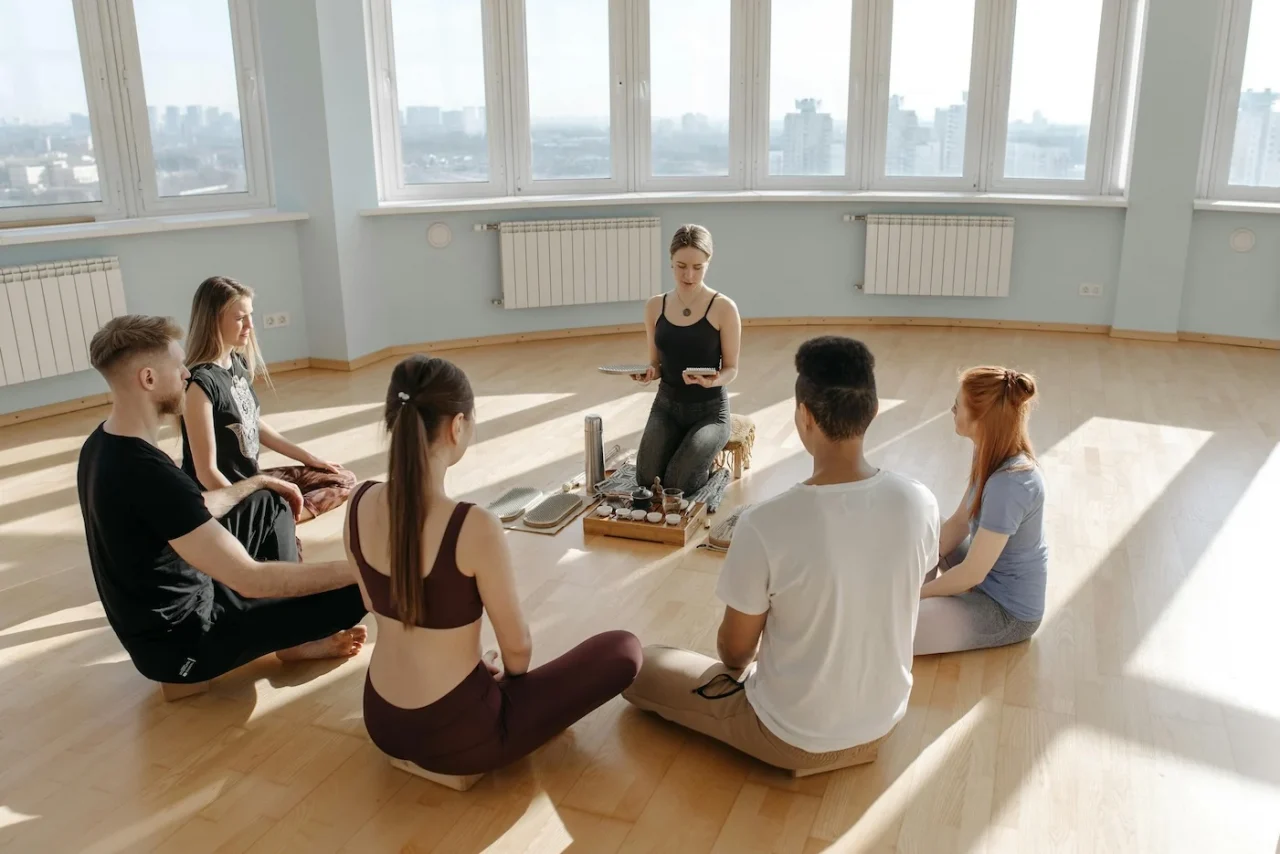
Another important factor in deciding how much should be said during a meditation is the participants’ level of experience. Experienced meditators may need less guidance and more room for their own practice, while beginners or people with no experience can benefit from additional guidance. Good teachers adapt their guidance to the needs and abilities of the participants, creating a supportive and nurturing environment for the meditation experience.
What degree of empowerment is appropriate?
An important aspect of meditation is handing responsibility over to the participants and encouraging them to lead their own practice. Competent teachers are not just guides but also mentors who help people discover their own inner wisdom and direction. This means that teachers should create room for self-reflection and self-guidance while at the same time offering support and guidance.
Is discomfort an opportunity for growth?
Silence and discomfort during meditation can be important experiences that contribute to the development of the mind. Silence allows participants to detach from external distractions and focus on their inner world. Discomfort can lead participants to engage with their emotions and thoughts and gain new insights. Skilled teachers encourage their students to value silence and to accept discomfort as part of the meditation process.
Conclusion: the art of meditation as a balancing act
All in all, guiding meditation is about finding a balance between guidance and silence. Experienced mentors find an approach that suits their own personality and meets the needs of the participants. They create room for self-reflection and self-guidance and encourage learners to value silence and to accept discomfort as part of the meditation process. Ultimately, there is no fixed rule for how much should be said during a meditation. Rather, it is about finding an approach that feels right for everyone involved and offers room for personal growth.
Revised on 3 May 2026
by Lisa-Marie Huntenburg (psychology student)
Your journey to becoming a meditation teacher
Start your training as a meditation teacher today. Discover our online training, which is based on solid scientific evidence and was developed by experienced psychologists. Immerse yourself in the fascinating world of meditation and mindfulness while experienced teachers guide you through a comprehensive curriculum. Get to know the various meditation practices, explore the foundations of mindfulness and develop your ability to help others find inner calm and balance.
The highlights of our course show you why well-founded training in meditation is so important:
- Scientifically grounded approach
- Fully online and flexible
- Comprehensive teaching materials and practical exercises
- Support from qualified teachers and psychologists
Would you like to delve deeper into the world of meditation and help other people find inner calm and mindfulness? Then this training is exactly right for you!
Still have questions?
No problem! If you have any questions that our website doesn’t answer, don’t hesitate to get in touch with us at any time. You can contact us by email or phone with no obligation – whichever you prefer. We will get back to you as quickly as possible and will be happy to advise you personally. We look forward to accompanying you, too, on this wonderful journey.
- Email: info@mindfulife.de
- Phone: +49 (0)69 9999 3159
Deepen your meditation practice with Mindfulife
Meditation can be more than a short break in your everyday life. If you would like to understand more deeply how meditation works, how to build a steady practice of your own and how to guide others mindfully, our meditation teacher training is the next step. There you will not only get to know meditation in theory, but also develop more confidence, clarity and trust in your own practice.
Would you like to find out more about the training first? In our weekly webinar you will get an insight and learn more about what your path to becoming a meditation teacher could look like.
For regular support in your everyday life, you can also use our online meditation studio and join guided meditations flexibly via Eversports.
We look forward to accompanying you on your journey.
You can find more mindfulness inspiration on our channels too
References
Feldmann, B. (2018). How do Mindfulness Practitioners Describe Pausing?: A Qualitative Interview Study. ResearchGate. https://doi.org/10.13140/RG.2.2.12647.70568
Pfeifer, E., & Wittmann, M. (2020). Waiting, Thinking, and Feeling: Variations in the Perception of Time During Silence. Frontiers in Psychology, 11. https://doi.org/10.3389/fpsyg.2020.00602
Woods, T. J., Windt, J. M., & Carter, O. (2020). Silence in Shamatha, Transcendental, and Stillness Meditation: An Evidence Synthesis Based on Expert Texts. Frontiers in Psychology, 11. https://doi.org/10.3389/fpsyg.2020.01259