From Perfectionism to Burnout? – 5 Ways Out of the Self-Optimisation Craze

 · 9 min read

Spend just five minutes on social media and it becomes obvious – we are living in the age of the self-optimisation craze. In this article, you will find out what dangers an excessive drive for perfection brings with it and what you can do to approach self-improvement mindfully.
Self-improvement without the self-optimisation craze?
Reflecting on ourselves, recognising our weaknesses and working on ourselves – how can we work on ourselves without falling prey to the self-optimisation craze? It has never been as easy as it is today: one click on the internet is enough to find countless ways of optimising our own little “quirks”. Whether it is a new fitness programme that will finally give us more stamina, a sleep hack for more restful nights or a relationship guide to deepen our partnership – the path to a “better self” seems just one step away.
Thanks to our innate desire to improve ourselves, we have managed to evolve from Stone Age cave dwellers into the people we are today. But there is also a downside: self-optimisation is an endless process. If all we ever see is potential for improvement, we will never feel good enough.
Our day has 24 hours – and in that time we are supposed to fit everything in: optimal sleep, extensive exercise, healthy eating, 110% at work, quality time with the family, journaling, meditation, nurturing friendships, further training, perhaps even volunteering – and, of course, staying cheerful the whole time. If we manage all of that – are we finally optimal? Or have we simply created the optimal conditions for burnout?
In this article, you will find out where this self-improvement trend comes from, what dangers it holds – and how you can learn to stop constantly putting yourself under pressure and still feel content.
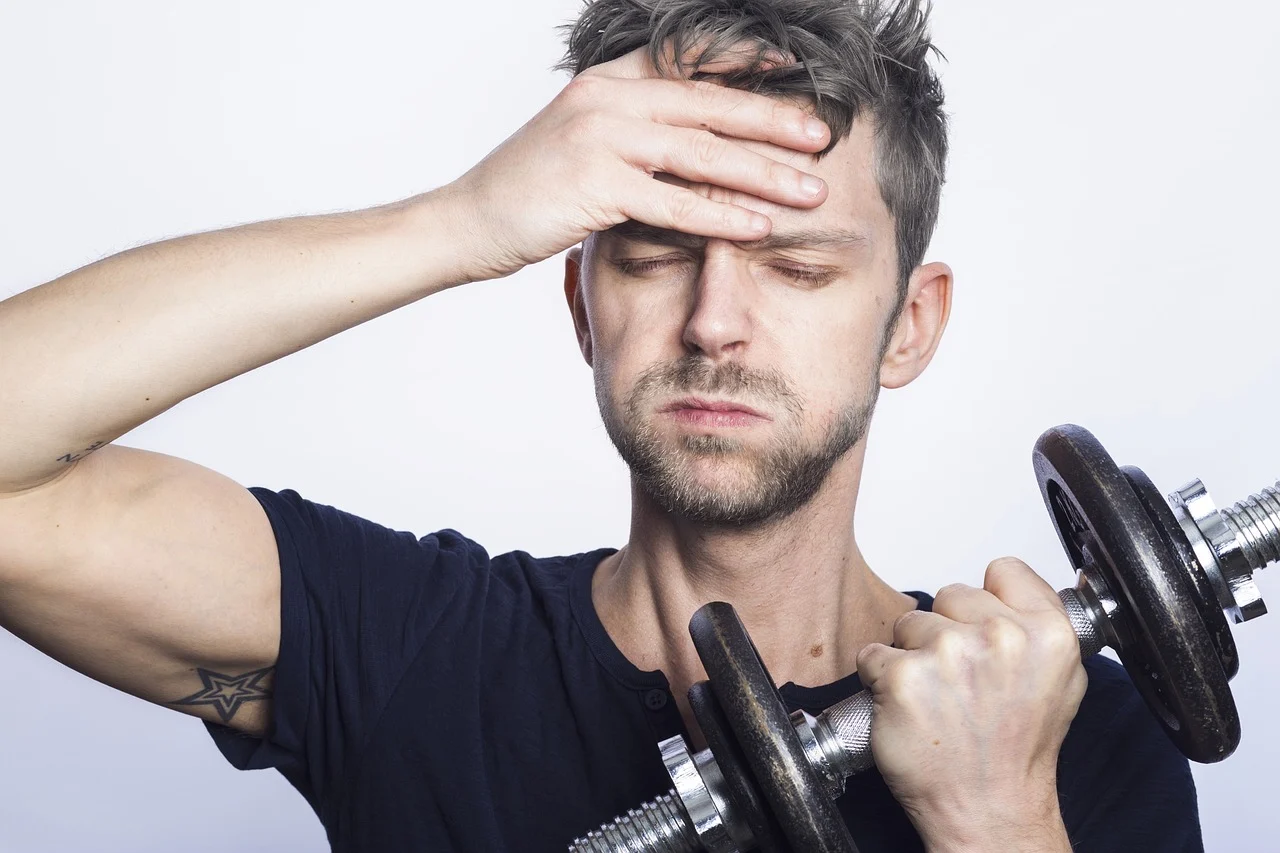
🔍What exactly is the self-optimisation craze?
According to the German Duden dictionary, the term Selbstoptimierungswahn (self-optimisation craze) refers to a pronounced and negatively regarded form of self-optimisation. Self-optimisation, in turn, is understood as the voluntary adaptation to external pressures, social expectations or ideals – with the aim of reaching the best possible version of oneself. The word Wahn (delusion or mania) implies a fixed but false belief that can take on a life of its own.
What begins as harmless self-care can develop into an endless process of constant self-improvement – shaped by self-discipline, permanent self-monitoring and constant feedback from external or digital feedback mechanisms. This urge to optimise can take hold of every area of life: body, career, health, relationships, leisure time or even sleep. The general aim is to maximise one’s own happiness or to change oneself in order to achieve something “good” – but what exactly counts as good is shaped by norms and dictated by society.
How self-improvement turns into burnout
It is precisely these normative ideas that carry the risk of people misjudging themselves. Someone who believes, for example, that only cosmetic surgery will make them happier may overlook serious health risks. Likewise, optimisation in one area of life often goes hand in hand with losses in another: anyone trying to be the perfect colleague or the most dedicated employee – with overtime, constant availability and extra responsibility – often loses time for social contact or restorative leisure activities.
On this constant hamster wheel of self-improvement, it is easy to miss the point at which exhaustion sets in. What initially looks like healthy ambition can quietly turn into mental exhaustion . Perfectionism is often accompanied by negative feelings such as loss of self-esteem, worry, social pressure and depressive states. It is also considered a risk factor for mental illnesses such as burnout, depression and anxiety disorders. The line between healthy self-care and pathological self-optimisation is often blurred and differs from person to person. Anyone who goes to extremes and can no longer maintain the balance between working on themselves and enjoying life risks serious health consequences – both physical and mental.
Why our society encourages perfectionism
Community
Our capitalist Western society is shaped by consumerism, a focus on performance and political individualism. People strive for success, perfection and beauty. Social media makes it possible to showcase our achievements publicly and to compare ourselves with others all the time. This often means that many users’ self-esteem suffers – while at the same time a stronger sense of competition emerges. Anyone who is preoccupied only with themselves runs the risk of losing touch with others – our society is in danger of becoming lonely.
Industry
It is also impossible to overlook the fact that industry profits from these self-doubts. Sectors such as cosmetic surgery, self-help books, dietary supplements and self-tracking technology in particular thrive on the desire for a better self.
Inequality
However, the seemingly easy availability of self-improvement makes things especially hard for those who lack the financial, time or health resources to “keep up”. If we assume that everyone can solve their problems simply by trying harder, we risk losing sight of those who genuinely need help. Not everyone is able to strive constantly for perfection or to take individual responsibility for every area of life. Underprivileged groups in particular experience heightened feelings of exclusion and inferiority as a result.
Environment
The constant urge to keep up at the top also has a negative impact on sustainability. The self-optimisation craze fuels a never-ending cycle of trends, hypes and new products with ever shorter lifespans. This creates a cycle of overconsumption and waste of resources in which the pursuit of self-optimisation, linked to growing environmental consumption, places a long-term burden on the environment and pushes sustainable action into the background.

💡What can I do about the pressure to optimise myself?
Here are five concrete approaches that can help you find a healthy way of dealing with self-optimisation, without the self-optimisation craze:
1.Question your motivation
Before you embark on the next change, ask yourself: Why do I actually want this? What do I hope to get out of it? Is it really your own wish – or does it stem from social expectations or comparisons with others? Once you realise that the impulse comes from outside, you can consciously decide whether you want to follow it. Do what matters to you and what makes you happy – not what others expect of you.
2. Question your ideals
What ideals do you pursue in particular areas of life – for example in terms of appearance, success or relationships? And where do these ideas come from? We often adopt social norms unconsciously, without questioning them. Ask yourself whether these ideals really match your own values – or whether you are striving for something that does not suit you at all.
3. Accept yourself
Before you try to change yourself, take a moment to reflect on your “quirks”. Are they really a problem – or just small deviations from social expectations? Think about what truly matters to you in life and adjust your goals accordingly. Be gentle with yourself. You do not have to be perfect at everything. Your crooked nose, your forgetfulness or your tendency towards chaos do not make you any less valuable.
4. Turn your attention outwards
Instead of constantly dwelling on your supposed flaws, consciously turn your attention to the present moment and to your surroundings. What can you see right now? What can you hear? What can you feel? It can also help to take an interest in something beyond yourself – such as art, science, literature, sport or nature. – Go out into the world!
5. Step off the hamster wheel
Recognise when you are caught in a spiral of self-optimisation and pressure to perform. You do not have to be productive, efficient and improved all the time. Allow yourself breaks, boredom and imperfection. Real contentment does not come from perfection. Why not try a short meditation to come back to yourself?
🧘♀️Even mindfulness is not safe from the optimisation craze
When meditation becomes an obligation to perform
Meditation, too, is not automatically free from the mechanisms of the self-optimisation craze. What was originally intended as a practice of inner reflection, slowing down and emotional balance is increasingly being instrumentalised – as a means of boosting productivity and stress resilience, or even of achieving physical ideals such as eternal youth or “biohacking”.
If we also follow an exaggerated performance mindset when meditating – for example by compulsively trying to become ever more mindful, present and calm, or when meditation ends up being just another tiresome item on our daily to-do list – then even this practice becomes a stage for comparison, judgement and pressure.

Back to its purpose: meditation as an invitation to self-acceptance
It is therefore worth reminding ourselves what meditation is actually meant for: not as a means to an end, but as a gift to ourselves, as a path to inner calm, self-acceptance and connection with the present moment.
Conclusion: simply being you is enough
Self-optimisation can be motivating – but it must not become the main task of your life. We are more than our performance, our appearance and our achievements. Meditation can help you avoid losing yourself in the self-optimisation craze. It invites us to slow down, to come back to ourselves, to accept our mistakes rather than fight them – and to recognise that it is okay simply to be.
How would you assess yourself? Do you sometimes feel the pressure to be ever better, more productive or more perfect? Do you recognise the signs of the self-optimisation craze?
Then consciously treat yourself to little breaks – for example with one of our guided meditations. Not as a new goal on your to-do list, but as a kind invitation to yourself to reconnect with who you are.
Marie S. (psychology student)
Frequently asked questions about the self-optimisation craze
What is the self-optimisation craze?
The self-optimisation craze describes a compulsive, exaggerated form of self-improvement: an endless cycle of mounting pressure to keep optimising oneself. According to the Duden dictionary, it has negative connotations and is accompanied by perfectionism, loss of self-esteem, social pressure and the risk of burnout or mental illness.
How do you optimise yourself?
Self-optimisation happens through targeted changes in your own behaviour, e.g. through:
-
-
-
- fitness programmes,
- healthy eating,
- sleep hacks,
- meditation to boost performance,
- productivity tools,
- self-tracking apps (e.g. step counters, calorie counters).
-
-
⇒ This often involves trying to conform to a social ideal rather than following your own needs.
⇒ These measures are often based more on external pressure – from society or the media – than on an inner need.
What is self-optimisation, simply explained?
Self-optimisation means consciously trying to improve yourself in areas such as body, mind, emotions or behaviour in order to reach a particular ideal – for example becoming more efficient, healthier or more successful. The goal: to develop a “better” self.
What is a synonym for self-optimisation?
Possible synonyms (depending on the context) are:
-
-
- self-improvement, personal development, self-management, performance enhancement, life optimisation
-
-
-
- In a negative sense: overtaxing oneself, pressure to optimise, striving for perfection
-
Where does the self-optimisation trend come from?
The trend arises from a combination of several social factors, including: capitalist society:
-
-
- Focus on performance and individualism
- Social media: constant comparison, self-presentation, likes as validation
- Industry interests: e.g. the beauty, fitness, dietary supplement and tracking industries profit from the pressure to be perfect
- Individualised responsibility: problems are increasingly interpreted as personal failure – social structures fade from view
-
Deepen your meditation practice with Mindfulife
Meditation can be more than a short break in your everyday life. If you would like to understand more deeply how meditation works, how to build a steady practice of your own and how to guide others mindfully, our meditation teacher training is the next step. There you will not only get to know meditation in theory, but also develop more confidence, clarity and trust in your own practice.
Would you like to find out more about the training first? In our weekly webinar you will get an insight and learn more about what your path to becoming a meditation teacher could look like.
For regular support in your everyday life, you can also use our online meditation studio and join guided meditations flexibly via Eversports.
We look forward to accompanying you on your journey.
You can find more mindfulness inspiration on our channels too
References
Balandis, O., & Straub, J. (2018). Selbstoptimierung und Enhancement. Journal für Psychologie, 26, 131–155. https://www.journal-fuer-psychologie.de/article/view/307.
Bröckling, U. (2013). Das unternehmerische Selbst (5. Aufl.). Frankfurt am Main: Suhrkamp.
Fenner, Dagmar: Selbstoptimierung, https://www.bpb.de/themen/umwelt/bioethik/311818/selbstoptimierung/, (2020), Abruf am 20.06.2025.
Piron, H. (2020). Meditationstiefe. In Psychotherapie: Praxis (pp. 233–244). Springer-Verlag. https://doi.org/10.1007/978-3-662-58881-9_11.
Wenzel, E. (2024). Selbstoptimierung: Ist unsere Gesellschaft von der Sucht nach Selbstmanagement besessen? Wenn ja, was ist so schlimm daran? In Megatrend Gesundheit: Wie Digitalisierung und Individualisierung unsere Gesundheitsversorgung revolutionieren. Megatrends und Transformations-Management (Kap. 9). Springer Gabler. https://doi.org/10.1007/978-3-662-68688-1_9 .
Whiting, R. (2022). Neoliberalism and the ideal of the self-optimizing subject: Social media and the psychological burden of self-improvement. Current Sociology, 71(1), 3–20. https://doi.org/10.1177/00113921221146575 .