What actually is mental health?

 · 2 min read

Lately, whenever we look into our health, we come across the term “mental health” more and more often. But what exactly does it mean, and how can it help us in our daily lives? You’ll find out all of this in this article.
What mental health means
The World Health Organization (WHO) defines mental health not merely as the absence of mental illness, but as a state of wellbeing in which individuals can realise their abilities, cope with the stresses of everyday life and work productively (World Health Organization, 2018). Mental health therefore encompasses emotional stability as well as the cognitive and social resources that help people lead a fulfilling life. Mental health matters for all age groups. For example, studies show that adolescents with high resilience have a lower risk of depression and anxiety disorders (Fergus & Zimmerman, 2005).
In adulthood, factors such as workload, social support and lifestyle are closely linked to mental health. A healthy mental state has a positive effect on relationships, job satisfaction and physical health. By contrast, chronic stress and mental illnesses such as depression can increase the risk of cardiovascular disease and other physical complaints (Walker et al., 2015).

The link between meditation and mental health
Meditation is a practice thousands of years old that has been increasingly studied in Western psychology and medicine in recent decades. Mindfulness-based meditation techniques, such as Mindfulness-Based Stress Reduction (MBSR), have proven effective in reducing stress, anxiety symptoms and low mood (Kabat-Zinn, 2003). A meta-analysis by Goyal et al. (2014) shows that mindfulness meditation can have effects comparable to those of antidepressants, particularly in mild to moderate depression. In addition, regular meditation practice improves emotional regulation and fosters resilience to stress (Galante et al., 2021).
One example is a study by Davidson et al. (2003), which demonstrated that just eight weeks of mindfulness-based meditation can lead to increased activity in the left prefrontal cortex, an area of the brain associated with positive emotions. These findings underline the neurobiological effects of meditation on mental health
Mental health – change your mindset!
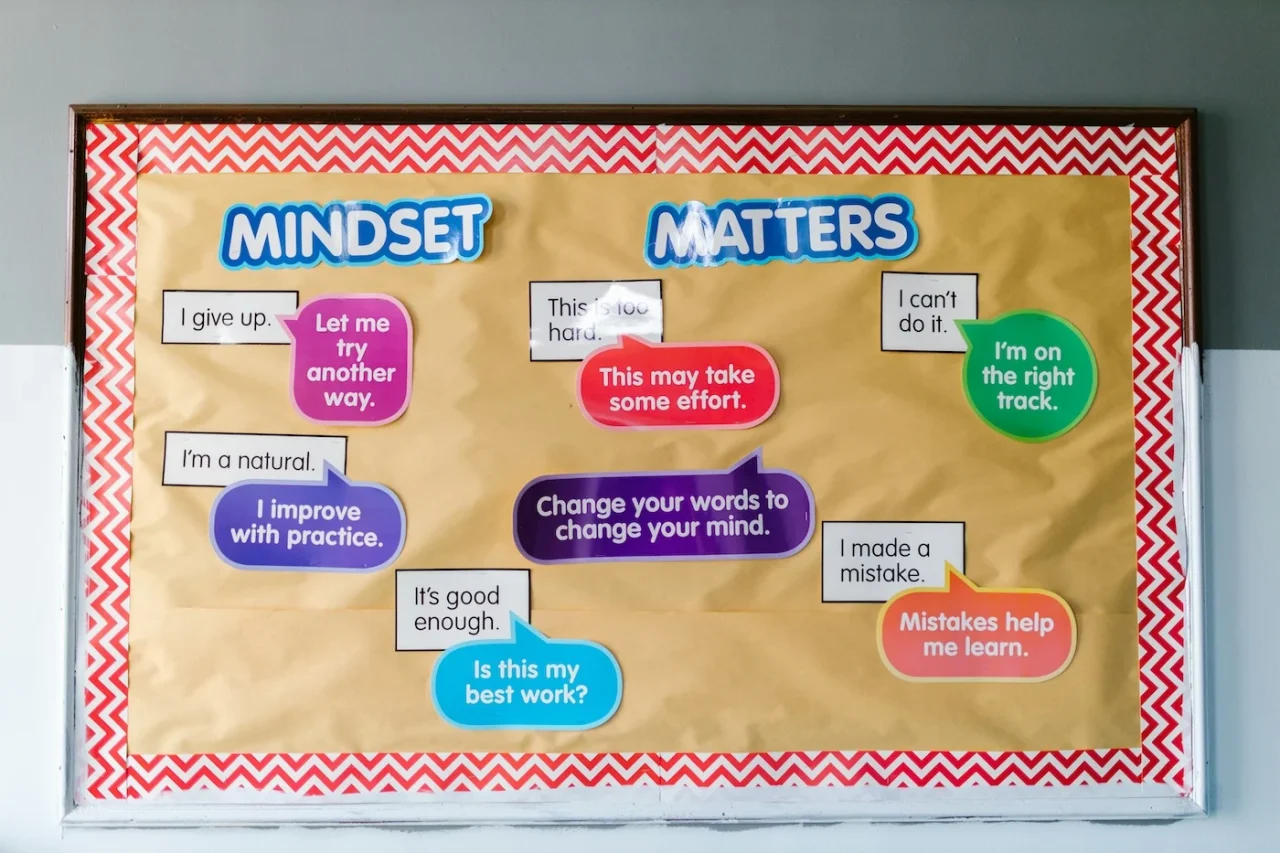
Mental wellbeing is not necessarily the same as mental relaxation – it also includes a positive mindset, the decisions we make and the way we evaluate what happens in our lives. So it is a much broader concept. The way we work on our mental wellbeing can look different for each of us. While I read a book on personal development, you might prefer to focus consciously on the different flavours while eating, and your best friend, on the other hand, makes a list of stressors in her life that she wants to change. It is an entirely individual matter, so nobody can tell you what is right and what is wrong, as long as it supports your wellbeing.
Deepen your meditation practice with Mindfulife
Meditation can be more than a short break in your everyday life. If you would like to understand more deeply how meditation works, how to build a steady practice of your own and how to guide others mindfully, our meditation teacher training is the next step. There you will not only get to know meditation in theory, but also develop more confidence, clarity and trust in your own practice.
Would you like to find out more about the training first? In our weekly webinar you will get an insight and learn more about what your path to becoming a meditation teacher could look like.
For regular support in your everyday life, you can also use our online meditation studio and join guided meditations flexibly via Eversports.
We look forward to accompanying you on your journey.
You can find more mindfulness inspiration on our channels too
References
Davidson, R. J., Kabat-Zinn, J., Schumacher, J., Rosenkranz, M., Muller, D., Santorelli, S. F., ... & Sheridan, J. F. (2003). Alterations in brain and immune function produced by mindfulness meditation. Psychosomatic Medicine, 65(4), 564–570. https://doi.org/10.1097/01.PSY.0000077505.67574.E3
Fergus, S., & Zimmerman, M. A. (2005). Adolescent resilience: A framework for understanding healthy development in the face of risk. Annual Review of Public Health, 26, 399–419. https://doi.org/10.1146/annurev.publhealth.26.021304.144357
Galante, J., Friedrich, C., Dawson, A. F., Modrego-Alarcón, M., Gebbing, P., Delgado-Suárez, I., ... & Dalgleish, T. (2021). Mindfulness-based programmes for mental health promotion in adults in nonclinical settings: A systematic review and meta-analysis of randomised controlled trials. PLOS Medicine, 18(1), e1003481. https://doi.org/10.1371/journal.pmed.1003481
Goyal, M., Singh, S., Sibinga, E. M., Gould, N. F., Rowland-Seymour, A., Sharma, R., ... & Haythornthwaite, J. A. (2014). Meditation programs for psychological stress and well-being: A systematic review and meta-analysis. JAMA Internal Medicine, 174(3), 357–368. https://doi.org/10.1001/jamainternmed.2013.13018
Kabat-Zinn, J. (2003). Mindfulness-based interventions in context: Past, present, and future. Clinical Psychology: Science and Practice, 10(2), 144–156. https://doi.org/10.1093/clipsy.bpg016
Walker, E. R., McGee, R. E., & Druss, B. G. (2015). Mortality in mental disorders and global disease burden implications: A systematic review and meta-analysis. JAMA Psychiatry, 72(4), 334–341. https://doi.org/10.1001/jamapsychiatry.2014.2502
World Health Organization. (2018). Mental health: Strengthening our response. https://www.who.int/news-room/fact-sheets/detail/mental-health-strengthening-our-response