Mindfulness and Meditation for PMS: How to Ease Symptoms and Reduce Stress

 · 6 min read
For many women, the days just before their period are an emotional and physical challenge. Behind these changes lies what is known as premenstrual syndrome (PMS) – a phase that places demands on both body and mind.
Some reach for medication to find relief, but this can come with side effects. That is why it is worth looking at gentle, holistic methods such as mindfulness and meditation. Studies show that they can help reduce stress, strengthen body awareness and make it easier to deal calmly with the monthly changes.
What is PMS and what are the symptoms?
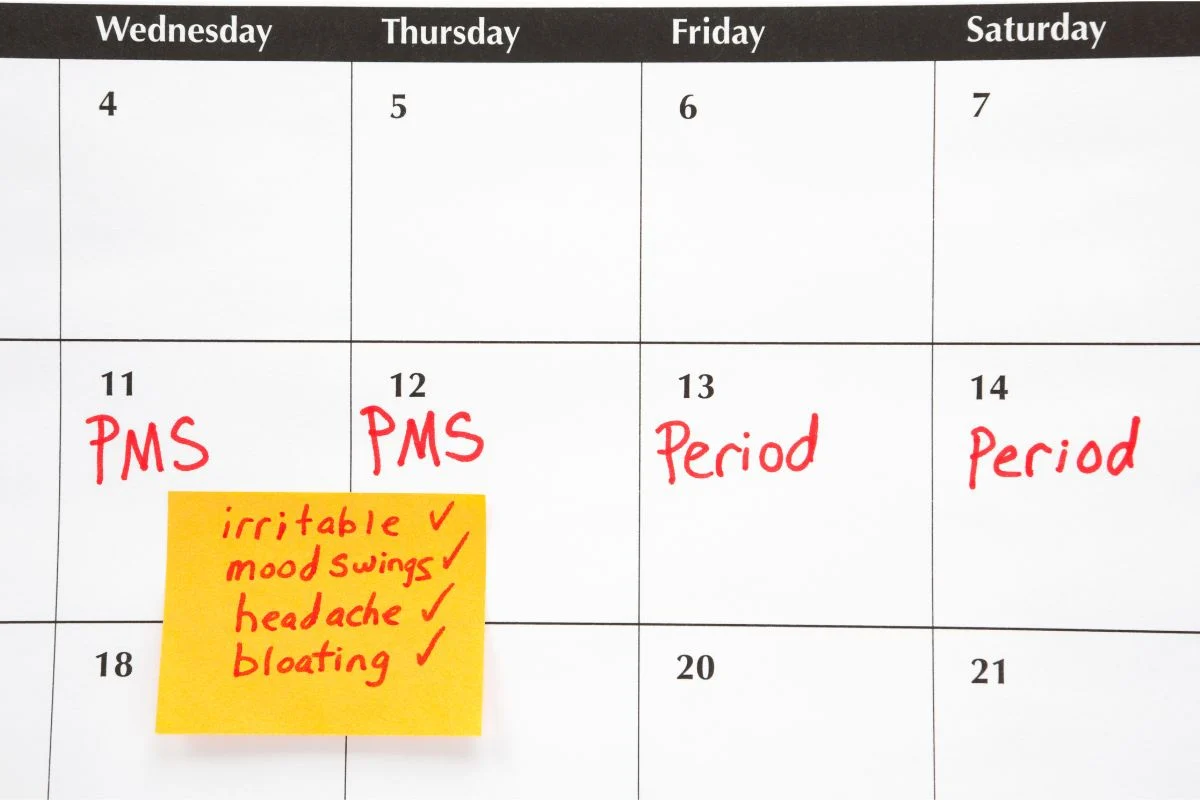
Premenstrual syndrome (PMS) describes the physical and psychological changes that can occur in the days before a period. It is caused by hormonal fluctuations during the cycle, which affect mood, energy and wellbeing. How strongly PMS is felt varies greatly from person to person: some women notice only slight changes, while others find this time considerably more distressing.

Typical PMS symptoms:
Physical symptoms
- Circulatory problems
- Tender and swollen breasts
- Headaches or migraines
- Back pain
- Lower abdominal cramps
- Water retention
- Food cravings or loss of appetite
- Tiredness and exhaustion
Emotional and psychological symptoms
- Sadness or low mood
- Irritability and mood swings
- Lowered self-esteem
- Anxiety or inner restlessness
- Aggressiveness or hypersensitivity
- Crying for no apparent reason
- Lack of drive
What helps with PMS?
When the pain and mood swings of the PMS phase start to make themselves felt, many women look for ways to cope better with this time. There are various ways to ease the discomfort and support your wellbeing.
1. Diet and nutrients
A healthy, nutrient-rich diet can noticeably reduce PMS symptoms.
- Magnesium & vitamin B6 relax muscles and nerves – especially helpful for cramps, headaches, bloating and irritability.
- Omega-3 fatty acids have an anti-inflammatory effect and can help balance mood swings. They are found in abundance in fish, linseed and walnuts.
- Sugar, caffeine & alcohol are best enjoyed in moderation – they can promote inflammation and intensify PMS symptoms.
Tip: Eat mindfully, but without pressure. It is not about going without, but about feeling good after eating and lovingly giving your body what it needs. Your skin may benefit too and look fresher.
2. Exercise and relaxation
Gentle movement often works like a natural mood booster.
- Yoga, Pilates or a walk can help release tension and improve circulation.
- Light strength training or dancing can help stabilise your hormonal balance in the long term – and you get a good mood from the endorphins thrown in for free!
- Warmth and massage: a hot-water bottle or a massage cushion relaxes the muscles and eases cramps.
- Sleep: getting enough sleep is essential, not only with PMS but also during your period, so that body and mind can recover.
Tip: Find your own balance between movement and rest. Too much activity can overtax the body, while too much rest can leave you sluggish. Pay attention to your energy levels – sometimes your body needs movement, and sometimes it simply needs a break.
3. Mind and self-care
Alongside the physical discomfort, emotional symptoms such as irritability, inner restlessness, low moods, lack of drive or feeling down also play a major role during the PMS phase.
Mindfulness can be an effective approach to easing these psychological symptoms. Stress has a marked influence on the course and intensity of PMS – and mindfulness reduces precisely this stress, stabilises your mood and strengthens your emotional balance.

- Journaling and cycle awareness: Regularly note down how you feel physically and emotionally. This helps you recognise recurring patterns and plan better for what does you good in each phase. It strengthens your body awareness and encourages a loving understanding of yourself. The body scan can be a helpful addition – a mindfulness exercise in which you slowly guide your attention through your body. It teaches you to notice tension, let it go and respond early to your body’s signals.
- Meditation and yoga exercises: Short meditations or yoga sessions can relieve the body and relax the mind – and so offer lasting help with menstrual discomfort. Just a few minutes of mindful breathing – for example using the 4-7-8 breathing technique – can calm the nervous system and lower your stress levels. Gentle yoga poses such as Cat (Marjaryasana) or Child’s Pose (Balasana) are also soothing for PMS symptoms. They release tension in the back, improve circulation and at the same time give you a moment of relaxation.
Tip: Mindfulness also means accepting your cycle as a natural rhythm. We are not equally productive every day – and that is perfectly fine. During the PMS days, allow yourself to slow down, listen mindfully to your body and withdraw when you need rest. This phase is not a weakness but a sign that your body deserves attention and care.
If psychological symptoms such as irritability, depressed mood or lack of drive are particularly severe for you, you may be suffering from PMDD, premenstrual dysphoric disorder. Around three to eight per cent of all women with an active cycle are affected by this particularly severe form of PMS. For those affected, psychotherapy or medication may be indicated.
How can you integrate mindfulness into your everyday life?
What matters is not practising mindfulness or meditation for hours or doing it perfectly – but simply getting started and regularly building small moments of awareness into your day. A mindful day might look like this:
- Begin mindfully: Start the morning more slowly. Take a deep breath, drink your tea or coffee in peace and briefly check in with yourself to see how you are today – physically and emotionally.
- Plan with consideration: Shape your day with understanding for how you are feeling right now. You do not have to get through everything on your to-do list – less pressure, more room to breathe.
- Act in tune with your energy levels: If you feel exhausted, allow yourself to rest – perhaps with a short breathing exercise or a moment of stillness. If you have energy, use it for gentle yoga or a walk. Mindfulness means working with yourself – not against yourself.
- Be kind to yourself: Notice how you talk to yourself. Especially in sensitive phases of your cycle, it helps to replace self-criticism with compassion: ‘I’m allowed to be tired.’ – ‘I’m doing my best right now.’
- End the day mindfully: Let the evening wind down calmly. A brief moment of gratitude – for your body, which does so much – can help you close the day peacefully.
Conclusion
Of course, mindfulness cannot prevent PMS entirely – but it changes how we deal with it. If you use mindfulness to learn to consciously notice your body’s signals, develop compassion for yourself and build in regular breaks, the way you experience PMS can change noticeably.
Meditation is the complementary practice that helps calm the mind, reduce stress and bring you back to the present moment again and again – away from the merry-go-round of thoughts and towards greater calm and trust in your body.
In this way, PMS becomes not just a challenge but a monthly reminder to treat yourself with mindfulness and love.
Da-Yong K. (psychology student), revised on 8 October 2025
Deepen your meditation practice with Mindfulife
Meditation can be more than a short break in your everyday life. If you would like to understand more deeply how meditation works, how to build a steady practice of your own and how to guide others mindfully, our meditation teacher training is the next step. There you will not only get to know meditation in theory, but also develop more confidence, clarity and trust in your own practice.
Would you like to find out more about the training first? In our weekly webinar you will get an insight and learn more about what your path to becoming a meditation teacher could look like.
For regular support in your everyday life, you can also use our online meditation studio and join guided meditations flexibly via Eversports.
We look forward to accompanying you on your journey.
You can find more mindfulness inspiration on our channels too
References
Art of Living. Yogaübungen helfen bei Menstruationsbeschwerden. Zuletzt abgerufen am 7. Oktober 2025 https://www.artofliving.org/de-de/yoga/menstruationsbeschwerden
Bluth, K., Gaylord, S., Nguyen, K., Bunevicius, A., & Girdler, S. (2015). Mindfulness-based stress reduction as a promising intervention for amelioration of premenstrual dysphoric disorder symptoms. Mindfulness, 6(6), 1292–1302. https://doi.org/10.1007/s12671-015-0397-4
DAK Texterkolonie. (2025). PMS – wenn dich die Zeit vor deinen Tagen fertig macht. DAK-Gesundheit. https://www.dak.de/dak/gesundheit/sexuelle-aufklaerung-mit-dem-doktorsex-team/zyklus-der-frau/pms_57734
Haußmann J, Goeckenjan M, Haußmann R, et al. : Prämenstruelles Syndrom und prämenstruelle dysphorische Störung – Übersicht zu Pathophysiologie, Diagnostik und Therapie. Nervenarzt: https://pmc.ncbi.nlm.nih.gov/... (Abgerufen am 21.05.2025)
https://helloclue.com/de/artikel/pms-und-pmdd/6-tipps-zur-linderung-von-pms-symptomen
Mayo Clinic Staff. Perimenopause – Diagnosis and treatment. Mayo Clinic. Zuletzt abgerufen am 9. September 2025 von https://www.mayoclinic.org/diseases-conditions/perimenopause/diagnosis-treatment/drc-20354671
Medisana. (2025). Was hilft bei PMS? Deine Wege aus dem Hormonchaos. https://www.medisana.de/healthblog/was-hilft-bei-pms/
Theyo Bean Team. (2023). Wie Euch Achtsamkeit und Schokolade bei PMS helfen können. Theyo. https://www.theyo.de/blogs/theyorie/achtsamkeit-gegen-pms?srsltid=AfmBOoqJB9iOFfsgMi79BAu5MxFTz9BOC53yZFlfzjlyt-x1B3Ns3f6W
Toler, S. (2017). So kannst du PMS-Symptome lindert – Wissenschaftlich fundierte Tipps gegen PMS-Symptome. Clue. https://helloclue.com/de/artikel/pms-und-pmdd/6-tipps-zur-linderung-von-pms-symptomen