What’s Behind the Matcha Hype: 1 Bowl for More Mindfulness

 · 6 min read
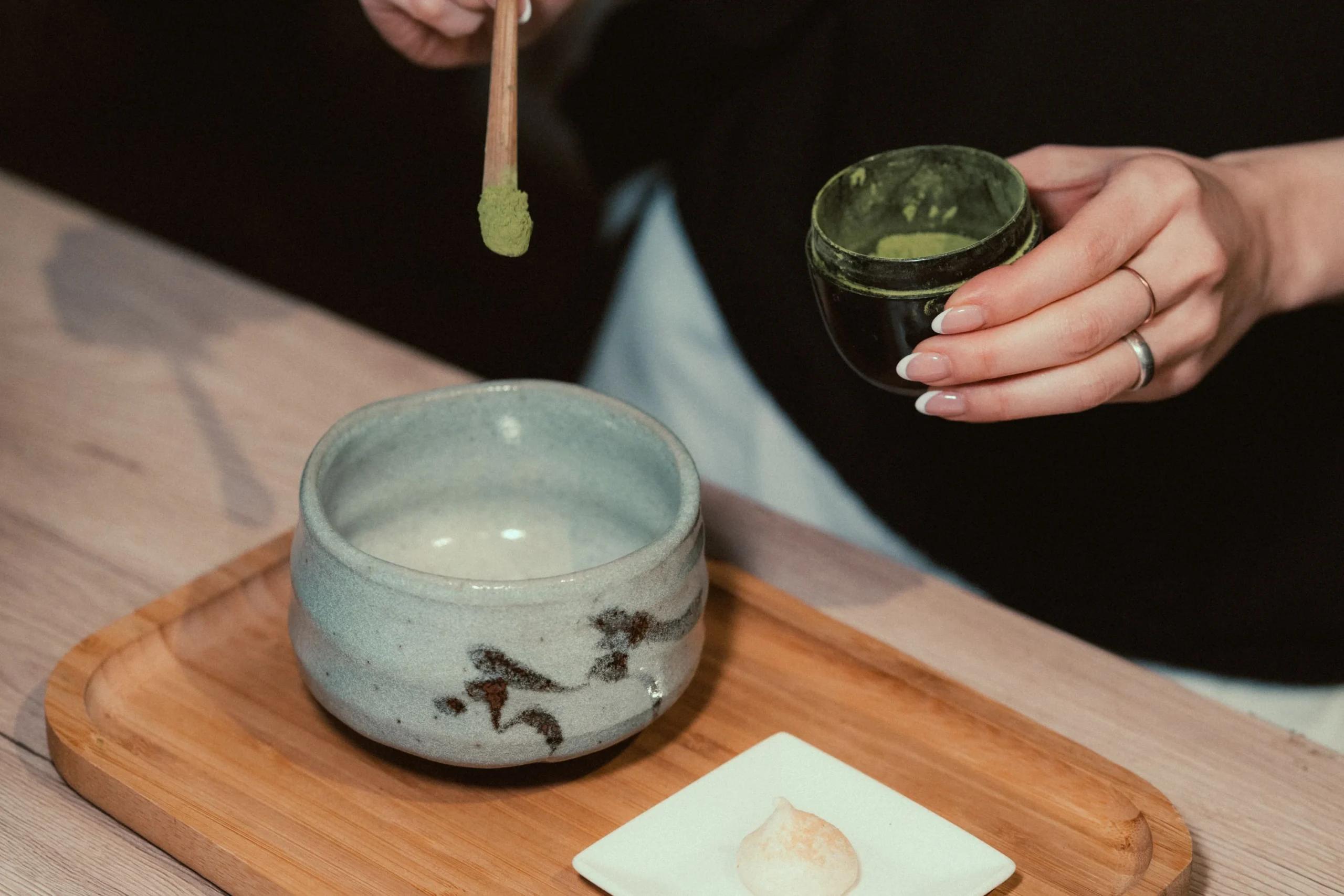
These days you can probably spot a sign reading ‘Matcha Strawberry Latte’ somewhere in just about every town, yet you will search in vain for a bowl of pure matcha, the way it is traditionally drunk in Japan. Taking a quiet moment to savour the slightly bitter yet umami flavour of a good matcha can be a moment of mindfulness. But does that still apply when you order a sweet drink mixed with syrup and milk?
What is matcha?
Perhaps you are now wondering what exactly it is. In short, it is a fine powder made from the tea plant. It is important to mention that matcha is not simply ground green tea, as its harvesting, production and preparation differ from those of ordinary tea.
Did you know that tea and tea drinking came to Japan from China? Today, however, the two countries each cultivate their own tea culture. If you are interested in tea, subscribe to our newsletter and receive a goodie for rating your favourite teas!
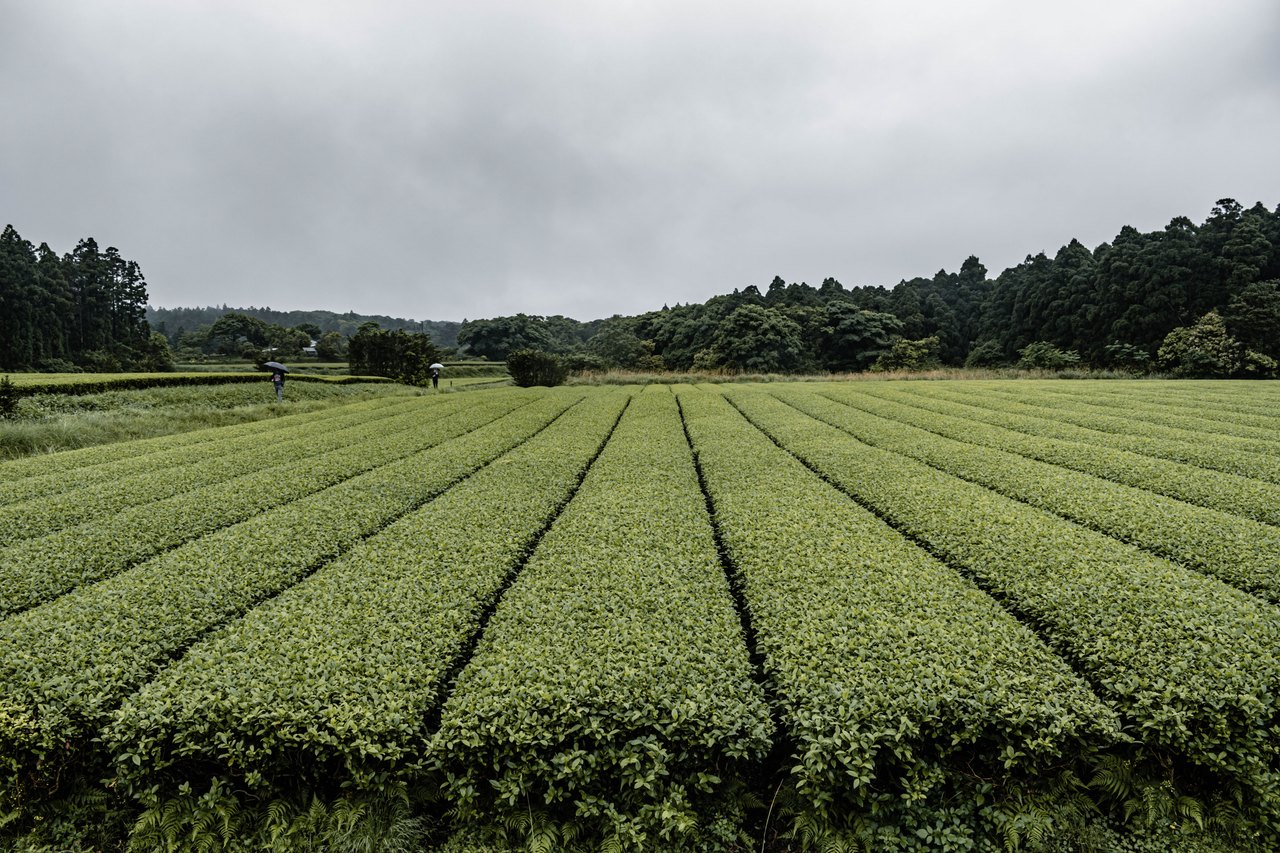
To produce matcha, the tea plant is shaded before it is harvested. Because less light reaches the plant, it forms more chlorophyll, which is responsible for the particularly green colour and the intense flavour. The reduced sunlight also results in more L-theanine and caffeine than in ordinary tea. There is evidence that L-theanine from tea has a calming effect on people. The stimulating effect of caffeine is already well known.
What is interesting, then, is the interplay between the two substances. Although it is not yet entirely clear how, matcha does seem to have a beneficial effect – you feel awake and focused, yet calm at the same time.
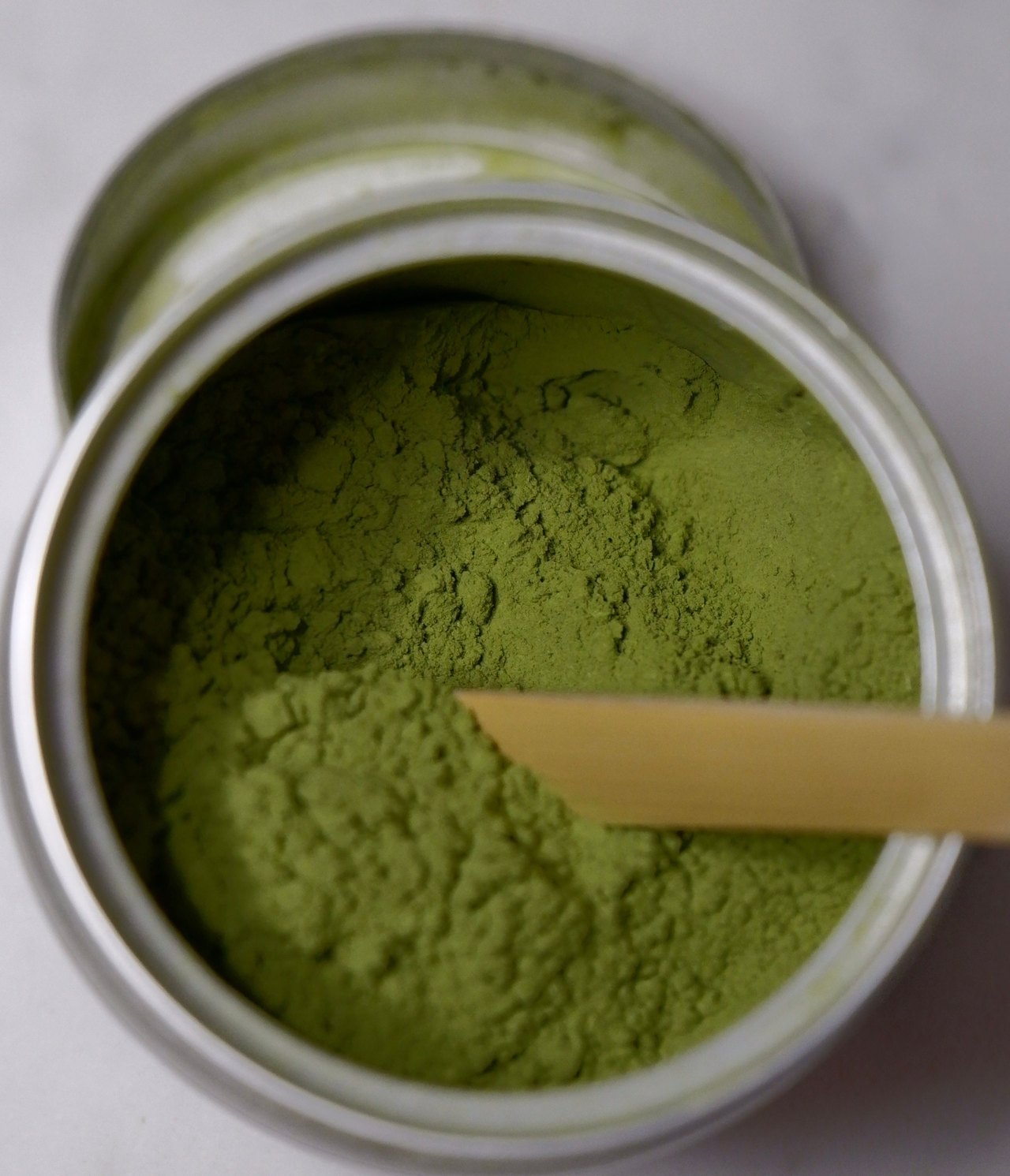
Once the tea is finally ready to be harvested, it is ground slowly and gently into a fine powder in granite stone mills. This is important to preserve its quality. The powder can then be packaged and make its way into tea shops.
An ancient ritual: Chadō 茶道
Among other things, matcha is bought for traditional tea ceremonies in Japan. These involve taking plenty of time over both the preparation and the enjoyment. A traditional tea ceremony is therefore a moment of mindfulness. Incidentally, only matcha of particularly high quality is used for it: the so-called ceremonial grade. It is drunk pure – without milk or any other ingredients – in small sips from a special bowl. Tea ceremonies still play a large and important role in Japan today. But what does a Matcha Strawberry Latte actually still have to do with traditional matcha?
What remains of the ritual today?
If, for example, you pick up a matcha latte to go from a café – in most cases mixed with sugar or syrup – and drink it on the move, the element of mindfulness is of course missing. There is nothing wrong with enjoying these drinks now and then, especially as the creations are becoming ever more adventurous – beautifully presented, some of them even colourful or topped with pudding.
On the other hand, the sharp rise in consumption of this precious green powder is also having consequences for tea farmers and traditional tea ceremonies in Japan. In recent years, Japan has barely been able to keep up with growing the tea, which has led to export difficulties and steep price increases. What makes this problematic is that matcha latte creations often use expensive ceremonial-grade powder, which is actually intended for tea ceremonies. Yet a cheaper powder would be perfectly adequate for this kind of drink, with no loss of flavour. It is worth remembering how elaborate and lengthy the production process is, and asking yourself whether it is really necessary to mix an expensive powder with milk and sugar.
Everyday mindfulness with a bowl of matcha
Instead of ordering one, you can quite easily prepare matcha yourself at home. Not only does this save money in the long run, it also tastes better if you buy the right powder and prepare it correctly. If you like, see this moment as a small mindful break from everyday life, very much in the spirit of a traditional tea ceremony. Try to carry out each step very slowly, with focus and awareness.
Before you start, you will need the following:
- The right powder: if you want to drink your matcha pure, buy ceremonial-grade powder. If you want to make a matcha latte with it, premium grade is sufficient.
- The equipment: traditionally, matcha is drunk from a special bowl, which is also ideal for whisking it. If you don’t have a special bowl, use another deep vessel with as flat a base as possible. To whisk it, you will need a chasen. This bamboo whisk ensures that the powder mixes without lumps and forms a froth. For the best results, you can also use a small sieve for the powder and a dedicated bamboo scoop, known as a chashaku. But an ordinary spoon and no sieve will do too.
Got everything you need? Then let’s get started!
For one bowl:
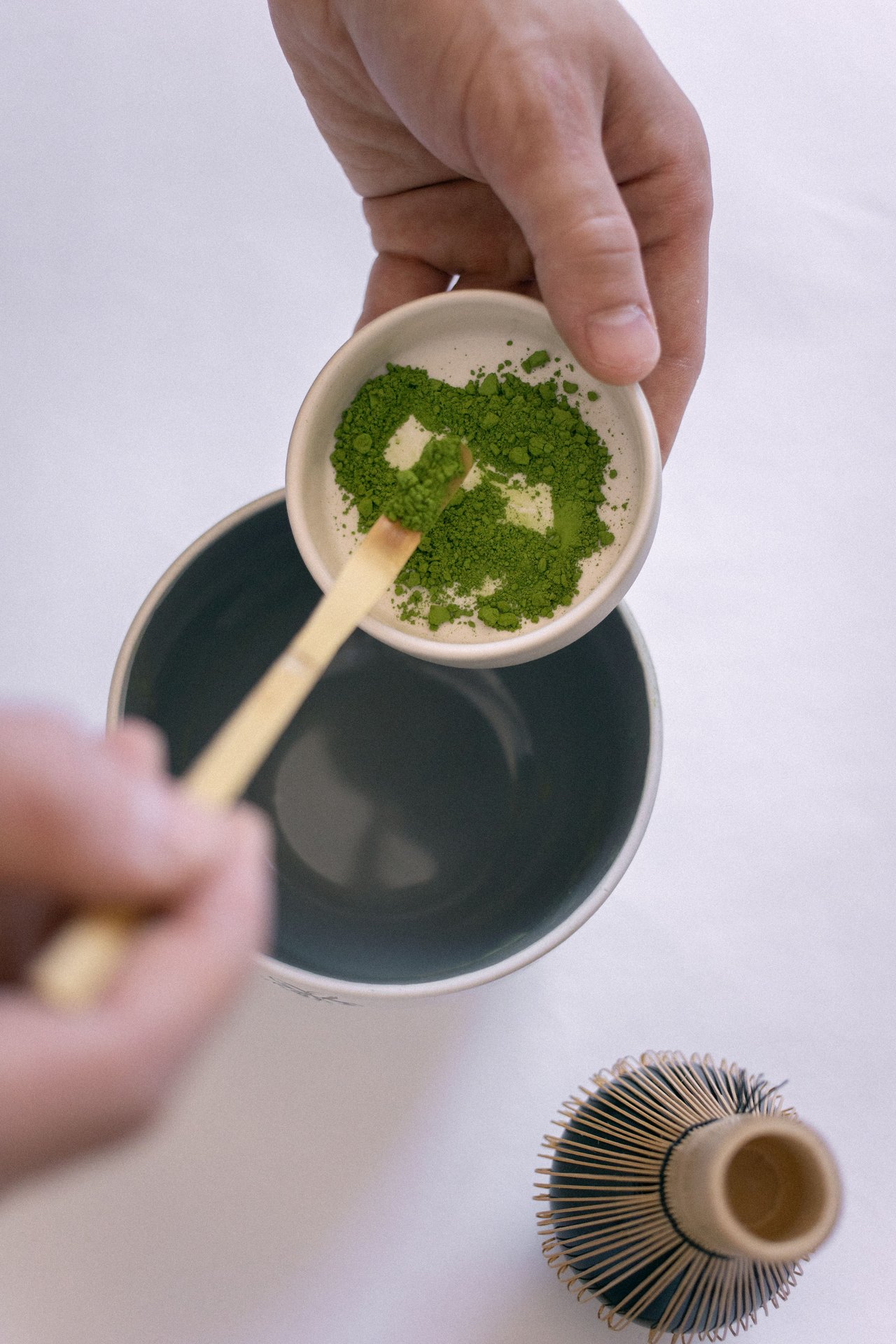
- Heat about 100ml of water to 70°C. Don’t use boiling water, otherwise the matcha will become very bitter. Cooler water is possible, but the flavour may change, as not all the compounds develop as well as they do in warm water.
- Put about 2 g of powder into a bowl (with or without a sieve). That should be about 2 chashaku or 1 teaspoon.
- Slowly pour the water into the bowl and whisk the powder into a froth with the chasen, using M-shaped movements. Keep your wrist relaxed and move the whisk without pressure in small, quick strokes. As soon as there are no lumps left and the amount of froth you want has formed, your matcha is ready to enjoy.
You can find the full guide to print or download here.
Tip: small sweets go particularly well with slightly bitter matcha. In Japan, people like to eat a piece of wagashi with it – beautifully decorated traditional sweets. However, these are elaborately handmade and not easy to recreate. But perhaps you will find a suitable alternative to help you enjoy your mindful break from everyday life even more!
Is the hype justified?
Matcha can certainly be a healthy drink, and one that comes with a fascinating history and culture. However, the health benefits can be lost if you mix matcha with sugary syrups and milk. Looking at the traditional tea ceremonies in Japan, drinking it can also be a moment of mindfulness. But it depends on how and when you drink it and how you shape your own consumption. Perhaps making matcha yourself at home and savouring it will bring you a little calm and serenity.
Lea (psychology student)
Deepen your meditation practice with Mindfulife
Meditation can be more than a short break in everyday life. If you would like to understand more deeply how meditation works, how to build a stable practice of your own and how to guide others mindfully, our meditation teacher training is the next step. There, you will not only learn about meditation in theory, but also develop more confidence, clarity and trust in your own practice.
Would you like to find out more about the training first? In our weekly webinar you will get an insight and learn more about what your path to becoming a meditation teacher could look like.
For regular support in everyday life, you can also use our online meditation studio and join guided meditations flexibly via Eversports.
We look forward to accompanying you on your journey.